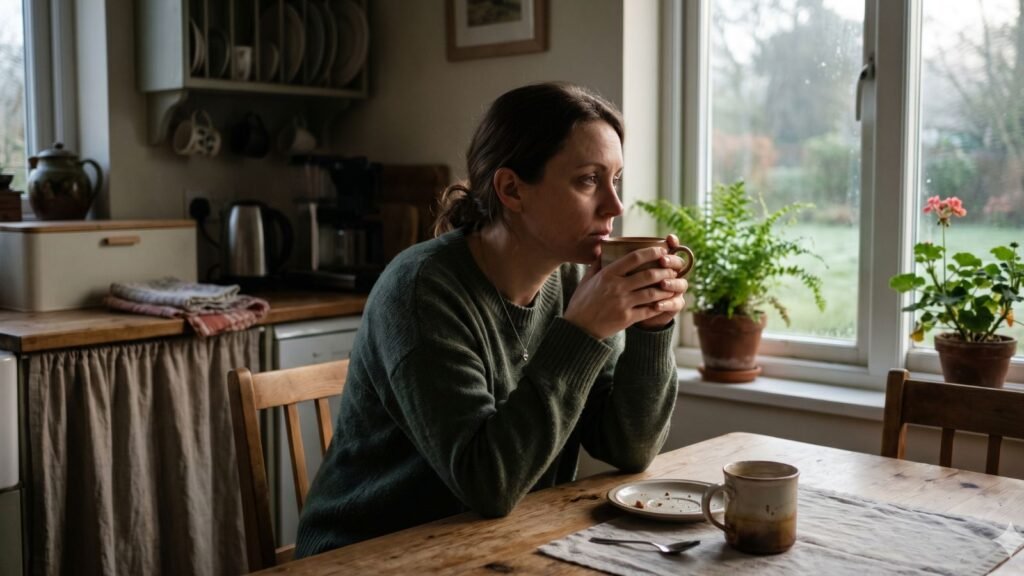
Think about the last time you sat across from someone who loved you; a close friend, a sibling, or a partner, yet you felt a heavy truth sitting right at the back of your throat. Maybe you were struggling with something they had already lived through and survived. Perhaps they were even talking openly about their own past experience with the exact same struggle, offering you a perfect, open doorway to say, “Me too.” Instead, you nodded, poured more tea, changed the subject, and kept your secret tucked safely away in the dark.
It is one of the strangest, most quiet contradictions of being human. We spend so much of our lives wishing someone would finally understand us, yet when we are handed a clear opportunity to be understood by the one person who actually might understand what we’re going through, we run. We make excuses. We tell ourselves we don’t want to burden them, or that our situation is different, or that we will talk about it when things get better. But deep down, there is something else happening beneath the surface.
The Strange Comfort of Remaining Misunderstood
There is a peculiar kind of safety in being misunderstood. When people don’t truly know what you are going through, you get to keep total control over your story. You remain the sole architect of your own fortress. If you tell someone who has no idea what it is like to feel deeply lonely in a crowd, they might offer a blank stare or some well-meaning but useless advice. In a strange way, their inability to get it protects you. Their lack of understanding acts as a barrier, keeping you safely isolated in a world you already know how to navigate.
But sharing that secret with someone who does understand changes the rules of the game entirely. The moment you tell a friend who has also felt that precise shade of grief, failure, or exhaustion, the barrier dissolves. They don’t give you hollow platitudes. They look you in the eye and say, “I know exactly how that is.” Suddenly, you are no longer watching your life from a safe distance. You’re fully exposed, standing in the bright light of recognition.
Why True Empathy Can Feel Like a Threat
There is a quiet psychological reality behind this defense mechanism. People who study human connection often talk about how we navigate emotional exposure around those we perceive as similar to us. When we open up to someone who doesn’t get it, the stakes are low because we expect them to fail at comforting us. But when we open up to someone who truly understands, we are forced to accept that our pain is real, valid, and visible to the outside world.
Studies on human relationships suggest that we often fear deep empathy just as much as we fear rejection. True empathy requires us to lower our guard completely. It asks us to drop the polished, put-together version of ourselves we present to the world and admit that we are struggling. For many of us, the prospect of having our pain witnessed and validated is far more terrifying than the pain itself, because validation means we can no longer pretend everything is fine.
The Silent Contract of the Secret-Keeper
Think about the quiet relief we feel when we keep our struggles to ourselves. We tell ourselves we are protecting the other person. We say, “They’ve been through so much already, they don’t need my issues,” or “I don’t want to make this afternoon all about me.” It sounds incredibly noble. It feels like an act of love and consideration.
But if you look closer, this silent contract is usually about protecting yourself, not them. By keeping your secret, you don’t have to face the terrifying warmth of someone else’s compassion. You don’t have to sit in the quiet room where someone looks at you with absolute kindness and tells you that you don’t have to carry the weight all by yourself. Accepting that kind of love requires a level of surrender that many of us are simply not used to practicing.
We have trained ourselves to be strong, to be the helpers, to be the ones who have it all figured out. When you allow someone who understands to see your cracked edges, you have to let go of the identity of the self-reliant survivor who needs nobody. You have to admit that, even though you are doing your best, you are still hurting.
The Freedom of Allowing Yourself to Be Known
Perhaps we don’t keep secrets from the people who would understand because we are afraid they will turn us away. Maybe we keep secrets because we’re afraid they will invite us in. We are terrified of the soft, open space where our pain is finally allowed to exist without apology. We worry that if we let someone hold our struggle with us, even for a moment, we won’t know how to pick it back up and carry it alone when the conversation ends.
But maybe being understood was never about finding a permanent cure for our challenges or our loneliness. Maybe it is simply about realizing that the walls we build to keep ourselves safe are the exact same walls that keep us isolated. When we finally take the risk to share our hidden truths with the people who have walked those same paths, we aren’t losing our strength. We are simply discovering that we never had to be strong all by ourselves.