If you search through the back of your closet, you might find a piece of clothing you bought years ago that you never quite felt comfortable wearing. Maybe it was too stiff, or too bright, or it belonged to a trend that did not really suit you, but you kept it anyway because you felt like you were supposed to want it. We do this with more than just clothes. For a long time, many of us spend our lives collecting expectations, social obligations, and versions of ourselves that we think we need to carry around to prove we are doing adulthood correctly.
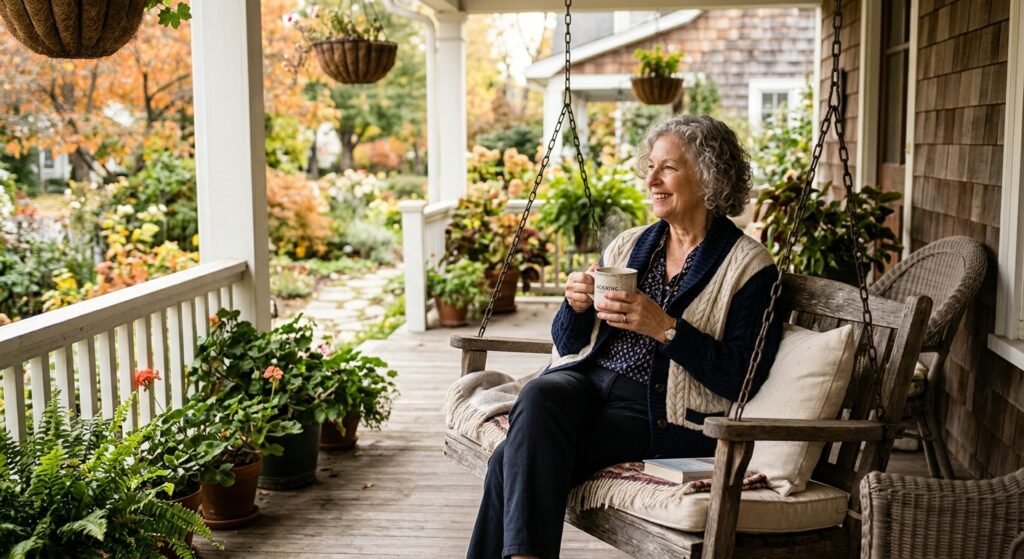
But then, a quiet evening comes along where you find yourself making a choice that would have horrified your younger self. You decline an invitation to a busy social gathering without inventing an elaborate excuse. You simply say you cannot make it, and you do not spend the rest of the night wondering if everyone is talking about your absence. You sit on your couch with a book or a quiet room, and you feel a strange, unfamiliar sensation: absolute peace. You do not feel the phantom itch of missed opportunities, and you do not feel the need to justify your quiet night to anyone.
The Heavy Weight of Constant Proof
When we are younger, life often feels like a series of auditions. You enter every room hoping to leave a specific impression. You worry about whether your career title sounds impressive enough, whether your home looks sufficiently put together, and whether you are keeping up with the invisible timeline everyone else seems to be following. Every conversation carries a faint undercurrent of performance, as if you are constantly trying to convince the world, and yourself, that you have everything figured out.
This constant vigilance is exhausting, but we accept it as the cost of admission to a successful life. We assume that the anxiety of wanting to be seen, liked, and validated is just part of the human experience that we must endure forever. We collect friendships that drain us because we fear loneliness. We say yes to projects we do not have the capacity for because we fear being seen as lazy. We build a life out of heavy things, and then we wonder why we feel so tired before the day has even begun.
And then, slowly, the years begin to accumulate. You notice a few more lines around your eyes when you laugh, or a silver thread in your hair, or the fact that your body requires a bit more care than it used to. Initially, these physical markers of time can feel like warnings. We live in a world that treats youth as the peak of the human experience, suggesting that everything after is a slow process of losing our spark. But if you pay close attention to your inner world, you start to notice something entirely different happening.
The Quiet Trade of Energy for Peace
You start to notice that your tolerance for unnecessary noise has quietly vanished. The arguments you used to participate in online or at family dinners suddenly seem incredibly unimportant. You realize that you no longer need to win every disagreement, because you have figured out that protecting your energy is far more satisfying than proving you were right. It is not that you have stopped caring about the world; it is that you have finally learned how to distinguish between what deserves your heart and what is merely loud.
People who study human development have spent a lot of time looking at this emotional transition. There is a fascinating body of research suggesting that as we get older, our emotional lives do not become duller; instead, they become more stable and refined. Researchers have found that older adults tend to experience fewer intense emotional swings and are much better at navigating social conflicts. This is not because they have grown indifferent, but because their minds have naturally begun to prioritize positive experiences and meaningful connections over trivial daily frustrations. It turns out that your brain actively helps you clear out the clutter as the years pass.
This change in perspective changes the way you view your relationships as well. You stop trying to be everything to everyone. You no longer feel the need to maintain an endless circle of acquaintances who only know the polished version of you. Instead, you find yourself gravitating toward the handful of people who know your flaws, your awkward silences, and your complicated history, and who love you anyway. You begin to appreciate the beauty of a quiet, unspectacular Tuesday evening spent with someone who does not require you to be entertaining.
Learning the Art of Letting Go
This is the secret beauty of growing older that nobody tells you about when you are busy running the race of your twenties and thirties. We are taught to fear aging because we are taught to fear loss. We worry about losing our options, our agility, and our relevance. But we rarely talk about what we gain. We gain the courage to be ordinary. We gain the relief of realizing that most of the things we worried about were never actually about us to begin with.
When you look back at the versions of yourself you left behind, you do not feel judgment anymore; you feel a gentle kind of compassion. You see the young person who was trying so hard to belong, who stayed in rooms where they felt small, and who believed that their worth was tied to how busy they were. You wish you could tell them that the storm they were fighting was mostly just background noise, and that one day, they would step out of it and simply breathe.
Perhaps the real magic of time is that it slowly strips away the layers of who we thought we had to be, leaving behind who we actually are. You realize that you do not need to have a grand purpose to live a meaningful life. You do not need to conquer the world to deserve a place in it. Sometimes, a good life is simply one where you can sit quietly with yourself at the end of the day, look around at your small corner of the world, and feel a deep sense of gratitude for the few things that truly matter.
Maybe growing older was never about losing your youth at all. Maybe it is the slow, beautiful process of arriving at yourself. It is the realization that you do not need to keep searching for home in the approval of other people, because you have finally spent enough time with yourself to build one of your own.