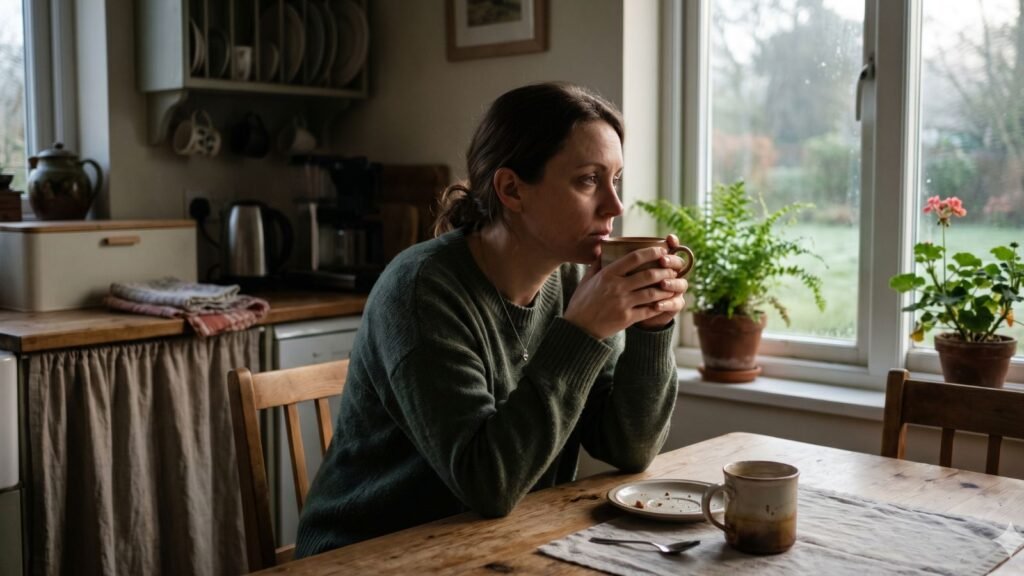
You’re sitting on the couch late at night, and the room is completely quiet. The television is off, your phone is face down on the coffee table, and instead of heading to bed, you find yourself wandering back to a moment you thought you left behind years ago. It might be the final, awkward conversation before a friendship dissolved, or the quiet afternoon you realized a relationship was over, or even a public mistake that made your stomach sink. You don’t just briefly remember it; you replay it, frame by frame, paying close attention to the expressions on people’s faces and the exact words spoken.
It seems like a strange way to spend a quiet evening. We’re often told to let go of the past, to look forward, and to focus on the positive. Yet, so many of us have this quiet habit of pulling out our old disappointments and studying them under a microscope. We return to them like a favorite album or a worn out movie we’ve watched dozens of times. It isn’t because we enjoy being unhappy, and it isn’t because we are broken. There is a deeper, quieter reason why we keep reopening those old chapters.
The Comfort of a Known Ending
When you think about it, the present moment is constantly demanding something from you. The future is even more demanding, stretching out ahead with questions you can’t answer and decisions you haven’t made yet. Tomorrow is completely unpredictable. It contains the potential for disappointment, surprise, joy, and frustration, all mixed together. Navigating all of that takes a lot of emotional energy because you’re constantly trying to anticipate what might happen next.
But the past is different. The past is completely finished. When you step back into a painful memory, there are no surprises waiting for you. You already know exactly how the argument ends, you know when the bad news arrives, and you know how you survived the aftermath. There is a strange sense of security in that predictability. Even though the memory contains an old ache, it’s an ache you’ve already learned how to carry. You don’t have to worry about what’s around the corner because you’ve already turned that corner.
This is where our minds play a clever trick on us. We often choose a familiar sadness over an unfamiliar blank slate. When the world feels too loud or uncertain, retreating into a story where we already know every line feels surprisingly grounding. It’s a way of finding solid ground, even if that ground happens to be paved with old regrets.
Why Our Minds Seek the Familiar Path
People who study the mind have actually spent a lot of time looking into this pattern. Researchers in cognitive psychology often talk about how our brains are wired to prioritize predictability over almost everything else. When we are faced with uncertainty, our stress levels naturally rise because our minds have to work extra hard to process new information. Returning to familiar memories, even painful ones, actually requires less mental effort because the neural pathways are already deeply established. It’s a mental shortcut. Your mind recognizes the old path and takes it because it knows exactly where it leads, saving you from the exhausting work of navigating the unknown.
Think of it like walking through a dense forest. It’s much easier to walk down a path you’ve traveled a hundred times, even if that path is muddy and difficult, than it is to clear a brand new trail through the thick brush. The muddy path is uncomfortable, but it’s familiar. You know where the deep puddles are, you know where the tree roots stick out, and you know how to get to the other side. The new trail, on the other hand, is a mystery. Your brain simply prefers the struggle it knows over the struggle it can’t predict.
The Bitter and the Sweet
There is also a bittersweet quality to these memories that we don’t always acknowledge. When we look back at a painful chapter, we aren’t just remembering the pain. We’re also remembering the version of ourselves who lived through it. We might miss the intensity of the feelings we had back then, or the closeness we once shared with someone, even if that closeness eventually faded into distance. In a strange way, revisiting the grief is a way of keeping the love or the connection alive.
Maybe you find yourself thinking about a job you lost or a home you had to leave. Along with the sting of that transition, there is a warmth in remembering the morning routines, the coffee in the kitchen, and the small daily habits that defined that era of your life. The sadness and the sweetness are knotted together so tightly that you can’t untangle one from the other. To keep the good parts of the memory, you have to accept the ache that comes with them. So, you visit both.
We do this because we want to feel connected to our own history. We want to assure ourselves that the chapters we lived through actually mattered, that the choices we made were meaningful, and that the person we used to be is still a part of who we are today. It’s a quiet way of keeping our own stories whole, even the parts that ended in tears.
A Different Kind of Safety
The next time you find yourself staring at the ceiling, replaying an old heartbreak or an ancient embarrassment, you don’t need to judge yourself for looking backward. You don’t need to worry that you’re failing to move on or that you’re secretly sabotaging your own happiness. You are simply doing what people have always done when the world feels too big and uncertain. You are looking for a story you already know by heart.
Perhaps the goal isn’t to banish these memories completely or to pretend they don’t have a pull on us. Maybe the real realization is that familiar pain can feel safer than unfamiliar uncertainty. Once we understand that we’re just looking for safety, we can be a little gentler with ourselves. We can look at those old, difficult chapters, appreciate them for the lessons they held, and then softly close the book, knowing we’re ready to see what the next page has to write.