If you’ve ever sat at a chaotic dinner table where one child is crying about homework while another is spilling juice, you probably remember the exact feeling of looking at your third child, who is quietly eating their dinner and clearing their own plate without being asked. In those moments, a wave of relief washes over you. You look at them and think, thank goodness I don’t have to worry about that one.
We call these children easy. They are the ones who get good grades, follow the rules, and seem to navigate the transitions of growing up with a quiet, independent grace. They don’t make demands. They don’t throw tantrums. When life gets stressful or busy, they naturally step back, adjusting their own needs to fit whatever space is left over. It’s a quality that feels like a blessing, especially in a world that always feels a little too loud and fast.
The Quiet Cost of Being Easy
But often, if you look closer, that independence isn’t actually a sign of peaceful confidence. It’s a silent agreement they’ve made with themselves. When a family is dealing with stress, whether it’s a demanding sibling, financial strain, or simply the daily rush of modern life, children are remarkably perceptive. They notice where the energy goes. They see how tired their parents are. And sometimes, a child decides that the best way they can show love is by never causing a single problem.
They begin to build a version of themselves that is entirely self-sufficient. They solve their own conflicts, manage their own anxieties, and keep their worries tucked safely away in their pockets. They become the mature one, the little adult, the reliable pillar of the household. It’s a role that brings plenty of praise, which only reinforces their belief that their worth is directly tied to their lack of problems.
What we don’t always realize is that carrying this expectation is a profound strain. When a child learns that they are loved for being easy, they also learn that their difficult feelings are a threat to the family peace. They start to believe that if they show anger, sadness, or fear, they will become a burden. So they keep those feelings hidden, hoping that if they keep the water calm, everything will be okay.
When the Quietness Starts to Crack
The trouble with holding your breath is that eventually, you have to breathe. For the easy child, the break rarely looks like a dramatic rebellion. It doesn’t usually involve slammed doors or loud arguments. Instead, it looks like a quiet unraveling.
It might start when a flawless report card suddenly has a single average grade, and the child reacts with a level of panic that seems completely out of proportion to the mistake. It might show up as physical symptoms, like stomach aches before school or sleepless nights that they try to hide. Sometimes, it’s a sudden, quiet withdrawal, where they stop sharing the small details of their day and retreat into a silent world of their own. You look at them and realize that the child who never needed anything is suddenly looking very small, and very tired.
Psychological research into family dynamics often shows that children who assume the role of the helper or the quiet observer are frequently carrying high levels of internal anxiety. Experts suggest that when a child’s emotional needs are consistently bypassed because they seem to be doing fine, they can develop a deep-seated belief that they aren’t allowed to have struggles. They don’t have a space where it is safe to fail, because they believe the stability of their family depends on their perfection.
Seeing the Child Who Doesn’t Ask to Be Seen
When you see this quiet strain starting to show, the instinct as a parent is often to look for things to fix. You want to solve the school stress or find a quick answer to their sudden anxiety. But the most meaningful thing you can offer isn’t a solution. It’s the permission to be messy.
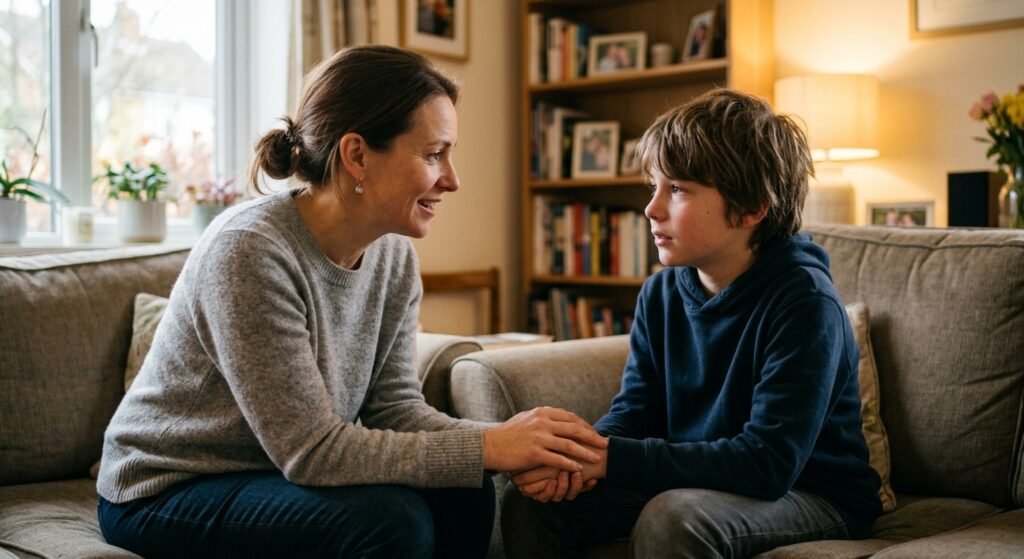
It means sitting with them on the edge of their bed and letting them know that it’s okay to have a bad day. It means quietly assuring them, not with a lesson but with your presence, that they don’t have to earn their place at the table by being perfect. When they do make a mistake or show a difficult emotion, it means meeting that moment with warmth rather than surprise or disappointment.
We often spend so much time trying to quiet the loudest parts of our lives that we forget to listen to the silence. The child who never complains still needs to be heard. The child who always figures it out still needs to be helped. By offering them a safe place to fall apart, we show them that they are loved for who they are, not just for how little they ask of us.
Maybe the child who never causes trouble wasn’t actually thriving all along. Maybe they were just waiting for someone to notice that they were holding their breath, hoping someone would tell them it is finally safe to let it out.