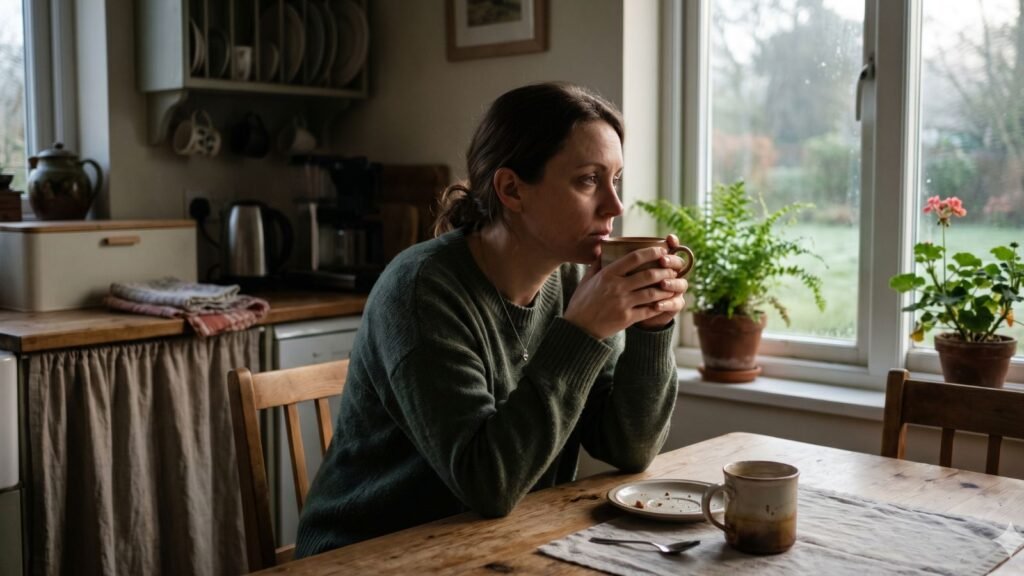
You might notice it first during a quiet drive home or while sitting in a kitchen that is unusually still. Something wonderful happens at work, or maybe you finally make peace with an old, lingering worry, and your first instinct isn’t to reach for your phone. You don’t text the group chat, you don’t post a vague but hopeful update online, and you don’t immediately call a friend to talk through every single detail. Instead, you simply let the feeling sit beside you on the passenger seat, keeping it company all by yourself for a little while.
It’s a subtle change, and if you aren’t paying attention, you might mistake it for loneliness or exhaustion. For years, we’re taught that sharing is the ultimate proof of connection. We tell our stories to feel seen, we post our milestones to feel celebrated, and we air our struggles to feel supported. But eventually, many of us reach a quiet intersection where we start to wonder if we’ve been offering up too much of ourselves to a world that doesn’t always know how to care for what we give it.
Choosing to hold back isn’t usually born out of sudden anger or a desire to push people away. It’s more like a gentle step backward. You start to notice how much energy it takes to explain your choices, your dreams, or even your sadness to people who are only half-listening. You realize that when you share a fragile, unfinished hope with someone else, their skepticism can quietly bruise it before it even has a chance to grow. So, you start keeping the doors closed just a little bit more.
The Difference Between Hiding and Protecting
People who spend their lives studying how we connect often point out that healthy relationships don’t actually require total transparency. They talk about the importance of boundary regulation, but in plain terms, it’s just the art of knowing where you end and someone else begins. There’s a vast difference between keeping secrets out of fear and keeping things private out of respect for your own peace. When we share everything, we inadvertently invite the entire world to vote on our lives. We let other people’s opinions, anxieties, and casual judgments dilute experiences that were meant to be entirely ours.
Think about a time you shared a piece of news you were genuinely excited about, only for someone to respond with a lukewarm comment or a warning about what could go wrong. In an instant, your joy felt a little smaller, a little less certain. That wasn’t because the other person was trying to be unkind. It’s simply because they cannot see your life through your eyes. When we protect our stories until they are strong enough to stand on their own, we aren’t hiding from the world. We’re just giving our inner lives the quiet environment they need to thrive.
The Energy of Keeping House
There’s also the matter of emotional energy. It takes a surprising amount of effort to constantly translate our internal world for external consumption. When we feel obligated to explain our career changes, our lifestyle decisions, or why we chose to spend a weekend alone, we’re essentially asking for permission to live our own lives. Over time, that constant explanation becomes draining. It turns our private choices into public discussions.
By choosing to share less, you quietly reclaim your own timeline. You start to find a deep, comforting rhythm in experiences that belong only to you. A morning walk doesn’t need to be documented to be beautiful. A difficult decision doesn’t need to be validated by a panel of friends to be correct. A quiet evening at home doesn’t need to be explained as a self-care ritual; it can just be a night where you chose to close the door and rest.
Finding Comfort in the Unsaid
This quieter way of living also changes the way we connect with the people who matter most. When you stop spreading your energy thin across dozens of casual acquaintances or digital spectators, you have so much more to offer the select few who truly understand you. The conversations become richer because they aren’t rehearsed. You aren’t offering a polished summary of your life; you’re offering your actual presence.
We often worry that if we stop sharing so much, we’ll slowly become invisible to the people around us. But maybe the opposite is true. Maybe by keeping some things sacred, we finally start to see ourselves clearly. We discover that our worth isn’t measured by how much of our lives we put on display, but by how deeply we inhabit the moments nobody else ever sees.
Ultimately, choosing to share less isn’t about building a wall to keep people out. It’s about realizing that the most beautiful parts of your life don’t need an audience to be real. You don’t owe anyone an explanation for how you grow, how you heal, or how you spend your quiet hours. Sometimes, the most profound act of self-care isn’t speaking up or standing out, but quietly holding your own hand and keeping your favorite stories to yourself.