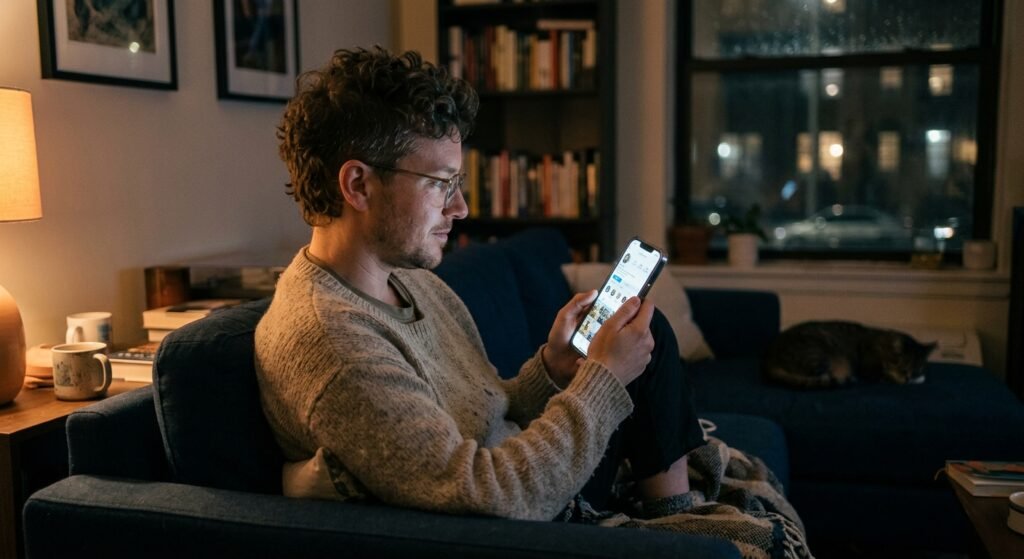
You’re sitting on your couch on a quiet Tuesday evening, scrolling through your phone, when you realize you know exactly what an old college friend had for breakfast, what their living room looks like after a remodel, and how their toddler reacted to their first haircut. You haven’t spoken to this person in five years. Yet, if someone asked, you’d probably say you’re still in touch. We’ve built a world where we know everything about everyone’s day to day existence while knowing almost nothing about what’s actually happening inside their minds.
It’s a strange kind of comfort, this digital closeness we’ve created. We look at those little glowing green dots next to names on a screen and feel like we’re part of a bustling community. We watch stories unfold in short clips, double tapping our way through birthdays, promotions, and vacation snapshots. We feel like we’re participating in each other’s lives. But there’s a quiet, aching difference between watching someone’s life and sharing it.
The Illusion of the Green Dot
When you actually stop to think about it, much of our modern socializing has become a form of passive observation. We gather data instead of cultivating connection. You might know that your former coworker just started a new job, but you don’t know if they’re quietly terrified they made the wrong choice. You see that your childhood friend posted a beautiful picture of a sunset, but you don’t know that they spent the afternoon feeling deeply lonely.
Psychologists have a term for this constant, low level knowledge we have about each other’s lives. They call it ambient awareness. It’s the mental equivalent of keeping a window open to a busy street. You can hear the chatter and see the movement, but you aren’t actually talking to anyone. It feels like connection, but it’s really just information.
Research into how we interact online suggests that this constant flow of updates can trick our brains. We have a finite amount of emotional energy, and when we consume dozens of digital updates a day, our minds register that we’ve socialized. We feel full, yet we remain starved. A study from several years ago pointed out that active communication, like a direct message or a phone call, boosts our sense of wellbeing, while passive scrolling actually increases feelings of isolation. We’re spending our relational currency on the digital equivalent of empty calories.
Why Being Seen Isn’t the Same as Being Known
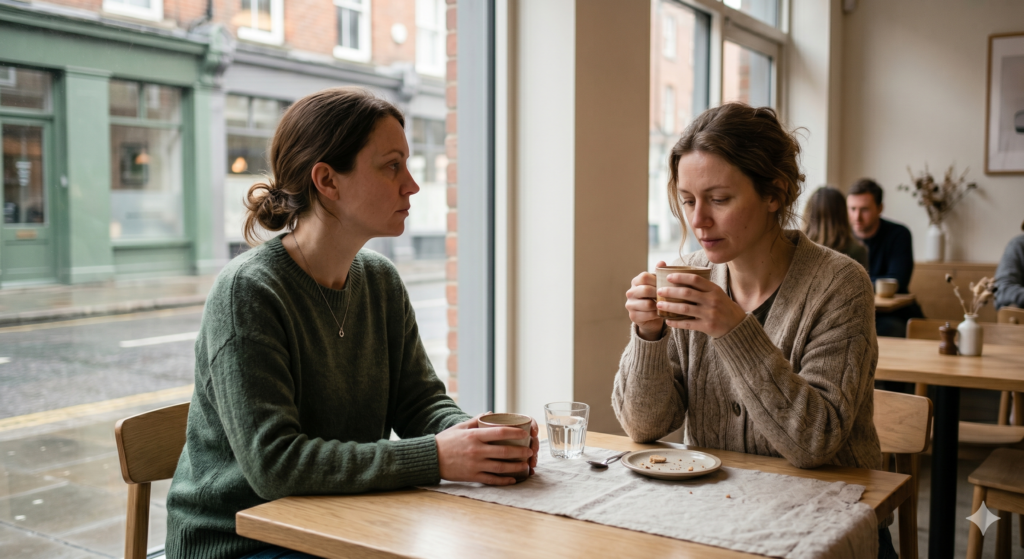
Think about the last time you felt truly understood. It probably didn’t happen because someone liked your post. It happened during a late night phone call when your voice cracked, or over a cup of coffee when you admitted you were struggling, and the other person simply nodded and said they’d been there too. True intimacy requires vulnerability, and vulnerability requires a safe space that a public platform simply cannot provide.
On social media, we tend to present the curated versions of ourselves. We share the highlights, the polished thoughts, and the beautiful angles. Even when we try to be authentic, we’re still editing. We’re performing our lives for an audience rather than sharing our lives with a friend. And when we live in public, we constantly run the risk of being surrounded by people who see us, yet feeling completely alone.
Reclaiming the Quiet Spaces
Maybe the solution isn’t to throw our phones into the ocean or delete every account we own. That feels too dramatic, and honestly, it’s not very practical. Instead, maybe we just need to start asking different questions when we look at our screens.
The next time you see a friend’s update, instead of leaving a quick comment or a heart, what if you took a moment to send a text? What if you bypassed the public square and reached out directly to ask how they’re really doing? It takes more effort, of course. It requires us to slow down and invest our time instead of just our attention. But those quiet, direct lines of communication are where real friendships actually live.
Because at the end of the day, visibility is not the same thing as closeness. We don’t need hundreds of people witnessing our lives to feel valued. We just need a few people who are willing to sit in the quiet with us, who know us when the screens are off, and who make us feel like we belong. Maybe the loneliness we feel online isn’t because we’re disconnected. Maybe it’s because we’ve confused being witnessed with being known.