
Think about that specific moment when the front door clicks shut and the apartment goes completely quiet. Maybe your partner left for a weekend trip, or the friends you spent the evening entertaining have finally gone home. For a few seconds, the silence feels almost loud. Your first instinct is probably to reach for your phone, turn on the television, or put on some music just to fill the corners of the room. We’ve all done it because an empty room can sometimes feel like a test we aren’t quite prepared to take.
At first, that stillness can feel a bit restless. You wander from the kitchen to the living room, opening the fridge without really being hungry, adjusting a pillow that didn’t need moving. It’s a strange sort of friction, this transition from being surrounded by the world to being entirely on your own. We spend so much of our lives responding to the voices, demands, and expectations of others that when those inputs suddenly vanish, we don’t always know what to do with our own hands.
The Strange Unfamiliarity of Your Own Company
There is a distinct difference between being lonely and being alone, though we often mistake one for the other. Loneliness is a feeling of lack, a sharp ache that tells us we are disconnected from the people we care about. Solitude, however, is something else entirely. It’s a quiet clearing in the woods of a busy life. Yet, because we rarely get to spend time there, our initial reaction to solitude is often a feeling of unease, as if we are waiting for the other shoe to drop or for the real world to resume.
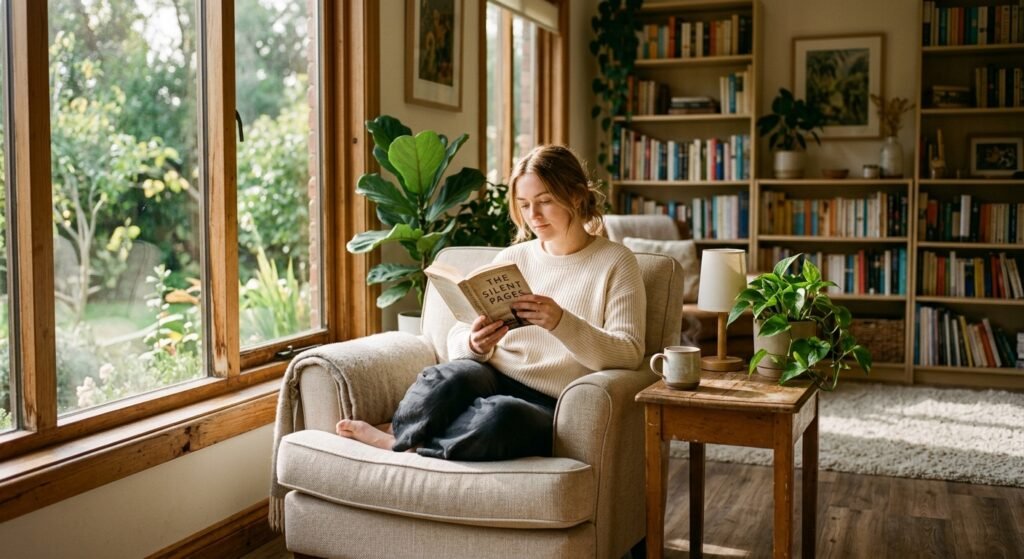
But if you sit with that quietness for just a little while longer without trying to cure it, something comforting begins to happen. The urge to distract yourself starts to fade. You stop looking at your phone every few minutes to see if someone has texted. You notice the way the afternoon light patterns itself across the floorboards. You make a cup of tea and actually drink it while it is hot, without checking emails or planning your next meeting. You are simply there, existing in a space that belongs completely to you.
The Small Pleasures of an Unwatched Life
Those who study how our minds process quiet time often point out that we live in a world of constant connectivity, where our attention is constantly divided. Research in observational psychology suggests that when we are constantly receiving notifications and managing interactions, our brains remain in a state of continuous anticipation. It’s only when we step away from this stream of external input that our minds can return to a natural baseline. This baseline isn’t a state of boredom; it’s a restorative mode where we process our lives and form a cohesive sense of who we actually are.
When you are completely by yourself, you don’t have to explain your choices to anyone. You can eat breakfast food for dinner, leave a book open on the kitchen table, or spend an hour looking out the window without feeling the need to justify how you spend your time. There is a profound freedom in being unwatched. In a world that constantly asks us to perform, edit, and present ourselves for the approval of others, being alone is the one place where the audience completely disappears.
We often spend our lives trying to keep everyone else comfortable. We soften our voices, we compromise on what to watch or eat, and we constantly adjust our personal energy to match the room. When you are alone, that constant adjustment finally stops. Your nervous system gets a chance to settle. You realize that you don’t have to be interesting, productive, or helpful. You can just be. And that quiet realization is where true contentment begins to take root.
The Room Inside Yourself
Many of us spend years running away from solitude because we are afraid of what we might find in the quiet. We worry that if we stop moving, we will have to face our regrets, our anxieties, or our deepest uncertainties. But when we actually open the door to those empty spaces, we usually find something much kinder than we expected. We don’t find a cold void; we find ourselves waiting there, patient and ready to be known.
Maybe solitude isn’t a state of isolation to be endured until someone else arrives to rescue you. Maybe it’s one of life’s gentlest comforts, a sanctuary where you can gather up the scattered pieces of your mind and put them back together. When you learn to enjoy your own company, you stop looking to the world to constantly validate your existence. You realize that the quiet empty spaces aren’t empty at all; they are full of the simple, peaceful reality of your own being, and that is more than enough.