
There was a time in your life when finding your people required almost no conscious planning. You simply walked out your front door, or down the hallway of your college dorm, or into the breakroom at your first job, and there they were. Connection was built into the very architecture of your day. You didn’t need to coordinate calendars weeks in advance or send group texts trying to find a three-hour window where four different schedules aligned. You just existed in the same space, and friendship happened as a natural byproduct of proximity.
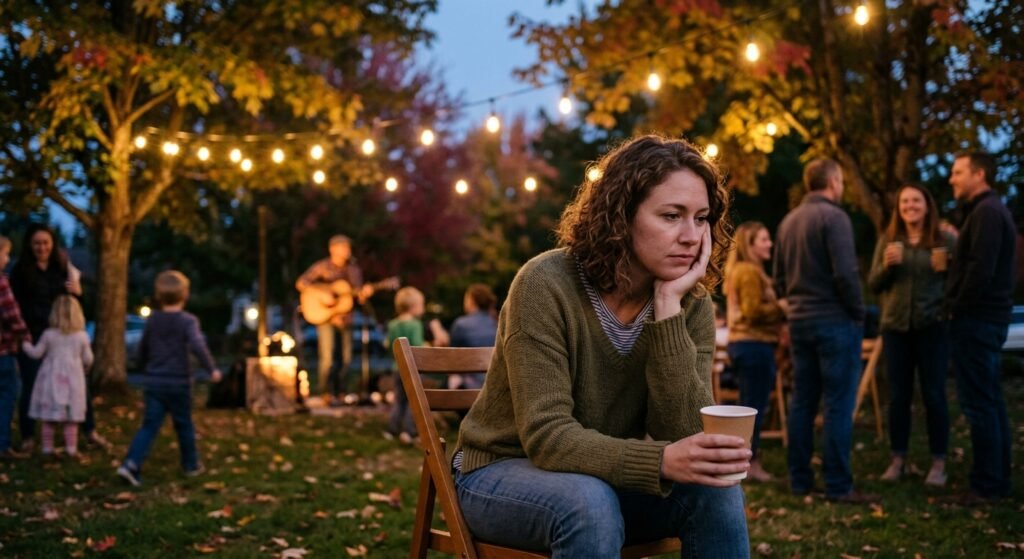
Then, slowly, the landscape changed. People bought houses in different neighborhoods, took new jobs with different hours, or started families that required their full attention. The casual drop-in visits became rare, and the spontaneous late-night conversations turned into planned dinners that felt more like business meetings than catch-ups. One day you look around your quiet living room on a Saturday night and realize that if you want to see someone, you’re going to have to make it happen yourself. It’s a strange, quiet moment when you first notice that community has stopped feeling like a given.
The Illusion of Effortless Belonging
When we’re younger, we often mistake convenience for chemistry. We assume the people we see every day are our lifelong partners in adventure simply because they’re there, and because being together is easy. Sociologists who study relationship patterns often point out that deep bonds require a few specific ingredients: close physical proximity, repeated and unplanned interactions, and a setting that encourages vulnerable conversation. In school or early career settings, those ingredients are handed to us for free. We don’t have to work for them, so we don’t always learn how to build them on our own.
The trouble begins when those structural scaffolds disappear. When you no longer share a lecture hall or a bullpen, the natural glue of daily life melts away. It’s easy to interpret this transition as a personal failure, or worse, as a sign that your friends no longer care about you. You might find yourself waiting for the phone to ring, holding onto a quiet resentment that nobody seems to be reaching out. But the truth is usually much less personal. Everyone is simply trying to keep their own lives afloat, waiting for someone else to build the bridge.
The Hidden Cost of Waiting
There’s a specific kind of loneliness that comes from wanting connection but refusing to be the one who asks for it. We tell ourselves that if people really wanted to spend time with us, they’d make the effort. We protect our pride by staying quiet, viewing our empty calendars as evidence of our own lack of value. It feels safer to stay home than to risk the vulnerability of sending a text that asks if someone is free to grab coffee next Tuesday.
Yet, research into social connection suggests that most people are actually starving for the exact same invitation you’re hesitant to send. Studies on friendship show that it takes about two hundred hours of shared contact to move from being casual acquaintances to close friends. When you’re an adult, those two hundred hours don’t happen by accident. They have to be claimed, block by block, out of the busy schedules we use to protect ourselves from the quiet parts of our lives.
Choosing to Build Rather Than Find
Perhaps the most profound realization we can have about friendship in adulthood is that community isn’t something we stumble upon; it’s something we have to construct with our own hands. We often talk about finding our village, as if there’s a fully formed neighborhood waiting for us to arrive and claim our spot. In reality, the village is built one awkward invitation, one repeated coffee date, and one shared chore at a time.
This means letting go of the expectation that connection should always feel easy or spontaneous. It means accepting that you might have to be the coordinator, the initiator, the person who hosts the dinner or suggests the walk. It requires us to show up even when we’re tired, and to offer grace when others are too overwhelmed to return the favor immediately. When we stop waiting for community to happen to us, we give ourselves permission to start creating it.
Ultimately, the people we miss are often missing us too, sitting in their own quiet living rooms, wondering why the world feels so disconnected. Loneliness isn’t a sign that you don’t belong anywhere; it’s simply a signal that it’s time to build something new. And maybe the most comforting thought is that the door is never truly closed. It just requires you to be the one who reaches out and turns the handle.