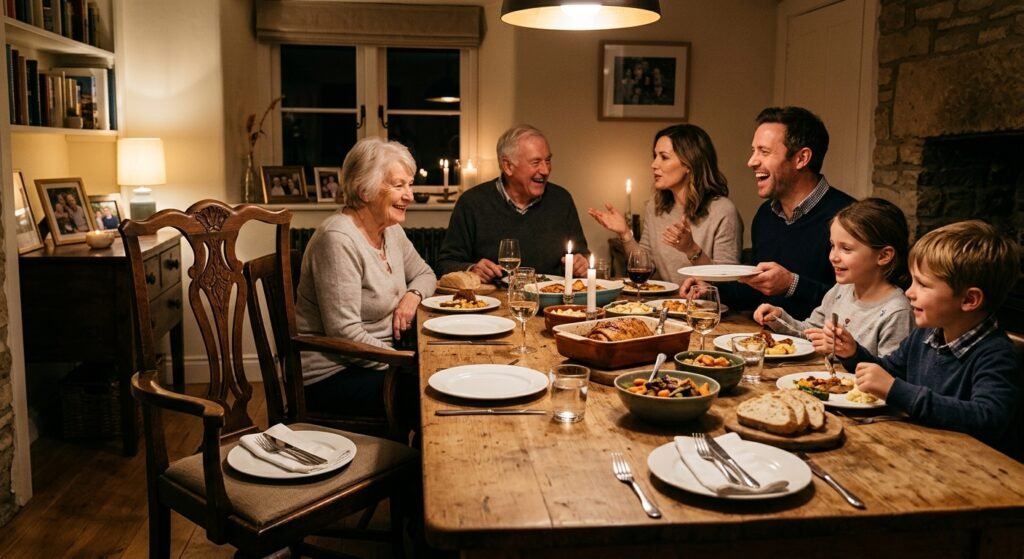
You notice it first in the quiet spaces. It’s the empty chair at the end of the table that nobody quite knows what to do with, or the sudden, strange lull in a conversation where a specific laugh used to live. For months, or maybe even years, your group of friends or your family had a rhythm. You knew exactly who would tell the loud stories, who would quietly roll their eyes, and who would keep the peace when things got a little too tense. Then, someone leaves.
Whether they moved across the country for a new job, parted ways after a long relationship, or simply drifted out of the circle, their departure does something strange to the people who remain. You don’t just miss the person. You miss the version of the group that existed when they were there. It’s like a finely balanced mobile hanging from the ceiling; when you snip one piece away, everything else tilts and spins, trying to find a new center of balance.
The Roles We Didn’t Realize We Were Playing
We don’t often think about the invisible jobs we assign to each other in our relationships. In any group, people quietly divide the emotional labor. One person is the planner who makes sure everyone actually shows up. Another is the instigator of fun, the one who coaxes everyone into staying out just an hour longer. Another is the buffer, the person whose quiet presence defuses tension before it can turn into something worse.
When one of those people is suddenly gone, the remaining group is forced to adjust. If the planner leaves, you find yourselves sitting in silence for weeks because nobody wants to be the one to send the first text message. If the buffer leaves, old arguments start rising to the surface because there’s no longer anyone there to gently steer the conversation toward safer ground. You realize, with a touch of sadness, that you weren’t just reacting to each other. You were reacting to the specific combination of everyone in the room.
The Awkward Dance of Rebalancing
It’s tempting to try to fill the gap. Someone else tries to start making the dinner plans, or someone else tries to step up and tell the jokes. But it often feels forced, like wearing a coat that belongs to someone else. The fit is just slightly off, and everyone in the room can feel it.
This struggle isn’t about a lack of love or effort. It’s simply that groups of people aren’t just collections of individuals; they are delicate ecosystems. When the ecosystem changes, everyone has to learn a new way of being. You might find yourself feeling more anxious than you used to, or perhaps you feel a strange pressure to be more outgoing than you actually are, simply because the group needs someone to fill the quiet. It’s exhausting to try to be the glue when you’re also trying to process your own sense of loss.
Grieving the Dynamic, Not Just the Person
What makes this transition so complicated is that it’s a very quiet kind of grief. If someone moves away or a relationship ends, we understand why we feel sad about losing them. But we don’t always know how to talk about the sadness of losing the dynamic we built together. It feels almost selfish to mourn the loss of a Sunday routine or workplace banter when the actual person is out there living a new life.
Yet, that collective energy was real, and it took time to build. It was made of shared jokes that don’t make sense to anyone else, unspoken understandings, and a unique sense of safety that only that specific group could create. When someone leaves, that version of the group is gone. Even if they come back to visit, it’s rarely the same. You’ve all started adjusting to their absence, and they’ve started adapting to a world without you. The puzzle pieces don’t fit together quite the same way anymore.
Finding Peace in the New Pattern
Perhaps the realization we’re searching for isn’t how to rebuild what we lost, but how to let the new shape of our lives exist without comparing it to the old one. We spend so much energy trying to preserve the past, trying to make the table feel just as full as it used to be. But maybe change isn’t a failure of the group. Maybe it’s just the natural way things grow.
When someone leaves, they take their piece of the puzzle with them, and that’s okay. The space they left behind isn’t just an empty spot; it’s a testament to the fact that they mattered. It’s proof that their presence made a difference. And as the rest of you slowly learn to lean into one another in new ways, you might find that the dynamic doesn’t have to be worse. It’s just different. You’re not the only one sitting at a quiet table, wondering how to talk to the people who are still there, while quietly missing the one who isn’t.