
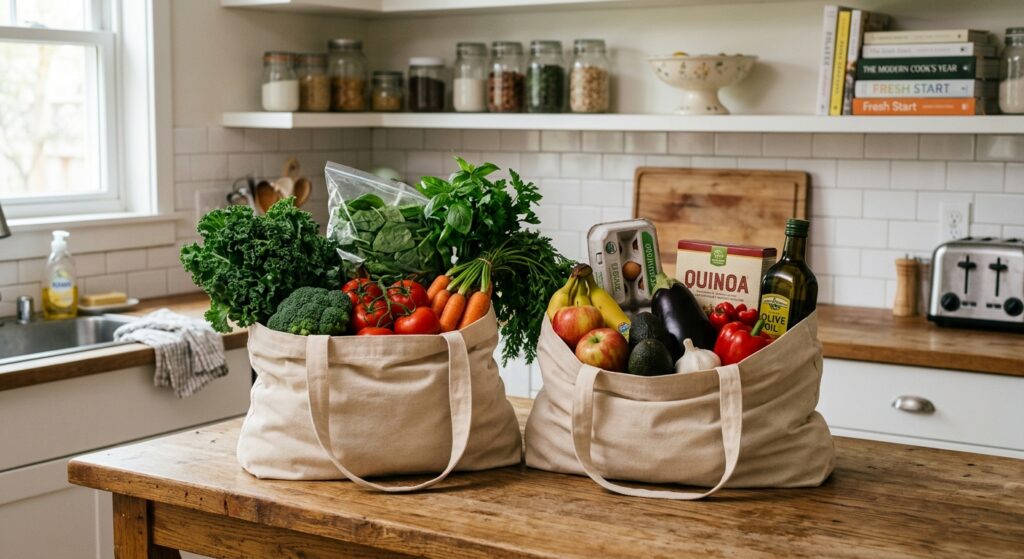
If you’ve ever stood in front of your open refrigerator on a Sunday evening, staring at a bag of rapidly yellowing spinach and a pint of organic berries that have started to lose their shine, you already know this feeling. There’s a specific, quiet guilt that comes with tossing unused produce into the compost bin. You bought those items just a few days ago with the best intentions, fully believing you’d transform them into a vibrant, nourishing meal. Yet, here you’re ordering takeout while the fresh ingredients you carefully selected slowly turn to mush.
It’s easy to label this habit as simple forgetfulness or poor planning. We tell ourselves we’ll do better next week, promising we’ll stick to a stricter budget or a more realistic meal plan. But if you look closer at those moments in the grocery store aisle, you’ll find something much deeper than a simple desire for nutrition. You weren’t just buying vegetables; you were buying a version of yourself that felt calm, organized, and entirely in control.
The Supermarket as a Sanctuary of Possibility
Think about the atmosphere of a modern grocery store. The bright, even lighting, the neatly stacked pyramids of citrus fruits, the water mist spraying over the crisp greens, and the soft music playing in the background all work together to create an environment of absolute order. For thirty minutes, you step out of a chaotic world and into a space where every problem seems solvable. If you feel tired, there’s a sparkling water to refresh you. If you feel disorganized, there’s a shelf of neatly labeled jars waiting to bring structure to your pantry.
In this space, we naturally begin to shop for our ideal selves. The person who buys the raw beets and the fresh rosemary is someone who has the time to roast vegetables on a Tuesday night. They aren’t stressed by work deadlines, they don’t have a sink full of dirty dishes, and they certainly aren’t too exhausted to cook after a long commute. By placing those items in your cart, you get to experience the emotional satisfaction of being that organized, peaceful person before you even leave the store. It’s a form of emotional reassurance that we can purchase for the price of a few bundles of herbs.
The Quiet Search for Security
This behavior is actually a very natural response to stress. When our lives feel unpredictable or overwhelming, we instinctively look for small ways to regain a sense of agency. Consumer psychologists have noted that shopping often serves as a compensatory mechanism. When we feel a lack of control over our careers, our relationships, or our future, we focus on the one environment where our choices have immediate, tangible outcomes: the store shelf.
Research into buying habits reveals that we often purchase items not for what they do, but for what they symbolize. A full refrigerator has stood as a symbol of safety and abundance for generations. When we stock up on wholesome ingredients, we’re building a physical barrier against uncertainty. It feels comforting to know those healthy options are waiting for us, even if we suspect we’ll be too tired to actually prepare them. The act of buying is the comfort itself.
The Transition from Aspiration to Reality
The trouble, of course, is that the grocery cart eventually has to come home. Once we cross our own threshold, the magical atmosphere of the supermarket fades, and we’re met with the reality of our actual lives. The work emails are still waiting, the energy levels are low, and the time we imagined we’d have suddenly evaporates. The raw ingredients that felt like exciting possibilities in the store aisle now look like a series of demanding chores waiting to be completed.
We look at the squash we bought and realize it requires peeling, chopping, and roasting. We look at the fresh herbs and realize they need to be washed and minced. Suddenly, the meal we wanted to cook feels like another task on an already endless to-do list. In those moments, choosing takeout isn’t a sign of laziness. It’s a logical decision made by a tired mind that simply needs comfort and ease after a demanding day.
And yet, the guilt remains. We look at the wasted food and feel like we’ve failed some invisible test of adulthood. We assume that organized people never let their produce spoil, and we promise we’ll be more disciplined next time. But perhaps that guilt is misplaced.
Finding Comfort in the Attempt
Maybe those yellowing greens and unused ingredients aren’t evidence of personal failure at all. What if they’re actually quiet signs of our persistent hope? Every time you buy ingredients you don’t end up cooking, you’re making a quiet statement that you still believe in a version of tomorrow that is peaceful, healthy, and spacious. You are attempting to care for yourself, even if the execution doesn’t quite match the aspiration.
When we stop judging ourselves for the food we waste, we can start to appreciate the emotional comfort those groceries provided when we needed it most. They offered us a moment of control in a busy week, a sense of security in an unpredictable world, and a brief glimpse of the peaceful life we’re all trying to build. The next time you find yourself cleaning out the refrigerator, try to look at those unused items with kindness. They did their job the moment you put them in your cart, even if they never made it to the plate.