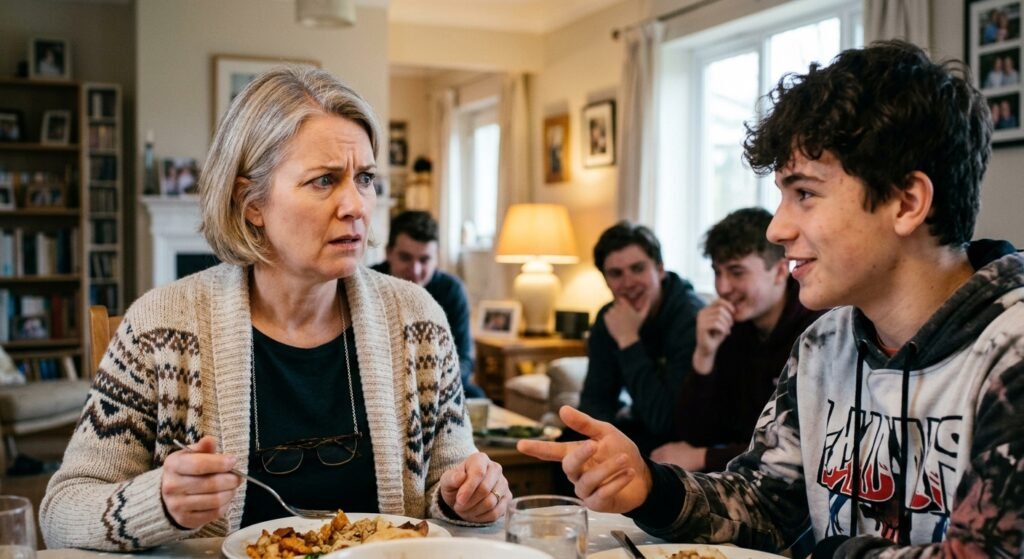
Can we talk about this for a second?
You’re walking down the cereal aisle on a casual Tuesday afternoon when a song starts playing over the store speakers. It isn’t some elevator track. It’s the exact song you used to play on repeat in your car during your senior year of high school. It’s the track that defined your entire summer back when you thought twenty five was ancient.
You find yourself gently nodding your head. You might even start humming the chorus while comparing the prices of organic oats. It feels great. You feel young and connected to your roots. Then, you look over and notice the teenager stocking the granola bars.
They’re looking at you with that polite, slightly detached expression you used to give your parents when they talked about their favorite bands. They aren’t being mean. They’re just observing an older person enjoying the classics. Suddenly, it hits you. You aren’t the cool young customer who happens to love nostalgic music. You’re the demographic this playlist was designed to keep happy.
The Great Denial
We spend years telling ourselves a story about aging. We think it’s something that happens later, to other people, or perhaps through some formal ceremony. We convince ourselves that as long as we know what the new slang words mean, even if we never use them, we’re still firmly in the younger category.
But the transition is much quieter than that. It sneaks up on you in the middle of everyday decisions that feel completely reasonable in the moment.
For instance, consider the sudden interest in comfortable footwear. There was a time when you’d wear shoes that practically guaranteed blisters just because they looked good. Now, you find yourself standing in a shoe store, looking at a pair of sneakers with extra arch support, and thinking how excellent they’d be for walking around the block. You don’t care if they look like orthopedic bread loaves. You care that they feel like walking on clouds.
The funny thing is how you justify it. You don’t say you’re getting older. Instead, you say you’re just prioritizing comfort because you have a busy week ahead. You make it sound like a strategic lifestyle choice rather than a physical necessity.
The Vocabulary Test
Then there’s the way we talk. You start using phrases you used to roll your eyes at. You find yourself saying, it’s starting to get late, when the clock only reads eight. You look at teenagers on the sidewalk and your first thought is simply that you hope they have their jackets because it looks chilly.
You aren’t trying to be a parent. But the urge to make sure everyone is warm and well fed seems to activate automatically once you cross a certain invisible line.
You also begin to realize that your references are starting to expire. You tell a story about a movie that came out when you were in college, and the younger person you’re talking to smiles politely and says their mother loves that movie. That’s the moment where time seems to stand still. You realize that your golden years of memories have been filed away under the classic category, right next to black and white television shows.
The Sounds of Settlement
We also have to talk about the physical sound effects. Nobody warns you about this. When you were twenty, you could stand up from a couch without a single sound escaping your body. You just stood up.
Now, every time you stand up from a low chair, your body insists on releasing a little sigh or a quiet groan. It isn’t even because you’re in pain. It’s just the official announcement that your body is currently transitioning from a sitting position to a standing position. It requires a countdown and a tiny bit of momentum.
If you catch yourself doing it, you immediately try to cover it up. You turn the groan into a cough, or you pretend you were just sighing about something on your phone. But you know the truth. Your body is starting to require a soundtrack for basic movement.
There’s also the sudden appreciation for good lighting. You go to a restaurant that’s beautifully designed, but the menus are printed in a tiny font and the room is lit by a single candle. Instead of feeling the romantic atmosphere, you find yourself squinting, holding the menu further away, and secretly wishing you’d brought a small flashlight. You might even use your phone flashlight, telling yourself it’s just because the print is unusually small this evening. It’s never the print. It’s always the eyes.
The Best Part
The beauty of this realization is that it actually feels quite nice once you stop fighting it. There’s a quiet freedom in realizing you no longer have to care about being on the cutting edge of every trend.
You don’t have to pretend to enjoy loud venues where you can’t hear the person sitting next to you. You don’t have to stay up until midnight on a Tuesday just to prove you can. You can go to bed at nine, sleep for eight hours, and wake up feeling like you’ve won a prize.
So the next time you hear your favorite high school song playing while you’re looking at cereal, don’t panic. Go ahead and hum along. Smile at the teenager stocking the shelves, even if they don’t understand the magic of that track. You’ve paid your dues, you’ve earned your comfortable shoes, and honestly, we all do this eventually.
You’ll probably do it again tomorrow, and you’ll look great doing it.