
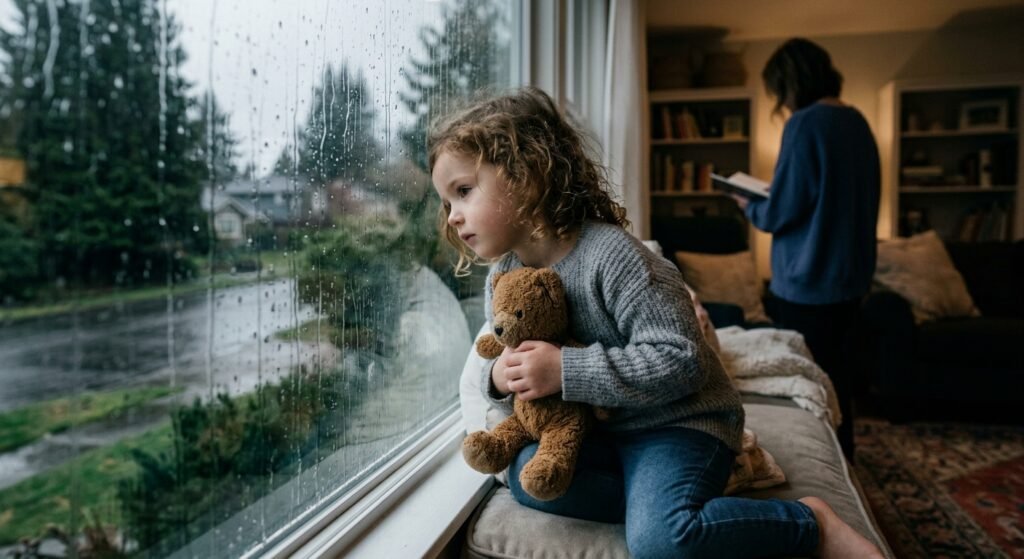
If you pay close attention to how you behave when someone you love is slightly late coming home, you can usually trace that feeling back to a quiet hallway from years ago. You might be sitting on the couch, watching the clock tick past the agreed upon time, and a strange, cold panic starts to settle in your chest. It isn’t just that they’re late; it’s that your mind immediately leaps to the worst possible conclusion. You don’t think they got stuck in traffic. You think they’ve decided to leave.
That immediate leap isn’t a design flaw in your personality. It’s an echo. For many of us, the first time we realized that love could simply disappear was not in a dramatic adult breakup. It was in the quiet, confusing spaces of childhood, watching a parent pack a bag, listening to hushed arguments through closed bedroom doors, or realizing that someone who used to hold our hand every day was suddenly no longer around.
The Day the World Lost Its Balance
When you are small, the adults in your life are not just people; they are the architecture of your entire world. You assume the walls will stay upright and the roof will stay on because you’ve never known anything else. But when a primary source of love and safety suddenly vanishes, whether through a sudden departure, a slow emotional withdrawal, or a family breaking apart, that architecture collapses.
A child doesn’t have the emotional tools to process why an adult leaves. They don’t understand adult unhappiness, financial stress, or personal struggles. Instead, they make the only logical calculation a child can make, which is that if something this safe can disappear, then nothing is truly safe. It is a quiet, devastating realization that reshapes how they look at every relationship that follows.
Carrying the Ghost of Yesterday into Today
People who study how we connect with others often point out that our earliest bonds create a blueprint for our adult lives. When those early bonds are disrupted, we often develop a hypervigilance about loss. In adult relationships, this looks like constantly scanning the horizon for signs of trouble. You might find yourself analyzing the tone of a text message, worrying when your partner seems a little quiet during dinner, or constantly asking for reassurance that they still want to be with you.
It’s a tiring way to live, but it makes complete sense when you understand what your younger self is trying to do. That child is trying to make sure they never get caught off guard again. If they can predict the departure before it happens, they think they can protect themselves from the pain of the surprise.
The Urge to Run Before They Can Leave
For others, the lesson manifests in a different way. Instead of clinging tighter, you might find yourself keeping one foot out the door. The moment a relationship starts feeling close and real, a quiet alarm goes off inside you. You might find reasons to pick a fight, convince yourself that the other person isn’t a good match, or quietly retreat into your own world.
This isn’t because you don’t want love. It’s because you’re terrified of what happens when love stops. To you, closeness feels like a trap because you’ve already learned that the people you let in are the ones who have the power to hurt you the most. If you never fully commit, then nobody can ever truly leave you behind. You stay in control of the ending.
The Realization: Protecting Your Younger Self
It is easy to look at these patterns and feel like there is something wrong with you, like you’re broken or not equipped for partnership. But these defenses weren’t built out of malice; they were built out of survival. They were the brilliant, necessary tools a young person used to get through a deeply confusing time.
The realization that changes things isn’t that you have to fix yourself before you can be loved. It’s the quiet understanding that you are no longer that helpless child standing in the hallway. You are an adult now. You survived the initial loss, and you have resources, strength, and choices that your younger self never had.
When you realize this, you can stop asking your partner to heal a wound they didn’t cause. You can look at your anxiety or your urge to run not as a permanent state of being, but as a sign that your younger self is simply feeling scared. And instead of letting that fear run the relationship, you can gently tell that child that you’ve got it from here. Love may sometimes end, but you are strong enough now to survive the ending, which means you are finally free to enjoy the beginning.