The Stranger in the Classroom
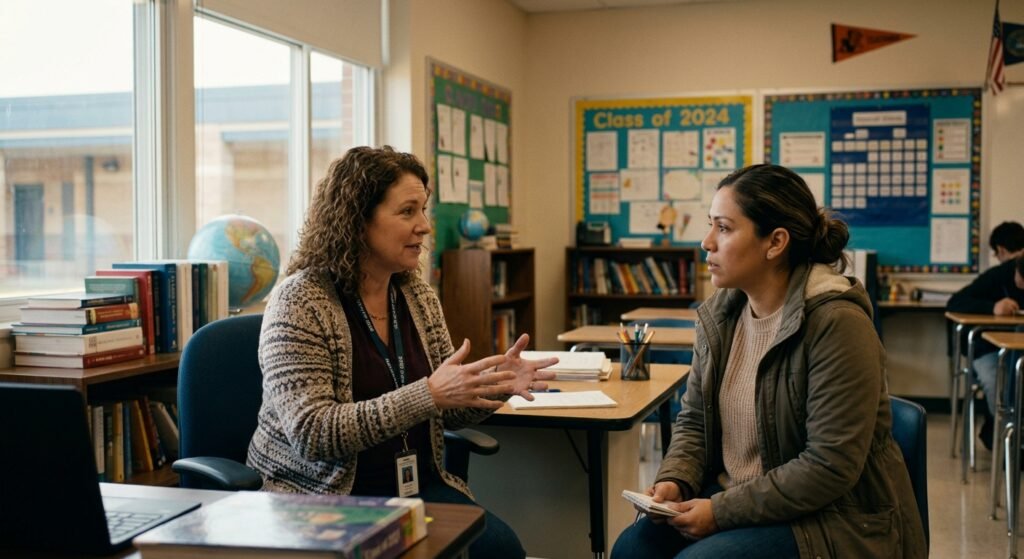
You sit in a chair that is entirely too small for you, your knees nearly touching your chin, waiting for the parent teacher conference to begin. You know what you’re expecting to hear. You’ve prepared yourself to talk about the messy backpack, the tendency to daydream, or perhaps the boundless energy that makes sitting still for dinner a daily battle. You know your child. You’ve watched them grow from a baby, you know their favorite foods, their exact sleep patterns, and the specific way their forehead creases when they’re about to lose their temper.
Then, the teacher starts talking, and you find yourself looking around the room to see if you’ve walked into the wrong classroom. They describe a child who is exceptionally quiet, meticulously organized, and always the first to volunteer to clean up after craft time. Or perhaps they describe a bold, outgoing leader who rallies the other kids at recess, while the child you know at home is a quiet observer who needs hours of silence just to wind down. You walk out to the parking lot with a strange, lingering feeling in your chest. You wonder who that other child is, and more importantly, why you’ve never met them.
It’s an experience that can feel surprisingly disorienting. When someone who spends hours a day with your child describes a person you don’t fully recognize, it’s easy for a quiet defensiveness to creep in. You might wonder if you’re doing something wrong at home, or if your child is keeping secrets from you. It feels like a subtle rejection, a quiet whisper suggesting that your child is somehow more cooperative, or more vibrant when they are away from you.
The Freedom of Different Rooms
But there is a different way to look at this discrepancy, one that is far more comforting. When a child behaves differently at school than they do at home, they aren’t trying to deceive you. They are simply discovering that different environments invite different parts of themselves to step forward. Think about your own life for a moment. You probably aren’t the exact same person at a staff meeting as you are when you’re laughing with old friends or sitting quietly with a partner. We all possess different versions of ourselves, and learning when to share those different versions is a vital part of growing up.
For a child, school is their very first independent arena. It’s a place where they exist entirely outside the shadow of your protective gaze and the established roles of family life. At home, they might be the baby of the family, the loud older sibling, or the one who always gets anxious during transitions. But when they walk through those school doors, the slate is clean. They get to experiment with who they want to be. The quiet child might discover they love the stage of the playground. The energetic child might find comfort in the rigid structure of a classroom schedule.
Developmental researchers often talk about this as situational adaptability. Studies in child development suggest that children who can adjust their behavior to match their surroundings often possess high levels of social awareness. They are reading the room, understanding the unwritten expectations of their peers and teachers, and figuring out how to navigate those spaces successfully. It’s not a sign of inconsistency; it’s a sign of a healthy, growing mind learning how to participate in the wider world.
Home is the Place for the Hard Days
Sometimes, the difference in behavior can feel a bit unfair. It’s common for parents to hear that their child is an absolute angel at school, only to experience intense meltdowns the moment the front door closes at home. It’s easy to look at this pattern and assume you’re failing to maintain discipline. But the reality is often quite the opposite.
School requires an immense amount of restraint from a young person. They must sit still, follow directions, share toys, manage friendships, and keep their emotions in check for hours on end. By the time they get home, their emotional battery is completely drained. When they walk through your door, they finally feel safe enough to let go of that restraint. They fall apart because they know your love isn’t conditional on their best behavior. The challenging behaviors you see at home aren’t a sign that you are doing a poor job; they are a sign that home is the one place where they feel safe enough to be tired, messy, and completely authentic.
When we realize this, the frustration begins to soften into curiosity. Instead of wishing our children were exactly the same in every setting, we can begin to appreciate the complexity of their growing personalities. We can start asking questions about what each environment offers them, and what they might be trying to learn about themselves in those different spaces.
Growing Into the Whole Person
As parents, our instinct is often to want a complete, predictable picture of our children. We want to feel like we know every corner of their hearts. But perhaps one of the greatest gifts we can give them is the permission to remain a bit of a mystery, even to us. Watching them navigate their own social worlds without us is a beautiful preview of the adults they will eventually become.
They aren’t static characters in a story we’ve already written. They are active participants in their own lives, trying on different roles, testing out different strengths, and learning how to stand on their own feet. When a teacher shares a story about a child you’ve never met, it’s not a sign that you are losing touch. It’s an invitation to admire just how expansive your child’s world is becoming.
Maybe they aren’t hiding parts of themselves from you. Maybe they are just practicing the art of living in a world that is much larger than the home you built for them. And perhaps the real beauty of parenting isn’t knowing every single thing about your child, but realizing that they are complex enough to surprise you, even when you’re the one who knows them best.