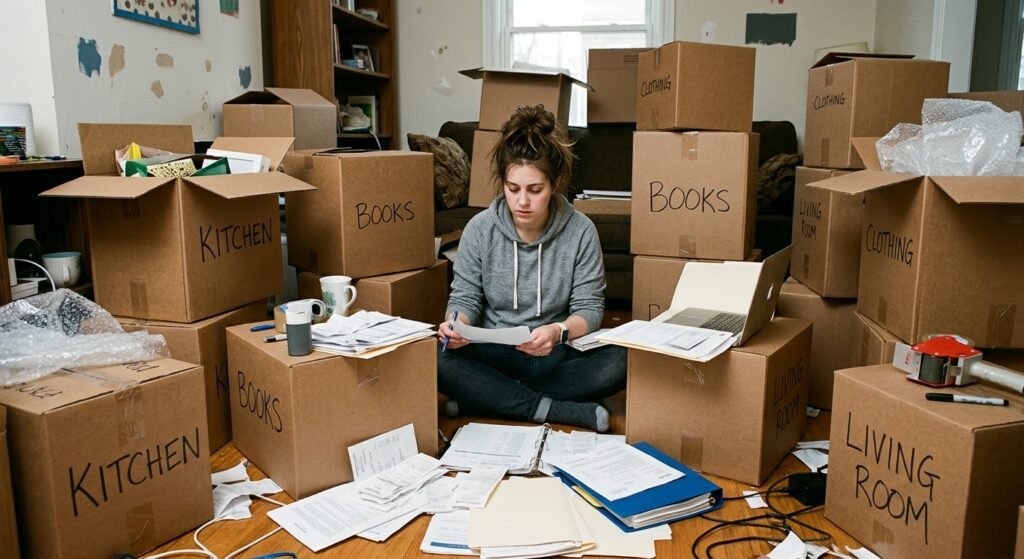
The Logistical Self vs. The Emotional Self
You probably remember the exact moment the ground beneath you moved. Maybe it was a phone call on an ordinary Tuesday afternoon, a sudden email that arrived just before five o’clock, or a conversation that started with a sentence you never expected to hear. In an instant, the life you had planned for the next six months dissolved, replaced by a brand-new reality you had no time to prepare for.
In those first few hours, something strange usually happens. You don’t break down. You don’t panic. Instead, a quiet, hyper-focused version of you takes over. You start making lists, packing boxes, replying to urgent messages, and coordinating details with remarkable efficiency. To anyone watching, you look like the portrait of strength, moving through the chaos with a calm that surprises even yourself.
This efficiency is a beautiful coping mechanism, but it comes with a hidden cost. When life demands that we adapt instantly, we don’t actually have the time to feel what is happening to us. We coordinate the move, we accept the new responsibility, or we step into the role of caregiver without pausing to ask how we feel about it. We do what needs to be done because the present moment requires action, not reflection.
The problem is that we often mistake this active state for healing or acceptance. We tell ourselves that because we aren’t crying or feeling overwhelmed, we must be handling the transition perfectly. We might even feel a little proud of how quickly we’ve adjusted to the new landscape. We assume that because our bodies have arrived in the new reality, our hearts have too.
Then, weeks or even months later, the dust finally settles. The boxes are unpacked, the new routine is established, and the immediate urgency has faded. You’re standing in the middle of a quiet kitchen, or sitting in traffic on a random Thursday, and suddenly a wave of profound exhaustion washes over you. You might find yourself feeling deeply sad, irritable, or disoriented over something small, like a misplaced set of keys or a slightly cold cup of coffee.
Why Your Mind Postpones the Pain
It can feel deeply confusing when these feelings show up so late. You might worry that you’re backsliding, or that you aren’t as strong as you thought you were. But psychologists have long observed that our internal systems are built to protect us during sudden life disruptions. When we experience a rapid transition, our cognitive processing and our emotional processing operate on entirely different schedules.
Research into how people navigate sudden life changes shows that our minds naturally prioritize immediate survival over emotional integration. During the initial phase of a crisis, our brains focus entirely on managing the immediate demands of the situation, effectively shelving our emotional responses for a later time. Experts refer to this as a cognitive lag, where our intellectual understanding of a change happens almost instantly, but our emotional adaptation can take months to catch up. It is not a sign of weakness; it is a sign that your mind is waiting until it is safe enough to let you feel.
Think of it as an emotional shock absorber. If you felt the full gravity of a major life transition while also trying to navigate the logistics of it, you wouldn’t be able to function. The delay isn’t a malfunction of your system. It’s a protective buffer that keeps you upright until you have the emotional bandwidth to handle the truth of what has changed.
The Aftermath of Being Strong
People who are used to being dependable often struggle the most with this delay. If you’re the person everyone relies on to solve problems, you’ve likely practiced the art of setting your feelings aside to get things done. You take pride in your ability to keep a cool head when everything else is spinning. But when the emergency ends, you might find yourself wondering why you feel so empty instead of relieved.
It’s because the energy required to carry a sudden transition is immense. We spend so much energy keeping ourselves together during the actual transition that we have nothing left when it’s over. The exhaustion you feel weeks later isn’t just physical tiredness. It is the cumulative load of all the feelings you had to put on hold so you could survive the upheaval.
When those emotions finally arrive, they rarely look neat or logical. You might grieve a job you didn’t even like that much, or feel a sudden surge of anger about a move you chose and wanted. You might miss a past version of your daily life, even if your new life is objectively better. These feelings can seem irrational, but they are simply your heart catching up to the timeline your life has already lived.
Allowing the Heart to Catch Up
Maybe we need to stop expecting our feelings to arrive on the same schedule as our calendars. A change can happen in a single phone call, but adjusting to that change is a slow, uneven process that cannot be rushed. You don’t have to feel okay with a transition just because you are managing it successfully on the outside.
The next time you find yourself weeping over something minor months after a major turn in your life, try to meet yourself with kindness instead of frustration. Your mind is finally telling you that the danger has passed, the dust has settled, and it is finally safe enough to fall apart a little bit. It is not a sign that you are failing to adapt. It’s a sign that you are finally ready to begin.