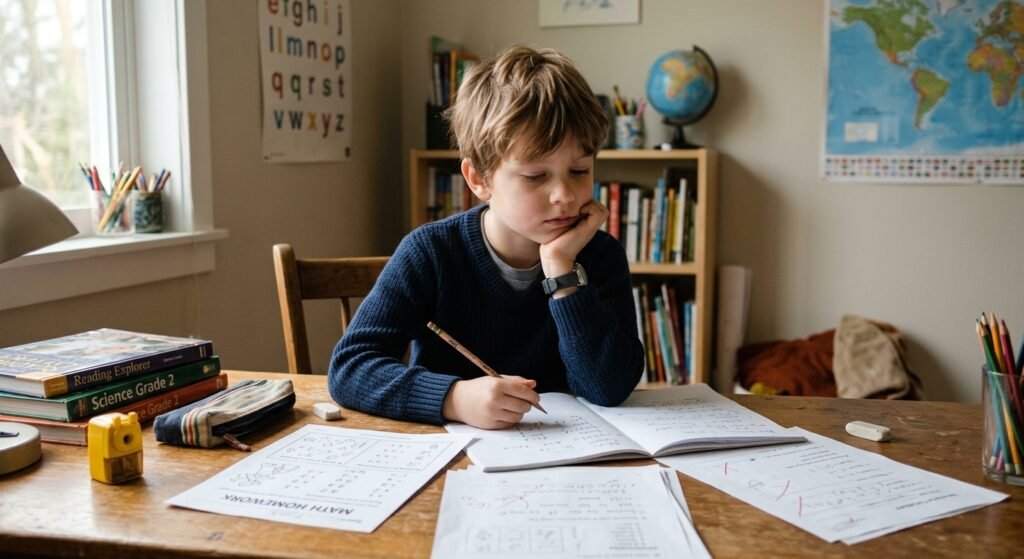
You’re sitting at the kitchen table on a Tuesday evening, watching your child finish their homework without a single prompt. They’ve already cleared their plate, packed their backpack for tomorrow, and even remembered to put their dirty clothes in the laundry hamper. You look at them and feel a sudden, deep sense of relief. You might even whisper to yourself, or boast to a friend on the phone, how lucky you are to have such an easy kid.
It’s a natural reaction. In a world where parenting can feel like a constant series of negotiations, fires to put out, and emotional storms to navigate, the child who quietly does what they’re told feels like a sanctuary. They don’t demand your attention with outbursts. They don’t make you feel like you’re constantly failing. They seem to glide through childhood with a quiet maturity that makes you believe everything is fine.
But if you watch closely, you might notice something else. You might notice the way their eyes search your face for approval after they complete a task. You might see the subtle tightness in their shoulders when they receive a grade that isn’t quite perfect, or the way they quickly apologize for small accidents, like spilling a glass of water, as if they’ve committed a major crime. Underneath that pleasant, undemanding exterior, there is often a child who is performing a quiet, daily act of endurance.
The Quiet Observers in Our Homes
Children are remarkably perceptive. Long before they have the vocabulary to discuss family dynamics, they can read the emotional temperature of a room. They know when money is tight, even if you never discuss bills. They notice when you and your partner are speaking in clipped, polite tones. They can feel the exhaustion radiating off you when you walk through the door after a long day at work.
When a family is going through a difficult season, or when a sibling requires an enormous amount of parental energy, the good child quietly makes a decision. They look at the stress already filling the household, whether it’s a struggling sibling or a tired parent, and decide that they can’t afford to add to it. They realize that the best thing they can do for the people they love is to have no needs at all.
They become the peacekeepers, the organizers, and the silent achievers. They swallow their own frustrations, bury their normal childhood worries, and present a perfectly polished version of themselves to the world. It’s a beautiful gift of love, but it’s also a tremendous strain for a young mind to carry. They are constantly holding their breath, trying to keep their balance on a tightrope they constructed themselves.
The Currency of Goodness
For these children, being good ceases to be just a behavior and instead becomes their entire identity. It’s the way they secure their place in the family ecosystem. They learn that their value is tied directly to their lack of problems. When they receive praise for being so independent, it reinforces a quiet belief: as long as I am perfect, everything will be okay.
This is where family research offers some perspective. Professionals who study family dynamics have long noted that children who fall into these roles often struggle to separate their own feelings from the feelings of their parents. They feel responsible for their parents’ happiness. If a parent is sad or stressed, the child interprets this not as a normal adult emotion, but as a failure of their own ability to keep the peace. When researchers look at how these patterns develop, they find that children are remarkable at noticing stress, but they often misinterpret the cause, believing that they must be the solution.
The trouble with this dynamic is that it leaves no room for the messy, complicated realities of growing up. Children are meant to push boundaries, make mistakes, lose their tempers, and make poor choices. That’s how they learn who they are. But when a child believes that their goodness is the only thing keeping their family stable, a single mistake feels like a catastrophe. A low grade on a spelling test or a minor reprimand doesn’t just feel like a small setback. It feels like they’ve broken the fragile trust that holds their world together.
The Fear of Letting Down the People You Love
If you talk to adults who were once the good children, they’ll often tell you that the pressure didn’t come from their parents demanding perfection. Most parents of these children are kind, loving, and would be devastated to know how much strain their child was experiencing. Instead, the pressure was entirely internal, born out of a deep desire to protect the people they loved from any further discomfort.
They grew up believing that their primary role was to be a relief, not a responsibility. This mindset doesn’t simply disappear when childhood ends. It follows them into their friendships, their marriages, and their careers. They become the adults who can’t say no, who apologize constantly for taking up space, and who feel a deep sense of guilt whenever they have a bad day or need to ask for help.
It’s a heartbreaking realization for many parents. You think you’re raising a child who is resilient and independent, but you might actually be raising a child who is simply too afraid to show you their cracks. They’re hiding their vulnerabilities because they believe that showing them would make them a disappointment.
Creating Space for the Messy Moments
Helping a child step down from their own pedestal isn’t about giving them a lecture or changing your parenting style overnight. It’s about quietly showing them that your love isn’t conditional on their performance. It means noticing the moments when they are trying too hard and offering them a way out.
Sometimes, this means celebrating their mistakes. When they drop a plate or forget an assignment, it’s an opportunity to show them that the world doesn’t end when they are less than perfect. Your reaction in those small, ordinary moments of failure is what teaches them whether it is safe to be imperfect around you. When they see that you can handle their mistakes without losing your warmth, they can finally begin to relax.
It also means actively inviting their negative emotions. Asking them what they’re worried about, or even encouraging them to express anger and frustration, shows them that their messy feelings are just as welcome in your home as their achievements. It reassures them that they don’t have to edit themselves to be loved.
The Gift of Being Ordinary
Perhaps the most profound thing we can offer these children is the permission to be ordinary. We can let them know that they don’t have to be the glue that holds the family together, or the shining star that makes up for other struggles. They are allowed to just be kids who sometimes lose their shoes, forget their homework, and have bad moods.
When we release them from the role of the easy child, we’re not asking them to stop being responsible or kind. We’re simply letting them know that their place in our hearts is secure regardless of how well they perform. We’re telling them that they don’t have to earn their peace.
In the end, maybe the goal of parenting isn’t to raise children who never cause us any trouble. Maybe it’s to create a home where our children feel safe enough to be difficult, knowing that our love is sturdy enough to hold all of their messiness, and that they never have to carry the burden of keeping us happy.