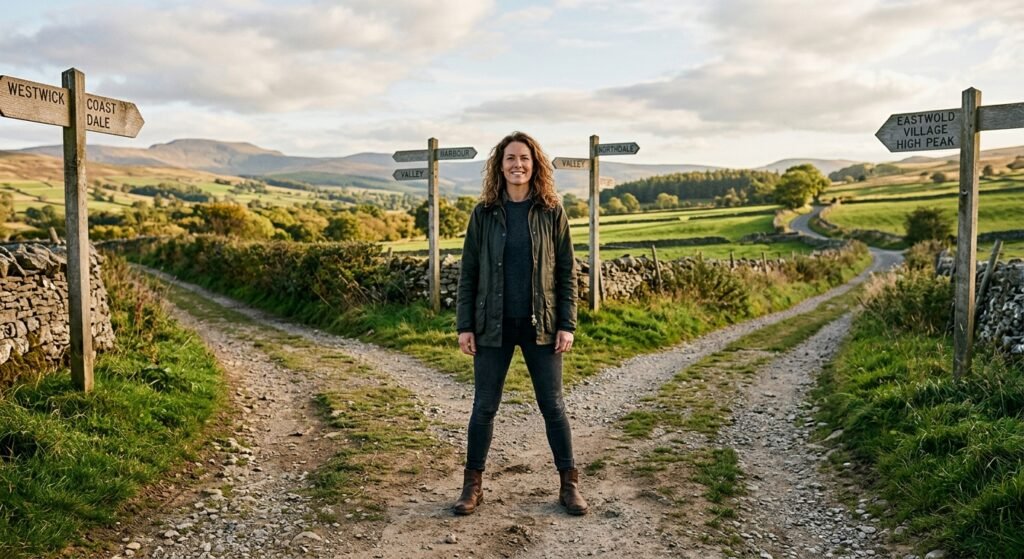
You’re standing in the middle of a home goods store, holding a lamp that’s slightly too bright, slightly too strange, and absolutely perfect for your living room. You love it. But before you walk to the register, you feel a familiar, quiet pause. You find yourself mentally scrolling through a list of friends to text a photo to, wondering if they’ll think it’s a good purchase. It’s your apartment, your money, and your desk, yet you’re standing there waiting for an imaginary hall pass.
Or maybe it happens at work on a Friday afternoon. You’ve finished all your tasks, the sun is shining, and you want to close your laptop at four o’clock. There’s no rule forbidding it, and your output has been excellent all week. Yet, you feel a tiny prickle of anxiety in your chest, as if a teacher might catch you sneaking out of class. You stay glued to the screen, refreshing your inbox, waiting for a green light that was never actually required.
This is the quiet, slightly confusing transition that quietly unfolds in adulthood. It’s the realization that the authority figures we spent our youth trying to please have quietly receded into the background, but we’re still operating as if they’re standing right behind us, clipboard in hand.
The Good Student Trap
For the first twenty or so years of life, our days are beautifully structured by other people. We’re told when to arrive, where to sit, what to read, and how to earn approval. The path is clear: if you follow the rules, you get the gold star. If you ask for permission, you stay out of trouble. It’s a highly effective way to navigate childhood, but it creates a deep habit that’s hard to shake.
We carry this mindset into our careers, our friendships, and even our marriages. We find ourselves waiting for a partner to validate our weekend plans, or a manager to tell us it’s okay to voice an opinion in a meeting, or a friend to approve of how we spend our free time. We’re adults with keys, bank accounts, and leases, yet we still feel like we’re secretly trying to avoid getting detention.
What’s surprising is how long this behavior persists even when there’s no one left to give us permission. We look for surrogate teachers in our bosses, our partners, or even the algorithm on our phones. We ask the internet if we’re allowed to wear certain clothes at a certain age, or if it’s okay to feel tired after a social gathering. We look outward for a confirmation that can only really come from within.
Why We Seek the Green Light
There’s comfort in seeking permission. When someone else gives you the green light, they also take on a small portion of the responsibility. If things go wrong, you can always point to the person who said it was okay. Relying on external approval protects us from the quiet terror of our own choices.
People who study decision-making and development often observe how we internalize authority. During our early development, our brains build neural pathways that closely connect safety with compliance. When we do what we’re told, we feel secure. When we make independent choices without a clear stamp of approval, our nervous system treats that lack of validation as a potential risk. It’s not that you lack confidence; it’s that your mind is simply trying to keep you safe in the only way it historically knows how.
But when we constantly look for a sign-off from the world around us, we quietly tell ourselves that our own judgment cannot be trusted. Every time we ask for permission when we don’t need it, we chip away at our own self-reliance. We trade our autonomy for a temporary feeling of safety, forgetting that the safety was ours to claim all along.
The Quiet Freedom of Owning Your Choices
The transition into true self-trust doesn’t usually happen with a grand gesture or a dramatic declaration of independence. Instead, it happens in tiny, ordinary moments where you choose to skip the advisory committee in your head.
It’s the evening you decide to decline an invitation to a dinner party simply because you’re exhausted, without fabricating an elaborate excuse to make it acceptable. It’s the moment you buy the green sofa because you like it, without asking three friends for their opinions first. It’s the afternoon you pitch a bold idea at work because you believe in it, rather than waiting for someone else to suggest it first.
These choices might feel small, but they carry a profound sense of relief. When you stop asking for permission, you start living a life that actually belongs to you. You begin to realize that the rules you’ve been trying so hard to follow were often just suggestions, and that the only person who needs to live with your choices is you.
Trusting the Voice Inside
Learning to trust yourself is a slow process, especially if you’ve spent decades being a reliable, cooperative person who prides themselves on making others happy. It requires you to sit with the discomfort of knowing that some people might not understand or agree with your decisions. It means accepting that you might make mistakes, and realizing that making a mistake of your own design is still better than executing someone else’s plan perfectly.
Perhaps the most beautiful realization of this transition is that you don’t need to wait for a sign, an expert, or an authority figure to tell you that your life is yours to live. You don’t need to justify your preferences, your boundaries, or your pace. The permission you’ve been searching for is not waiting at the end of someone else’s approval. It was already granted the moment you decided to pay attention to what you truly need.
And when you finally stop looking around the room for a hand to raise, you might discover something wonderful. The room is quiet, the door is open, and you’ve been allowed to leave the whole time.