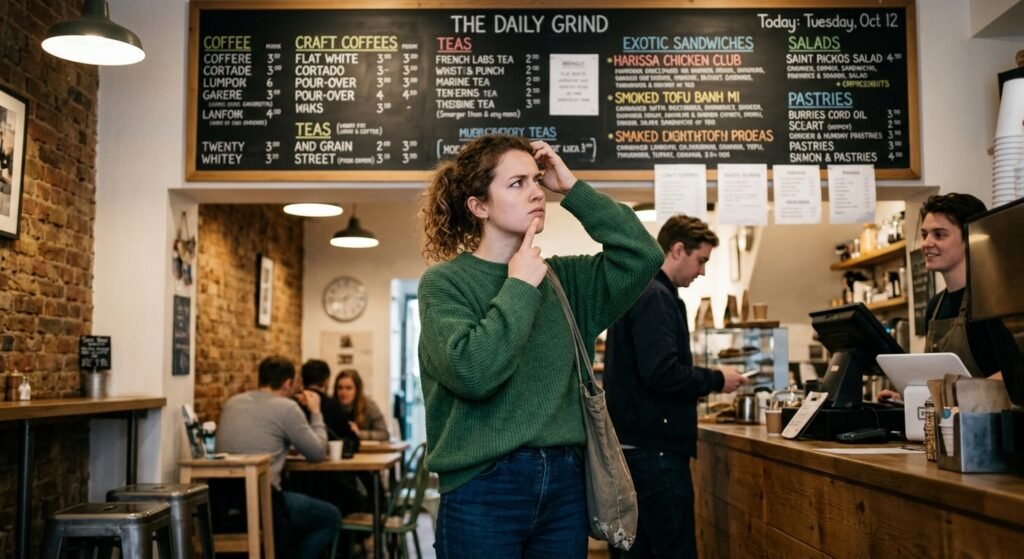
You’re standing in the grocery store aisle, staring at a wall of salad dressings, and suddenly you feel entirely paralyzed. There are dozens of options, and you only need one bottle of vinaigrette to get through the week. Yet, you find yourself comparing labels, checking prices, searching reviews on your phone, and wondering if the garlic-herb option will ruin your dinner plan. It’s a tiny, insignificant moment, but your heart is racing as if you’re deciding on a mortgage.
Many of us live these small dramas every single day. We spend forty-five minutes scrolling through movie titles on a Friday night, only to go to bed without watching anything. We write, rewrite, and delete a simple three-sentence email to a coworker, agonizing over whether an exclamation point makes us sound too eager or a period makes us sound too cold. We’ve turned the simple act of choosing into a high-stakes performance where every outcome feels like a test of our judgment.
It’s exhausting to live this way, but it’s also deeply relatable. When we treat every ordinary choice like a life-altering event, we aren’t just trying to make a decision. We’re trying to manage a deep, quiet undercurrent of anxiety.
The Search for a Zero-Downside Life
We live in an era that promises us we can find the absolute best version of everything. If you want to buy a pair of running shoes, a coffee maker, or even a pillow, you have access to thousands of opinions, ratings, and expert breakdowns. We’ve been taught to believe that with enough research, we can make decisions that are completely flawless. We’re told that if we just look a little longer, we can find the option that has zero downsides.
But this endless library of information doesn’t actually make us feel more confident. It usually does the exact opposite. When we believe that a perfect choice exists, then any choice that isn’t perfect feels like a failure. We stop looking for what will make us happy and start looking for what will protect us from regret. We aren’t really searching for the best salad dressing or the perfect movie anymore; we’re trying to purchase a guarantee that we won’t make a mistake.
This constant pressure turns the most mundane parts of our lives into a series of obstacle courses. We struggle to commit to a weekend plan, a restaurant menu, or a career path because we’re terrified of the door we’ll close when we open another. The moment we choose one thing, we begin mourning all the other options we had to leave behind.
Why Our Minds Get Stuck in the Loop
There’s a well-known idea in psychology that divides us into two groups when it comes to how we make choices. Some people are satisfied with finding an option that meets their basic needs, while others feel compelled to analyze every single possibility to ensure they’ve secured the absolute best option available. Researchers have found that those of us who feel the need to maximize every decision often end up feeling less satisfied with what we ultimately choose.
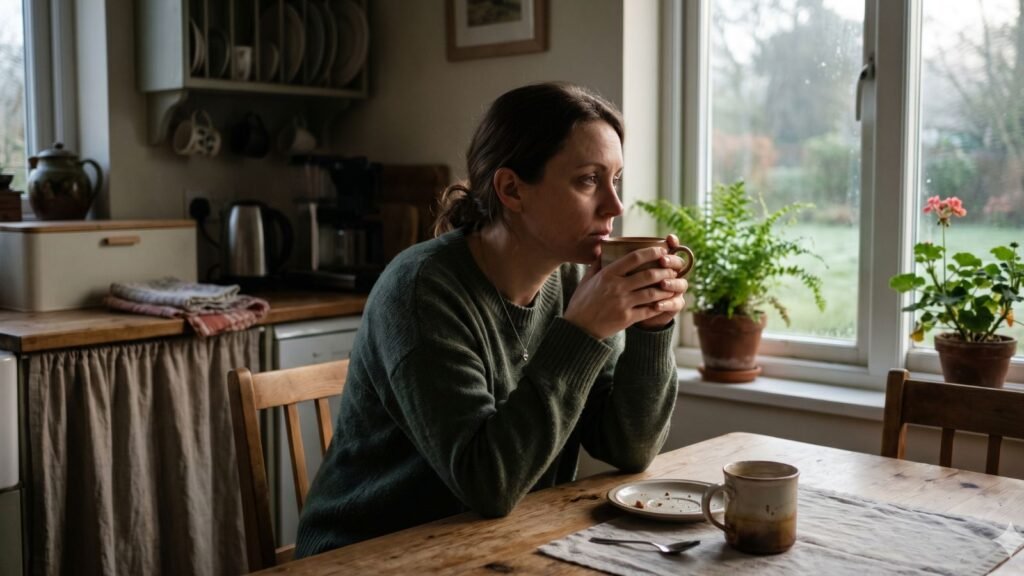
When you’re constantly evaluating every alternative, your mind never really rests. Even after you’ve made your choice, you might lie awake wondering if another option would’ve brought you more joy, saved you more money, or looked better to other people. The very act of overthinking creates a sense of separation from our own lives. We become spectators of our choices, constantly grading our own performance instead of simply living with the outcomes.
This isn’t a flaw in your intelligence or your ability to think clearly. It’s actually a sign of how deeply you care. You want to do things right, you want to be responsible, and you want to ensure that the people around you are taken care of. But somewhere along the way, that beautiful sense of care got tangled up with the belief that you aren’t allowed to make mistakes.
The Realization Beneath the Overthinking
Perhaps we aren’t actually terrified of making the wrong choice. Maybe we’re terrified of how we’ll treat ourselves if things don’t go perfectly.
When a decision leads to a disappointing outcome, we often take it as proof of our own inadequacy. We tell ourselves we should’ve known better, researched more, or trusted our gut. We treat a cold meal, a bad movie, or a slightly inconvenient purchase as a personal failing. We assume that a good life is one that’s completely smooth and free of friction, and that any bump in the road is a sign that we’ve failed to steer correctly.
But the truth is that some of the most memorable chapters of our lives are born from the decisions we didn’t labor over. The wrong turn that led to a beautiful view, the restaurant with terrible service that became a long-running family joke, or the imperfect job that introduced us to a lifelong friend. When we allow ourselves to make imperfect choices, we also allow room for life to surprise us.
So the next time you find yourself staring at a menu or a screen, unable to take the leap, you can take a deep breath and let go of the need to be flawless. The goal isn’t to live a life with zero regrets, because that life doesn’t exist. The goal is simply to trust that whatever happens on the other side of your choice, you’ll be okay. You don’t need a perfect decision to have a wonderful life; you just need to be there to live it.