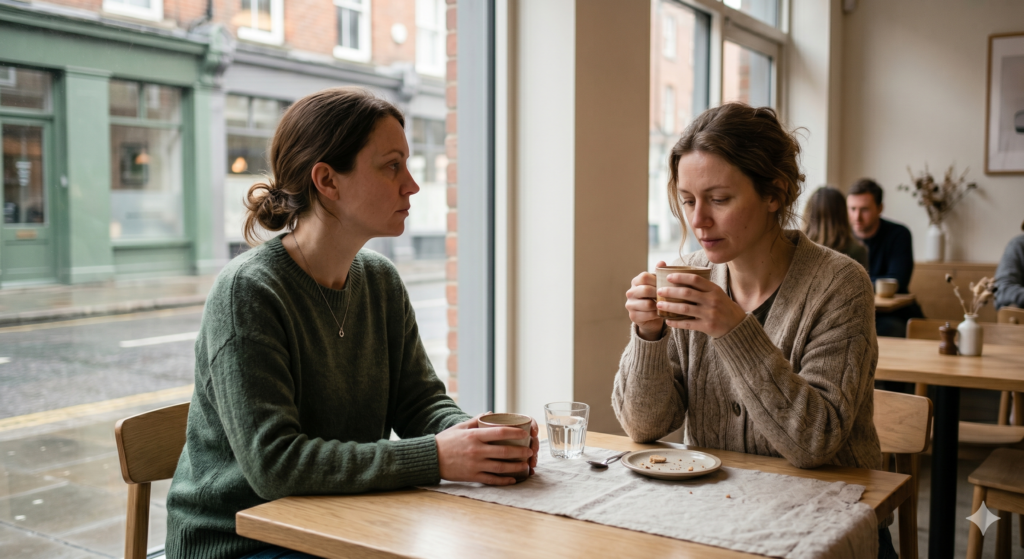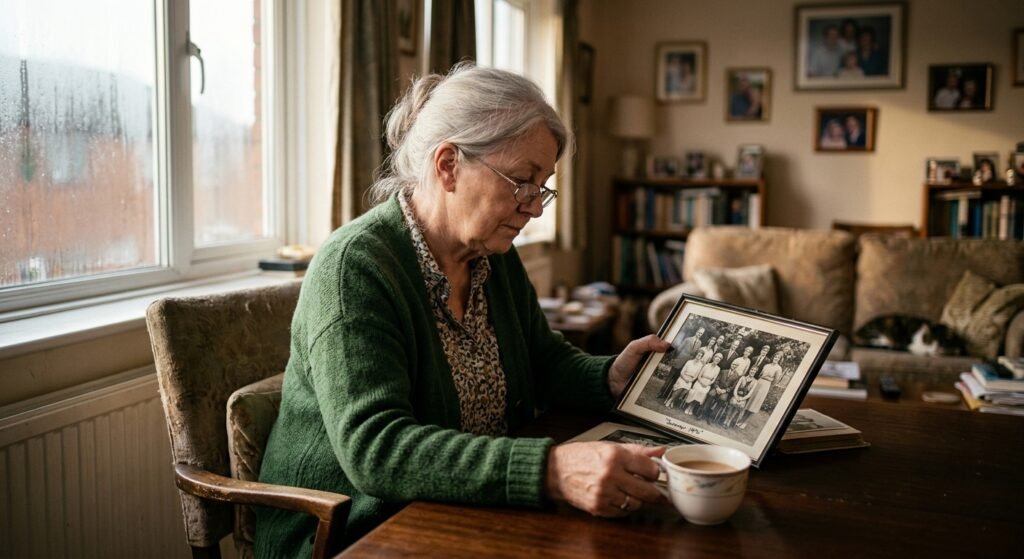
You’re sitting on your couch on a Saturday evening, scrolling through your phone, when a specific photo catches your eye. It’s a picture of people you know well, gathered around a restaurant table or laughing in someone’s backyard. You recognize the smiles, the inside jokes implied by the caption, and the comfortable posture of a group that has spent years learning each other’s patterns. What you don’t recognize is the feeling of being left out. There was no argument, no dramatic misunderstanding, and no single moment where anyone said you were no longer welcome. Yet, looking at the screen, the reality is impossible to deny. The group has moved forward, and you’re standing in a different place.
It’s a quiet, aching sort of sadness that’s difficult to explain to anyone else. If you tell a partner or a family member, it can sound petty, like you’re complaining about a social calendar. But it isn’t about the party you missed. It’s about the realization that a collection of shared history is slowly becoming a relic of the past. You remember when these people were your daily landscape, the ones who knew about your bad days before they even ended, and the ones who shared the silly, unremarkable details of your life. Now, you find yourself wondering when you became an observer rather than a participant.
The Quiet Erosion of Shared Routines
We often think of relationship endings as loud events. We imagine doors slamming, angry text messages, or a sudden decision to walk away. But the truth is that most group dynamics don’t end with a bang. They fade through the slow, almost imperceptible accumulation of small choices. A missed dinner because you were working late. A group chat that you forgot to check for two days. A weekend trip you couldn’t afford, while everyone else could. Each individual moment seems harmless, like a minor detour, but over time these detours add up to a completely different destination.
Sociological research suggests that we build our closest connections through frequent, unplanned interactions. When we’re in school, or starting our first jobs, we have an abundance of these moments. We run into each other in hallways, share cheap meals, and have hours of unstructured time to waste. As we grow older, however, our days become more structured and demanding. We have to schedule catching up weeks in advance. When a group of people starts to share a new routine that you aren’t part of, whether that’s raising children at the same school, working in the same industry, or living in the same neighborhood, they naturally spend more time together. It isn’t personal. It’s simply the natural path of least resistance in a busy world.
The Illusion of the Circle
One of the reasons this hurts so deeply is that we tend to view a friend group as a single entity. We think of it as a circle, and we want to belong inside that circle. But relationship research reminds us that groups are actually networks of individual, personal relationships. When you feel yourself drifting from the group, it’s often because several of those individual threads have quietly weakened. Perhaps you and the host of the gatherings no longer have much in common, or the person who used to invite you has become consumed by their own life transitions.
When we look at the group from the outside, we feel a sense of rejection that feels remarkably personal. Our brains are wired to find safety in belonging, and when we perceive a threat to that belonging, it triggers a genuine emotional alarm. It’s easy to search for a villain in this story. We want to believe someone is actively keeping us out, or that they’ve suddenly changed their opinion of us. Accepting that people simply grew in different directions without harboring any ill will is actually much harder to sit with. It means there’s no one to blame, and nothing specific to fix.
The Pain of the Unsent Message
There’s a peculiar tension that arises when you realize a connection is slipping. You see an invitation to an event, or you hear about a gathering after it has already happened, and you feel the urge to reach out. You pick up your phone, open the message thread, and begin to type. But then you pause. You wonder if you’re forcing yourself into a space where you’re no longer naturally invited. You worry that if you have to ask to be included, the inclusion won’t feel genuine anyway.
So you delete the text. You decide to wait and see if they’ll reach out first. And when the phone remains silent, it feels like a confirmation of your worst fear, that you were only a temporary character in their lives. But what we often forget is that the other people in the group are likely living their own complicated lives, navigating their own pressures, and assuming that you’re simply busy with yours. It’s rarely a conscious decision to exclude you. It’s a collective assumption that everyone is doing just fine on their own.
The Beauty of Seasonal Connections
We’re taught to believe that the best friendships are the ones that last forever, remaining unchanged through every decade of our lives. But perhaps this expectation is a burden that relationships were never meant to carry. People change, priorities rearrange, and the things that once brought a group together, like a shared apartment, a college major, or a specific phase of early parenthood, eventually fade into the background. When those external anchors disappear, it’s natural for the group to rearrange itself too.
If you look back at the chapters of your life, you’ll likely find that different groups of people held you together during different seasons. They were the perfect companions for who you were in your twenties, or your thirties, or during those chaotic early years of building a career. They provided laughter, comfort, and safety when you needed those exact things. Just because a group isn’t your primary landing place anymore doesn’t mean the time you spent with them was a failure. It simply means that particular chapter has reached its natural conclusion.
Maybe the quiet truth of drifting apart is that you didn’t do anything wrong, and neither did they. We don’t have to cling to the edge of a circle that no longer fits us just to prove we once belonged there. We can hold a deep gratitude for the warmth we shared with them, while also giving ourselves permission to step into the open spaces where new, different connections are waiting to grow. You aren’t being left behind. You’re simply clearing the path for the person you’re becoming next.