
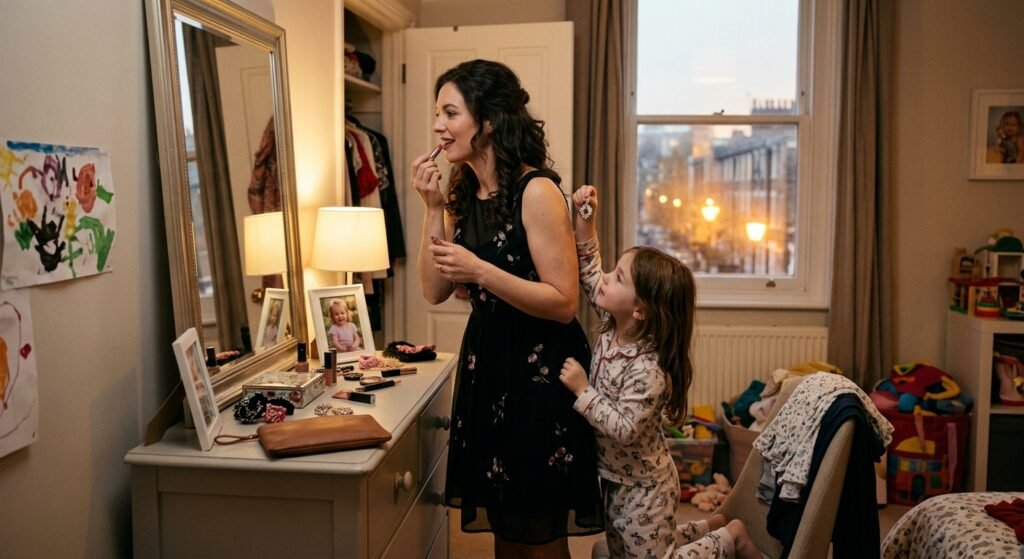
You are sitting in your car in the driveway, the engine turned off, listening to the quiet tick of the cooling metal. In the back seat, there is a stray plastic toy and a forgotten sweatshirt, remnants of the whirlwind morning you just navigated. You look in the rearview mirror, adjusting your collar and wiping a faint trace of someone else’s breakfast off your sleeve, trying to remember how to breathe. In twenty minutes, you are meeting someone new for coffee, and for the first time in years, the conversation will not be about school schedules, grocery lists, or pediatrician appointments. It is a strange, dizzying feeling, like stepping off a swift carousel onto solid ground that suddenly feels like it is spinning.
When you have spent a long season holding everything together for everyone else, the idea of stepping out to seek your own connection can feel less like an exciting adventure and more like a gentle betrayal of your duties. You worry about what is happening at home while you are gone, whether the chores are piling up, or if you left enough instructions for the afternoon. The transition from caregiver to an independent individual who is allowed to have desires, preferences, and a personal life is not a simple switch you can just flip. It is a slow, clumsy process of remembering who you were before everyone started needing you to be everything.
The Divided Mind of a Caregiver
The hardest part of trying to meet someone new during this stage of life is not the conversation itself, but the sheer amount of mental space you are trying to manage. While you are sitting across from someone who is asking about your favorite music or what you do for fun, a quiet, parallel track is running in your mind. You are wondering if you remembered to prep dinner, if the kids finished their homework, or if the house is running smoothly in your absence. You are physically present at the table, but emotionally, you are still acting as the main coordinator for your household.
This divided focus is remarkably common for anyone who has spent years in the deep trenches of family management. When your daily life is defined by anticipating everyone else’s needs, your brain adapts by staying constantly on alert. It is a protective mechanism that helps you keep the household afloat, but it makes it very difficult to simply relax and enjoy a moment that is just for you. You might find yourself feeling guilty for enjoying the quiet conversation, as if your happiness is somehow being stolen from the people who rely on you.
The Quiet Loss of Identity
Many people who dedicate themselves to caring for family members eventually experience a quiet, slow erosion of their own identity. It does not happen overnight, but rather through a thousand small choices where you put your own needs at the very bottom of the priority list. You stop buying clothes that aren’t practical, you stop pursuing hobbies that take you away from home, and you gradually forget what it feels like to have someone ask about your day simply because they are interested in you. Your identity becomes entirely defined by what you do for others rather than who you are when you are alone.
Observations of family dynamics suggest that caregivers often struggle to transition back into personal relationships because they have internalized the role of the helper so deeply. When you are used to being the strong one, the organized one, and the one who has all the answers, letting someone else see your vulnerability can feel remarkably uncomfortable. You might worry that showing your own needs will make you appear weak or that you are asking for too much when you already have so many responsibilities at home.
Learning to Receive Again
To open yourself up to partnership again, you have to practice the unfamiliar art of receiving. For years, your primary mode of interaction has been outward, giving energy, time, patience, and care to those around you. When you sit down with someone who genuinely wants to get to know you, the flow of energy changes. They might pull out your chair, ask deep questions about your thoughts, or offer a listening ear without expecting you to solve their problems in return.
At first, this kind of attention can feel overwhelming, or even slightly exposing. You might feel the urge to steer the conversation back to safe topics, like your children’s accomplishments or the logistics of your daily routine. It takes practice to stay in the moment and allow yourself to be the center of attention, even if it is just for an hour over coffee. You are relearning how to occupy space in the world as an individual rather than just as a support system for others.
Embracing the Dual Roles
The secret to navigating this transition isn’t about finding a perfect balance where nothing ever slips, because that balance does not exist. It is about realizing that you can hold both realities at the same time without one erasing the other. You can be a deeply devoted, reliable caregiver who keeps the household running smoothly, and you can also be a person who is actively seeking companionship, excitement, and a fresh start. These two truths do not have to compete for your time or your worth.
When you start putting yourself out there again, you are not abandoning your family or neglecting your responsibilities. Instead, you are showing the people you care for that a healthy life includes seeking joy, connection, and personal fulfillment. You are modeling what it looks like to value yourself enough to seek out relationships that feed your spirit, which is one of the most beautiful lessons you can pass on to those who look up to you.
Perhaps the real breakthrough isn’t finding someone who makes you forget about your responsibilities at home, but finding the courage to believe you deserve to be cared for too. You don’t have to choose between holding your world together and letting someone hold your hand. Starting over doesn’t erase your daily duties, nor does it quiet your personal hopes. It simply means recognizing that the person who spends all their energy keeping the world spinning for everyone else deserves a soft place to land when the spinning stops.