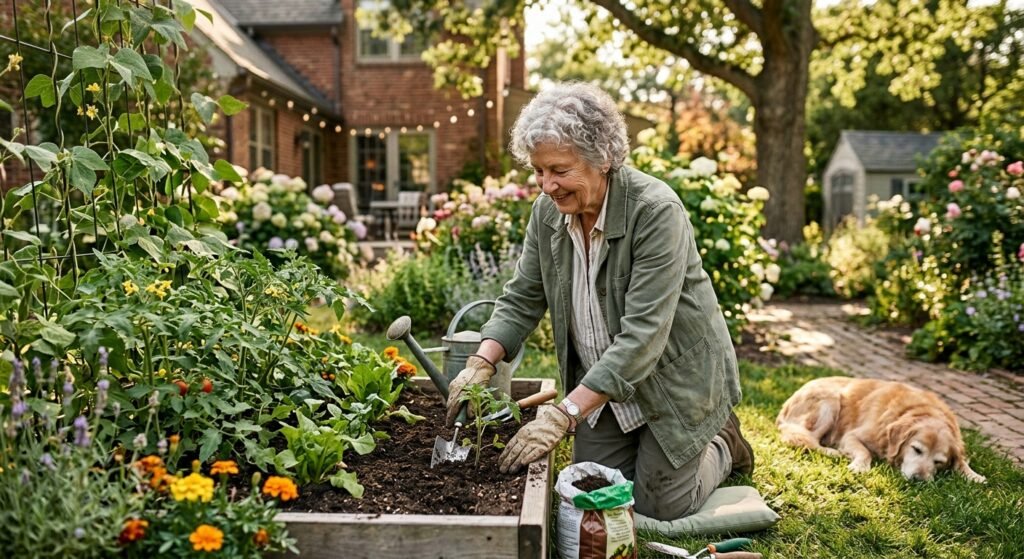
Imagine watching an older relative try to open a stubborn jar or deal with a dropped plate of food. Or maybe it’s a neighbor trying to figure out a confusing new remote control. There’s no dramatic sigh. There’s no throwing hands in the air or complaining about how unfair the day is. They simply find a butter knife to break the seal, grab the broom, or slowly press the buttons one by one until something works. They do it with a quiet, steady composure that looks almost like indifference, but it’s actually something much deeper.
If you’re like most people today, your reaction to those same tiny disruptions is probably a bit different. A frozen computer screen can feel like a personal insult from the universe. A delayed flight feels like an absolute crisis. We’ve grown so accustomed to speed, convenience, and instant answers that any pause in our plans feels like a system failure. We carry a quiet anxiety that everything must go perfectly, and when it doesn’t, we feel the tension rising instantly.
It’s easy to look at the older people in your life and assume they were simply born with a patience gene that skipped your generation. We see their steady hands and calm voices during family crises or minor daily hassles and think they must be made of different stuff. But if you sit down and talk with them, you quickly realize their composure isn’t a genetic miracle. It’s a skill they had to practice, often because they didn’t have any other choice.
The Muscle Memory of Survival
Psychologists often talk about emotional regulation as a capacity that strengthens with use. When we look at how people adapt to challenges, researchers find that resilience isn’t a fixed trait you either have or don’t have. Instead, it’s built through what experts call lived experience—the slow, repetitive process of facing small disappointments, navigating delays, and discovering that you’re still standing on the other side. The older generations didn’t have the luxury of escaping discomfort with a swipe of a finger, which meant they had to learn how to sit with it.
Think about what it meant to grow up in a world where you couldn’t track a package, search for an instant answer, or message someone to see where they were. Waiting wasn’t a choice; it was the default state of existence. You waited for the mail, you waited for the phone to ring, and you waited for the season to turn. That constant, quiet training built a high tolerance for uncertainty. It taught people that discomfort wasn’t an emergency, but simply a temporary state of affairs.
The Gift of a Longer Horizon
When you talk to someone who has lived through several decades, you begin to notice they view time differently. They don’t measure the quality of a life by the success of a single afternoon or even a single year. They’ve seen economic downturns come and go, they’ve watched children grow up and move away, and they’ve said goodbye to friends who walked alongside them for fifty years. They know, in a way younger generations are still trying to understand, that life is made of long seasons rather than quick moments.
This perspective completely changes how you respond to the daily storms. When a project fails at work or a relationship hitches, it feels like the end of the world because our horizon is so short. We’re looking at the immediate wall in front of us. An older person, however, is looking at the entire landscape. They’ve already survived their own version of your worst day, and they remember how the sun still came up the next morning. Their quietness isn’t because they don’t care, but because they know how much of what panics us today will be completely forgotten tomorrow.
Learning to Trust the Next Chapter
There’s a quiet respect we feel when we watch an older person navigate a difficult season. We see them face health scares, loss, and the slow fading of their physical strength, yet they somehow maintain a sense of grace. They don’t try to fight the passage of time with anger or pretend everything is fine. Instead, they accept the changes with a steady dignity that can feel almost foreign to a culture obsessed with staying forever young and in control.
Perhaps that’s the real secret of their strength. It isn’t that they never felt afraid, lonely, or overwhelmed. It’s that they’ve lived long enough to build a deep trust in their own ability to endure. They know that we don’t get to control the seasons of our lives, but we do get to choose how we stand in the rain.
Perhaps resilience isn’t about being tough enough to never break. Perhaps it’s the quiet understanding that breaking is just part of the story, and that we’re far more durable than we think, even when we feel entirely scattered. When we look at the older people in our lives, we aren’t looking at people who avoided the storms. We are looking at people who simply kept walking through them until the sky cleared.