Think about the first day you moved into your current place. The cardboard boxes stacked high, the unfamiliar creaks of the floorboards, and that quiet, slightly unsettling feeling of being a stranger in a brand new space. You probably spent the evening trying to locate the extension cords or wondering where you packed the mugs, feeling entirely disconnected from the world outside your window.
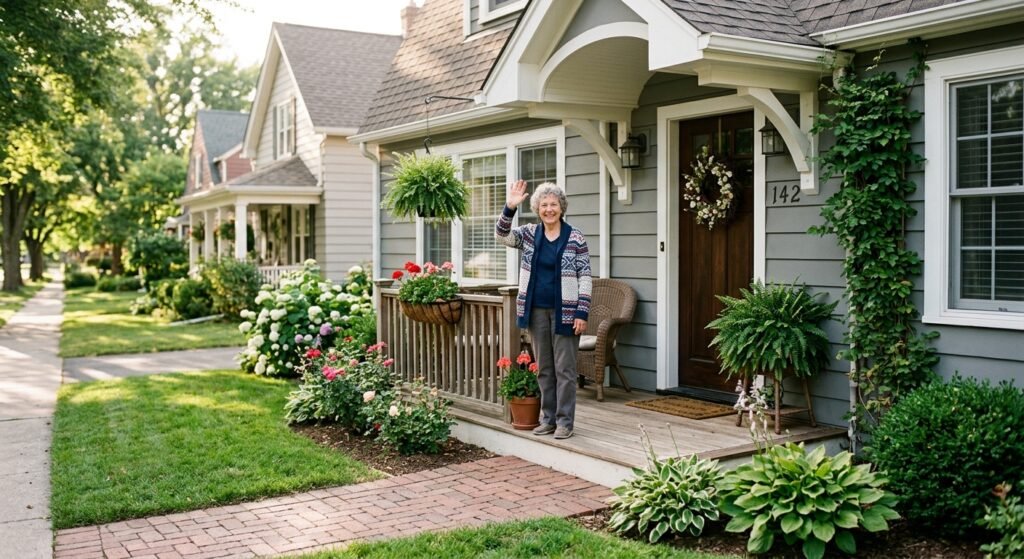
Then, maybe a day or two later, something small happened. Someone from next door walked over with a plate of slightly lopsided cookies, or maybe they just gave you a genuine, slow wave from across the driveway while you were wrestling with a trash bin. It wasn’t a grand welcome ceremony. But in that brief exchange, the space between your front porch and theirs suddenly felt a little less vast.
We live in a world where we’re encouraged to seek deep, soul-baring relationships. We look for life partners, best friends, and tight-knit family circles to ground us. But we often overlook the quiet magic of the casual connections that exist just past our doorsteps.
These are the people who know your dog’s name but might not actually know yours. They’re the ones who text you when you’ve left your garage door open overnight, or who quietly drag your empty bins back from the curb when they notice you’re running late. There’s no expectation of deep confession or emotional processing. It’s just a steady, quiet presence that says, without words, that you’re not alone in this corner of the world.
The Shared Rhythm of Living Side by Side
Sociologists sometimes talk about the importance of weak ties, those casual acquaintances who populate our daily routines. While close friends provide deep emotional support, these lighter connections actually play a massive role in our overall sense of safety and belonging. They create a gentle buffer against isolation, giving us a comforting rhythm of recognition throughout the week.
When a neighbor waves to you, your brain registers a tiny spark of acknowledgment. You aren’t just an anonymous face moving through space; you’re a recognized member of a shared territory. This gentle recognition acts as an emotional anchor, reminding you that you belong to a larger whole, even if you’re just stepping outside to grab the mail in your oldest sweatshirt.
There’s a unique intimacy to neighboring because these people witness the unpolished versions of our lives. They see you when you’re rushing out the door half-dressed, when you’re struggling to carry three grocery bags at once, or when you’re sitting on the porch steps just staring into space after a long day. They hear your dog barking at the mail carrier and know exactly what time your car usually rumbles down the street. In a way, they hold a mirror to your daily existence.
It’s an unspoken agreement of mutual witnessing. We agree to ignore the occasional loud evening or the lawn that got a little too long, and in return, we receive a quiet safety net. Think of the neighbor who always seems to know exactly when to offer a hand without being asked. They don’t wait for an invitation to help when your car battery is flat; they just walk over with jumper cables in hand. They don’t make a big deal out of it. They don’t expect a long conversation or a formal thank-you note. They just help, smile, and head back inside.
The Quiet Construction of Home
Sometimes we think building a community requires organizing massive block parties, attending town halls, or hosting elaborate dinners. We wait for perfect opportunities to connect, believing that real relationships require hours of deep conversation. But perhaps the real magic of a neighborhood isn’t built on those big, planned gatherings. Maybe community is actually created in the spaces between those events, built on a foundation of tiny, repeated gestures that accumulate over months and years.
When you look back on the places you’ve lived, you rarely remember the exact layout of the rooms or the color of the kitchen walls. Instead, you remember the feeling of walking down the street and knowing that the person behind the window next door wishes you well. You remember the warmth of being looked out for.
In the end, maybe the people who make a place feel like home aren’t the ones who change our lives in dramatic ways. Maybe they’re the ones who remind us of a simpler truth. By simply sharing a corner of the world with us, they show us that looking out for one another is the most natural thing we can do. And perhaps, without even realizing it, you’ve become that very same comforting presence for someone else.