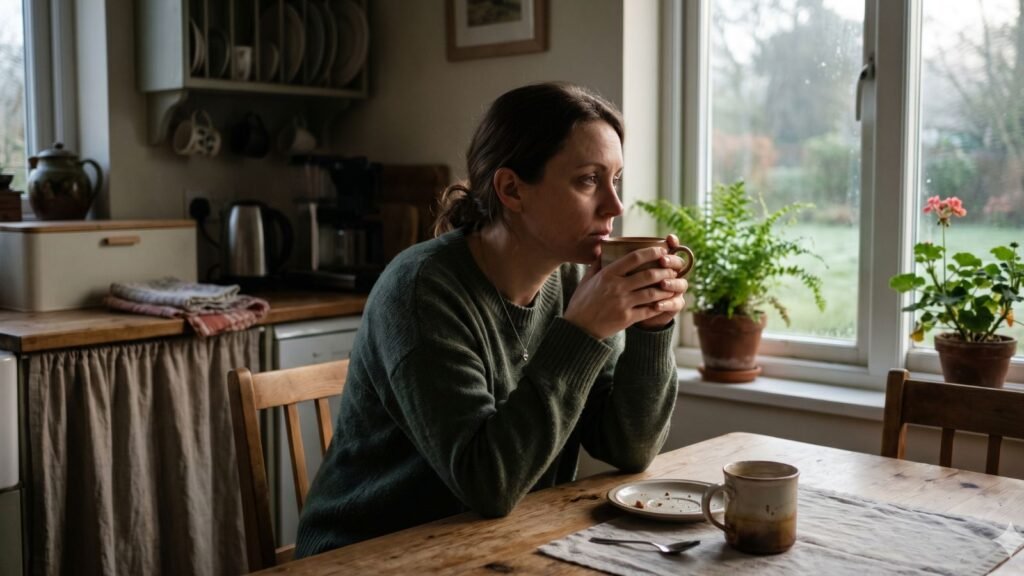
Imagine spending a Friday evening exactly how you wanted. You have got your favorite book, the living room is quiet, the lighting is soft, and you did not have to make small talk with a single soul. It is peaceful. You chose this. You love your own company, and you don’t feel lonely in the traditional sense. But then, as you look out the window at the warm glow of a neighbor’s kitchen, a strange feeling creeps in. It isn’t a desire to join them, exactly. It’s more like a quiet ache, a sudden realization that while you are perfectly content in your solitude, nobody actually knows where you are or what you are thinking right now. You are safe, but you also feel entirely unseen.
Many of us have spent years building a life that feels self sufficient. We pride ourselves on not needing others to rescue us or keep us entertained. We have learned to enjoy eating at restaurants alone, traveling to new places with only our own thoughts for company, and solving our own problems without making them anyone else’s burden. It feels like a quiet superpower. But there’s a difference between enjoying your own space and feeling like your existence doesn’t register on anyone else’s radar.
The Paradox of Solo Peace
When you are good at being alone, people tend to take your silence for strength. They assume that because you don’t ask for help, you don’t need connection. Your friends might say they admire your independence, or your family might joke that you are a bit of a hermit. It’s easy to play along with that narrative because it feels safe. It shields you from the messiness of relying on other people who might let you down.
But the truth is that independence isn’t a shield against the basic need to be known. You can love your solitude and still want someone to notice the quiet ways you’re growing. You can appreciate a quiet house and still want a text message that simply asks how your day went, not because they need something from you, but because they care about your answer. Wanting that doesn’t mean your independence is a lie. It just means you’re a person who needs to be anchored to the world, even if you like to explore it on your own.
The Cost of Being Low Maintenance
Often, those of us who are comfortable alone become the low maintenance friends. We’re the ones who don’t demand attention, who listen more than we speak, and who seem to have everything figured out. In relationships, we pride ourselves on being easygoing. We don’t want to make a fuss. We don’t want to occupy too much space.
What’s interesting is how this plays out over time. Experts who study how people relate to one another often talk about how we teach others how to treat us. When we consistently show up as self sufficient, people take us at our word. They stop checking in because they assume we’re fine. They stop asking deep questions because they think we prefer to keep our thoughts to ourselves. The dilemma of being low maintenance is that you eventually get exactly what you asked for, which is very little maintenance. And that’s when the quiet loneliness starts to settle in.
It’s a subtle distinction. Traditional loneliness is often about a lack of people. This kind of loneliness is about a lack of depth. It’s the feeling of being in a crowded room, or even in a loving relationship, and realizing that while people like you, they don’t actually see you. They see your independence, but they don’t see the effort it takes to maintain it. They don’t see the quiet moments where you have to be strong for yourself because there’s nobody else around to help carry the burden.
The Myth of the Strong Friend
Think about the last time you went through a difficult season. Maybe it was a stressful period at work or a quiet disappointment that you kept to yourself. If you’re someone who values solitude, you probably retreated into your shell to process it. You figured things out on your own, just like you always do. But when you emerged, did you feel relieved, or did you feel a little sad that nobody noticed you were gone?
Studies in social psychology suggest that our brains are wired to constantly look for signals that we belong. We’re always scanning our surroundings for proof that we’re safe and valued within our social circles. Even the most introverted individuals require these signals to feel secure. When we go through hard times and nobody notices, our minds register it as a quiet rejection, even if we were the ones who hid away. We realize that our absence didn’t leave a gap, and that realization can hurt more than the original problem did.
This is where the ache comes from. It’s not that we want someone to save us. We just want someone to notice that we needed saving. We want someone to say that they saw us quiet down lately and want to know if everything is okay. That single question does something profound. It proves that our presence matters, that we aren’t just ghosts moving through our own lives.
The Realization That Changes Everything
Maybe the mistake we make is believing that independence and connection are opposites. We treat them like a scale where we have to choose one or the other. We worry that if we admit we feel unseen, we’re admitting defeat, as if our ability to love our own company was just a phase we outgrew. But perhaps those two things are meant to live together.
Being comfortable alone is a beautiful gift. It means you’re a good companion to yourself. But it doesn’t mean you have to be your only companion. You don’t have to surrender your quiet Friday nights or your solo walks in the park to let someone in. Real connection doesn’t require you to give up your solitude; it simply asks you to share the fruits of it with someone who cares.
When you allow yourself to say that you love your space but still want to be known, you stop hiding behind your self reliance. You give people permission to see the parts of you that aren’t perfectly polished or completely figured out. And you might find that the people who love you have been waiting for that invitation all along.
It’s okay to want both. It’s okay to love the quiet of your own mind and still crave the warmth of a knowing look across a room. You aren’t failing at being independent just because you want to feel seen. You’re simply remembering that no matter how comfortable we are in our own skin, we still need someone else to look at us and acknowledge that we are here. You’re not the only one who feels this quiet contradiction. And maybe, just knowing that others are sitting in their own quiet rooms feeling the exact same way is its own small form of connection.