If you’ve ever cleaned out an old drawer and found a list of goals you wrote down when you were twenty-two, you probably felt a strange mixture of tenderness and disconnect. Maybe you wanted a specific job title, a certain zip code, a perfect kitchen, and the reassurance that you’d finally arrived. Back then, the future looked like a mountain to climb, and you had a very clear plan for how to reach the top. But if you’re standing somewhere in the middle of your life now, you might notice that even if you checked those boxes, the view from the summit doesn’t feel the way you thought it would.
It’s a quiet, unsettling feeling that people rarely talk about at dinner parties. You did what you were supposed to do. You built the career, or raised the family, or secured the stability you once craved. Yet, instead of feeling complete, you find yourself staring out the window wondering why the game you spent decades learning to play suddenly feels like it’s lost its spark. You aren’t unhappy, exactly, but the fuel that used to drive you simply isn’t burning the same way anymore.
There’s a simple reason for this. The tools we use to navigate the first part of our lives aren’t designed to get us through the second. In the first half, our main task is construction. We build our identity, establish our security, gather our credentials, and try to prove to the world that we have a right to be here. It’s an outward-facing project, fueled by ambition and the desire to fit in. We follow a map that someone else largely drew for us, believing that if we just keep walking, we’ll eventually find peace.
The Rules We Outgrow
For a long time, this approach works beautifully. It keeps us focused. It gets us out of bed on rainy mornings and pushes us to stay late at the office or wake up in the middle of the night with a crying baby. Psychologists who study adult development suggest that this early phase is all about building our social identity and creating a stable container for our lives. We need this structure to function in the world. We need to know who we are in relation to everyone else, and we need to feel capable of handling life’s basic demands.
But a funny thing happens once that container is built. We realize that filling it with more of the same stuff doesn’t actually make us feel any more fulfilled. If you’ve spent thirty years defining your success by how much you can produce, protect, or achieve, it’s terrifying to realize those metrics don’t satisfy you anymore. It feels like a betrayal of your younger self. You might worry that you’re losing your drive, or that you’re becoming ungrateful for the very things you worked so hard to get.
But this isn’t a crisis of motivation. It’s an invitation to curiosity. The restless feeling isn’t a sign that your life is broken; it’s a sign that you’ve outgrown your old measurements.
The Transition We Don’t Plan For
There’s a famous idea from the Swiss psychiatrist Carl Jung, who observed that we cannot live the afternoon of life according to the program of life’s morning, for what was great in the morning will be little at evening, and what in the morning was true will at evening have become a lie. He wasn’t suggesting that our early achievements were foolish. He was pointing out that our developmental needs change. If the morning of life is about building the house, the afternoon is about deciding what we actually want to do inside it.
This transition can feel deeply disorienting because our culture is obsessed with the morning. We celebrate the start-ups, the young prodigies, the rising stars, and the milestones of acquisition. We’re taught how to accumulate, but we’re rarely taught how to let go. When we enter the afternoon, we look around for a new set of instructions, only to find that the road signs have vanished. The old map told us exactly where to go next: get the promotion, buy the bigger house, secure the next milestone. The new landscape doesn’t have those clear markers.
That’s why the transition often feels like a loss before it feels like growth. You might find yourself grieving a version of yourself that felt more certain, more driven, and more easily satisfied. It’s completely normal to miss the simplicity of just wanting to win, even as you realize that winning the old games no longer interests you.
Creating Your Own Coordinates
So, how do we begin navigating this new territory? We start by changing what we are looking for. If the first half of life was about external validation, the second half is about internal alignment. Success has to be redefined from something we show to the world to something we feel in our chest.
This means trades. We trade efficiency for presence. We trade the need to be right for the desire to understand. We trade the frantic search for answers for a willingness to live with better questions. Instead of asking what will make us successful, we learn to ask what makes us feel alive.
This isn’t a passive process. It requires a quiet kind of courage. It means saying no to opportunities that look great on paper but feel hollow in your soul. It means allowing yourself to be a beginner at things that actually matter to you, even if you’re an expert in your day job. It means sitting with the discomfort of not knowing what comes next, rather than rushing to fill the silence with busywork.
The Power of a Blank Page
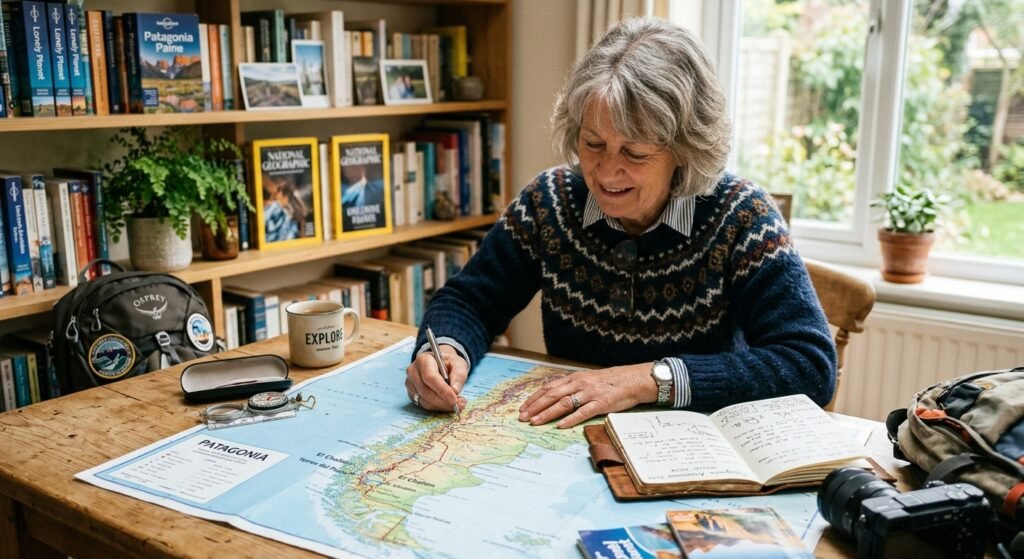
Perhaps the most beautiful realization of this season is that you don’t need to have it all figured out to move forward. The map for the second half of life isn’t something you find; it’s something you draw as you walk. Every step you take with curiosity rather than fear is a line on that new map.
You might discover that you care less about being noticed and more about being truly seen by a few people who know your heart. You might find that a quiet evening with a book or a slow walk through your neighborhood brings you a deeper sense of contentment than any professional triumph ever did. These aren’t small consolations; they are the actual destination.
If you’re feeling lost right now, try to look at your confusion not as a failure, but as proof that you are paying attention. You’ve completed the first assignment. You built the structure. Now, you’re finally free to decide what you want to keep inside it, and what you’re ready to leave behind. You’re not the only one standing at this crossroads, looking at the blank page, and wondering which way to turn. And maybe, just maybe, that’s exactly where you’re supposed to be.