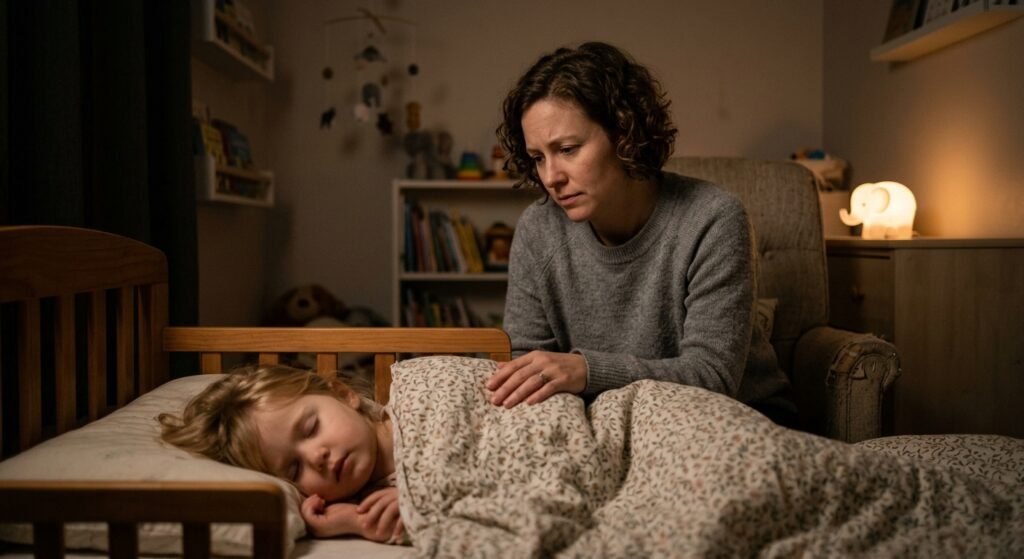
There is a quiet moment that happens in almost every home late at night, long after the house has finally gone still.
You stand in the doorway of your child’s room, watching the soft rhythm of their breathing in the dark. Maybe it follows an ordinary day, or maybe it comes after an evening where you lost your patience, raised your voice, or held a boundary that felt a little too harsh. In that silent doorway, all the confidence of adulthood seems to evaporate, leaving behind one small, persistent question: am I doing this right?
It isn’t a question you usually ask out loud. You don’t bring it up with other parents at school pick-up, where everyone seems to have figured out sleep schedules, screen limits, and emotional balance. But inside, the doubt lingers quietly.
The Pressure Of Every Small Choice
When you become a parent, the world suddenly feels full of unseen consequences. Every decision, from how you handle a grocery store meltdown to how you react to a bad report card, feels like it’s being permanently etched into who your child will become.
You find yourself rehearsing conversations in your head before they even happen. You retrace your steps after a tough afternoon, wondering if a single reactive moment will stay with them for decades. It can feel as though you’re walking across thin ice, where one wrong step might crack the foundation of someone you love more than life itself.
What makes this feeling so tricky is that it rarely comes from a lack of effort. In fact, it usually arrives precisely because you care so much. The worry doesn’t mean you’re failing; it means the responsibility you’re holding matters deeply to you.
Why The Standard Feels So Impossible
In modern family life, there’s an overwhelming stream of information telling us how to handle every single emotion, behavior, and milestone. We are surrounded by expert advice, guidance, and endless perspectives on how to raise resilient, well-adjusted adults.
While much of that guidance comes from a good place, it can quietly create an unspoken expectation of emotional perfection. We start believing that a good parent never loses their cool, never feels overwhelmed, and always knows exactly what to say in the middle of a tantrum. When reality inevitably falls short of that ideal, guilt steps in fast.
Developmental research has quietly pointed to something far more forgiving for decades. Long ago, child specialists began noticing that children don’t actually need flawless caretakers to thrive. In fact, seeing a parent navigate small missteps, apologize when they’re wrong, and try again teaches kids something far more valuable than perfection: it teaches them how to navigate their own imperfections.
When you repair a moment that went sideways, you aren’t fixing a mistake. You’re showing your child how real relationships operate.
The Discomfort Of Loving Someone This Much
Parenting is perhaps the only experience where your heart completely lives outside your body. You are responsible for guiding a person through an unpredictable world, yet you can’t protect them from every disappointment, heartbreak, or struggle.
That powerlessness is unsettling. When you can’t guarantee their happiness, you focus on the only thing you can control: your own performance. You scrutinize your words, your patience, and your choices, hoping that if you get everything right, you can shield them from life’s harder edges.
It’s an understandable impulse. But living with that level of self-scrutiny takes a toll. It turns everyday parenting into a series of high-stakes tests, where every bad mood or difficult phase feels like a direct reflection of your ability as a parent.
A Different Way To See The Uncertainty
Perhaps the quiet fear of getting it wrong was never meant to be solved. Maybe it isn’t a flaw in your confidence or a sign that you’re underprepared.
When you sit with that feeling without judging yourself for it, something changes. You realize that uncertainty isn’t the opposite of good parenting. It’s the natural companion to a love so large that you’re constantly willing to question yourself for the sake of another person.
The parents who worry the most about getting it right are almost always the ones who are already offering what matters most. They are the ones paying attention, staying present, and caring enough to keep asking how to show up better tomorrow.
You don’t need to have all the answers to be a safe place for your child. Sometimes, simply staying in the room, staying patient through the messy days, and trying again tomorrow is the whole point. Love and uncertainty have always traveled together, and maybe that isn’t something to fix, but something to hold with a little more grace.