When millions of people suddenly stopped traveling to work every day, almost everyone celebrated the extra time. You probably did too. It felt like winning back an hour of your life every morning and evening, time that used to belong to traffic, train platforms, and crowded highways.
Yet after a few weeks or months, a strange feeling began setting in for a lot of folks. You close your laptop at five in the evening, step out of the bedroom, and within three seconds, you’re standing in the kitchen answering questions about dinner. There was no pause, no moment to catch your breath, and no time to leave the workday behind.
That’s usually when people realize something surprising. They don’t miss the traffic, but they deeply miss the commute.
The Spaces Between Who We Are
Most of us play several different roles throughout a single day. At work, you might be the person who solves problems, answers questions, and stays focused under pressure. At home, you’re a partner, a parent, a friend, or simply someone trying to rest. Each of those roles requires a slightly different state of mind.
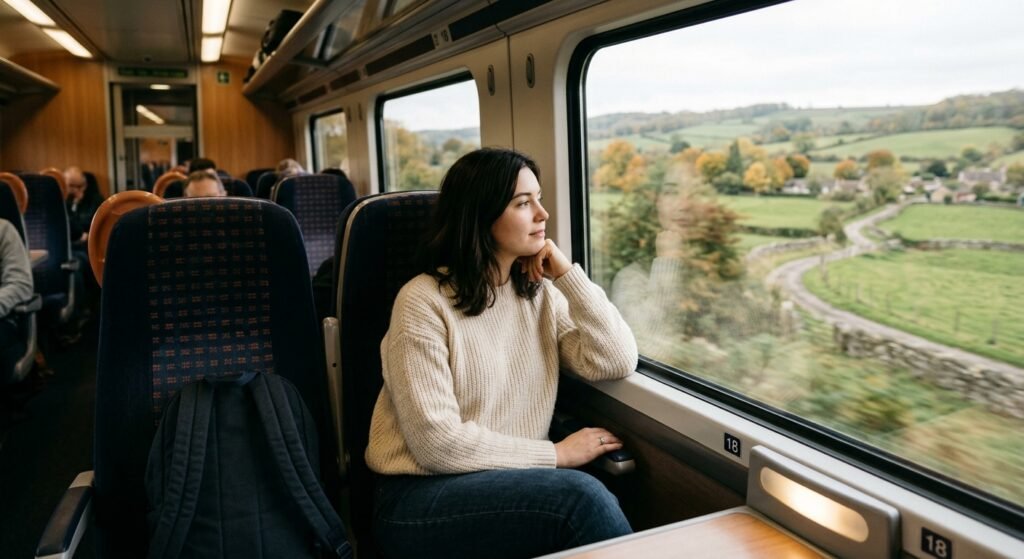
For decades, the journey between work and home served as an unspoken bridge. Whether you were driving down a quiet road, sitting on a train, or walking a few blocks, that travel time gave your mind a chance to disconnect. You could listen to a favorite song, let your mind wander, or just sit in silence without anyone needing anything from you.
It turns out that minds don’t change states instantly. When you jump directly from a stressful meeting into a home conversation, your thoughts stay stuck in work mode. You might be physically present in the living room, but emotionally, you’re still sitting at your desk.
A Quiet Space Nobody Else Owns
Psychologists who study daily routines often speak about transition boundaries. These are the small rituals and physical spaces that signal to your mind that one part of the day has ended and another has begun. When those boundaries vanish, the lines between your professional life and your personal life blur completely.
The beauty of a commute was that it belonged entirely to you. Bosses didn’t expect you to answer emails while you were driving. Family members didn’t expect you to take out the trash while you were on the bus. It was one of the few moments in modern life where you had full permission to simply be.
Even when the travel was frustrating, it still offered a rare kind of freedom. You were between places, which meant nobody could reach you with real demands. That time acted as a natural filter, catching all the tension of the day before you walked through your front door.
Why Sudden Transitions Feel So Exhausting
When you take away that buffer, the return to personal life becomes jarring. You might find yourself feeling irritable or distracted around the people you love, not because you’re unhappy to see them, but because you haven’t processed your day yet. You’re trying to give energy to your home life while your mind is still wrestling with an unresolved project.
Studies on work routines show that without a physical boundary, people often end up working longer without realizing it. The workday doesn’t end; it just slowly bleeds into the evening. A simple question from someone at home can feel surprisingly demanding simply because your mental guard is still up from work.
It isn’t that you want to spend time sitting in traffic. What you actually want is the psychological distance that traffic accidentally created. You want the boundary back.
The Secret Value Of Small Rituals
Sometimes we don’t realize how much a small routine matters until it vanishes from our daily lives. We spend years complaining about the morning travel, assuming it’s just wasted time. We calculate how many hours we lose each year sitting behind steering wheels or waiting for trains, convinced that eliminating those hours will make life smoother.
What we forget is that people aren’t built for constant efficiency. We need pauses. We need moments of transition. We need small pockets of time where we aren’t expected to produce anything, perform for anyone, or prove our value.
That’s why so many people have started creating fake commutes, taking a short walk around the block before sitting down at their desk, or sitting quietly in their car in the driveway for ten minutes before entering the house. They aren’t trying to waste time. They’re trying to reclaim the emotional bridge they lost.
Maybe the commute was never really about the travel at all. Maybe it was just the only time of day when you were allowed to exist between the person you have to be at work and the person you want to be at home. Realizing that changes how you look at those quiet minutes on the road, because you realize you were never missing the drive, you were missing the quiet permission to reset.