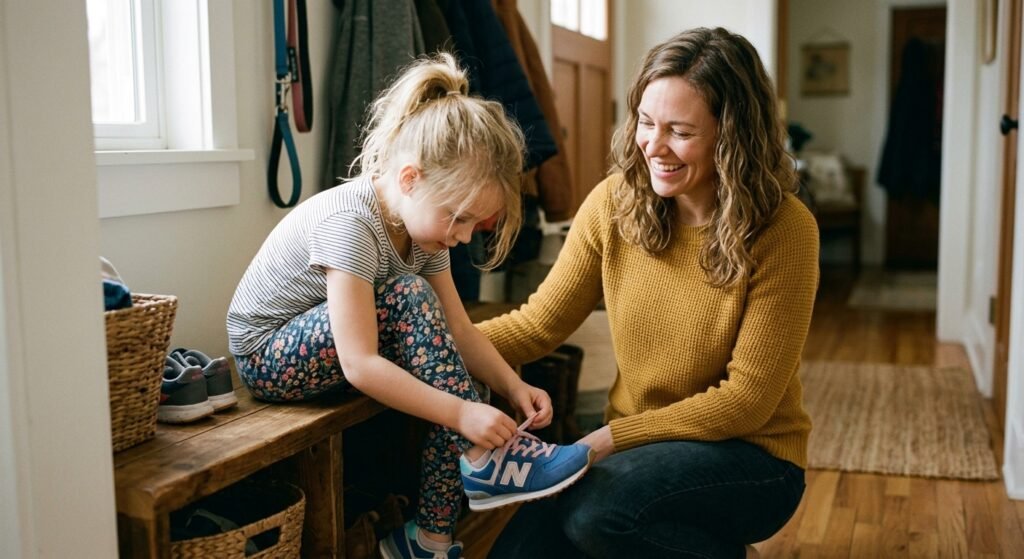
There is a specific kind of quiet tension that fills a room when a child is trying to do something complicated with their hands. Maybe it is tying a sneaker that refuses to stay looped, or trying to balance the final block on a tower that keeps leaning sideways. You sit nearby, watching their fingers fumble, and every instinct in your body tells you to lean forward, take over, and fix it in two seconds.
It takes real effort to keep your hands in your lap. You can see the frustration building in their shoulders, and you know how easy it would be to end that struggle. Yet somehow you stay still, holding your breath, waiting to see which way the moment will tilt.
And then it happens. A thumb adjusts position, a piece clicks into place, or the knot finally holds. They look up, eyes wide with the sudden realization of what they just accomplished, completely unaware of the tiny battle you were fighting inside your own head.
The Instinct To Step In Is Hard To Silence
From the moment children enter our lives, loving them looks a lot like taking care of things for them. You carry them when their legs grow tired, you open jars they cannot twist, and you untangle zippers that get stuck halfway up a winter coat. For years, your usefulness is how you express affection and keep their world feeling secure.
Because that habit is built over thousands of small daily moments, turning it off feels almost counterintuitive. When you see someone you love struggling, stepping in feels like kindness. Sitting back can feel surprisingly like neglect, even when you know deep down that the struggle is where the learning lives.
Child psychologists often talk about scaffolded learning, which is a formal way of describing how adults build temporary supports while a young person learns a new skill. The support is supposed to disappear as the child grows stronger. What research rarely mentions is how strange it feels for the person holding the support when it is time to take it down.
You realize that every time you refrain from fixing a problem, you are giving up a small piece of your role as the problem solver. It’s a quiet transition that happens in living rooms and kitchen corners without any grand announcement.
The Bittersweet Nature Of Independence
When a child realizes they can handle something alone, their world expands instantly. They stop asking for help with the light switch because they found a stool. They pack their own lunch box, even if the sandwich ends up slightly crooked. They manage a disagreement on the playground and come home telling you the story instead of asking you to fix it.
Watching that independence take root brings a deep, warm sense of pride. You raised someone who can think, adapt, and navigate life without holding your hand every step of the way. That was always the goal, even on the days when it felt a long way off.
Still, right alongside that pride, there’s usually a quiet pang of nostalgia. Each small triumph means another small era has quietly closed. The little hands that used to reach for yours to navigate a steep curb are now confident enough to run ahead.
It turns out that parenting is one of the few roles in life where success is measured by how effectively you make yourself less central to the daily mechanics of someone else’s world. That’s a strange thing to celebrate, which is why the pride so often comes mixed with a quiet, lingering warmth.
Finding Joy In Standing Back
As time goes on, the challenges change scale. The tricky shoelaces turn into complicated homework assignments, broken friendships, or decisions about where to go next. The physical impulse to grab the laces becomes an emotional impulse to write the email, give the unprompted advice, or step in to smooth out every rough patch.
Yet the quiet victory remains the same whenever you choose to listen instead of direct. When you sit on the couch and let them talk through a problem until they find their own solution, you are giving them something far more valuable than a quick fix. You’re giving them proof that you trust their judgment.
Developmental research shows that confidence doesn’t grow from being rescued. It grows from experiencing difficulty and coming out the other side intact. Every time they solve something themselves, they update their internal understanding of what they are capable of handling.
And maybe that’s the real perspective change that transforms how we view these moments. When you step back, you aren’t stepping away. You are stepping into a different kind of presence, one that says you believe in their ability to meet life on their own terms.
Love That Celebrates Space
In the end, watching someone grow up is a long lesson in learning how to celebrate space. It’s finding genuine happiness in the fact that they didn’t need your help with the zipper today, and that they didn’t need you to call their teacher, and that they figured out how to fix their own mistakes.
You spend the early years being the safety net, the expert, and the constant solver of mysteries. But the deeper work of love involves stepping back into the audience and becoming their most reliable supporter.
The next time you catch yourself reaching out to fix something that a child is on the verge of figuring out, take a quiet breath and let your hands stay still. Watch their brows furrow and their fingers work through the puzzle.
Because when they finally look up with that bright, sudden realization that they did it on their own, you’ll realize something too. Maybe love was never about staying necessary forever. Maybe love is simply cheering loudest for the very skills that allow them to fly without you.