If you’ve ever spent weeks watching your child navigate a hard season, you already know the specific quiet that fills your home. It isn’t a peaceful quiet. It’s the kind of silence that carries a lingering tension, where every room feels a little larger and every evening feels a little longer. You find yourself scanning their face when they walk through the front door, looking for any subtle sign that today was slightly better than yesterday.
You watch how they set down their backpack, how quietly they answer simple questions, or how quickly they retreat to their room. You carry that worry around with you while you make dinner, answer work emails, and try to keep daily life moving forward. It feels like walking on thin ice, hoping that time and patience will eventually help them find their footing again.
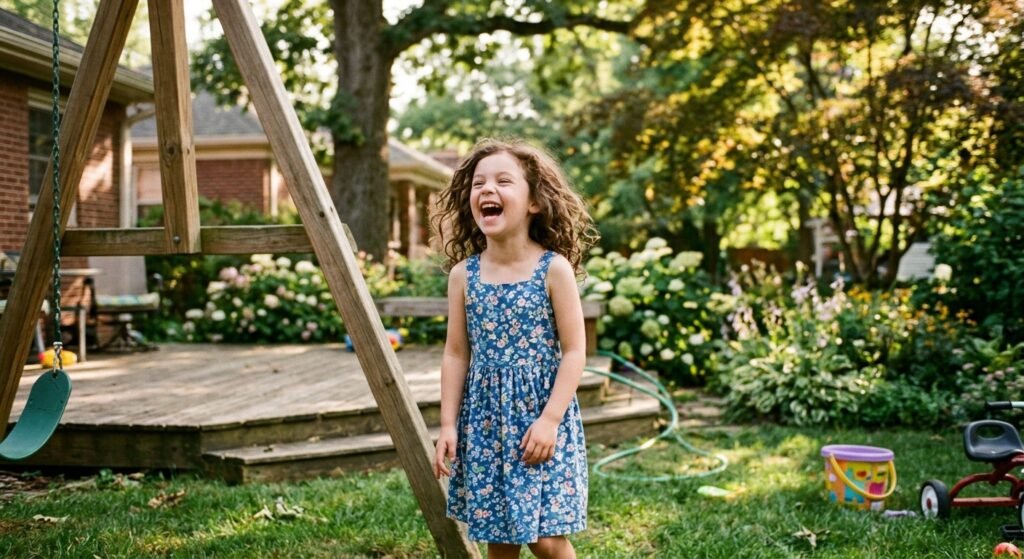
Then, on an ordinary Tuesday afternoon when you least expect it, a sudden sound travels down the hallway. It’s a genuine, unscripted burst of laughter.
It might be over a silly mistake, a video, or a ridiculous joke shared with a sibling. But the moment it hits your ears, you freeze. Whatever you’re holding stays in your hands while you listen closely, holding your breath for just a second to make sure you didn’t imagine it. And as the giggles continue, a sudden, deep sense of relief washes through your chest.
When A Child’s World Goes Quiet
Children have a way of carrying their worries in their whole body. When they’re going through a tough patch at school, dealing with a friendship that fell apart, or simply feeling overwhelmed by a big life transition, their whole world seems to turn down its volume knob. The bright, energetic atmosphere that usually fills your living room quietly fades into something cautious and withdrawn.
As a parent, watching that retreat can feel completely heartbreaking. You want to fix whatever is hurting them, but so many of the challenges growing up presents aren’t things you can simply solve with a quick conversation or a favorite meal. You’re left standing on the sidelines, offering soft places to land while honoring their need for space. You learn to live with a constant, background ache, wondering if they’re going to be okay.
That watching phase is exhausting in a way that’s hard to describe to anyone who hasn’t lived it. You aren’t just managing your own daily tasks; you’re constantly monitoring the emotional temperature of your home. You notice the missing enthusiasm for hobbies they used to love. You notice the half-hearted smiles given only to reassure you. And without even realizing it, your own mood becomes tied to theirs, waiting for a signal that the storm is starting to pass.
The Shared Rhythm Of Healing
Psychology often speaks about how closely connected family members are through emotional co-regulation. Long before children have the words to explain their internal struggles, their nervous systems interact directly with ours. When a child feels anxious or sad, parents naturally absorb that emotional climate. Your body stays on high alert, tuned into every small change in their behavior, constantly seeking proof that they’re safe.
Observational research shows that positive emotional expressions like laughter act as instantaneous markers of safety for our nervous systems. When we hear someone we love laugh freely, our own physiological stress markers immediately drop. It isn’t just a pleasant sound; it’s a direct signal to your own body that the immediate strain has loosened. The tension holding your shoulders tight for weeks finally begins to melt away.
What makes that first laugh so powerful isn’t just its volume; it’s its spontaneity. You can’t force a real laugh out of a child who’s feeling down. You can ask them to smile for a picture or prompt them to say thank you, but genuine, belly-shaking joy requires a moment of total surprise and presence. When it happens, you know their mind has briefly stepped out of its worry and back into the present moment.
Noticing The Smallest Victories
In life, we tend to wait for grand milestones to confirm that everything is going to be fine. We look for big indicators like improved grades, completed seasons, or formal events that mark the end of a difficult chapter. But healing rarely announces itself with a giant celebration. Most of the time, it arrives in tiny, quiet moments that are easy to miss if you aren’t paying close attention.
It’s the sudden decision to build a blanket fort on a rainy afternoon. It’s the unexpected storytelling at the kitchen table while making toast. Or it’s that loud, infectious giggle coming from the back seat of the car over something entirely silly. These small moments are quiet evidence that their spirit is recovering its natural resilience.
When you hear them laugh again, it doesn’t mean that every single problem has disappeared into thin air. Life still has its complexities, and tomorrow might still bring its own set of minor hurdles. But that sound offers something far more valuable than a permanent guarantee. It offers perspective. It reminds you that joy hasn’t vanished from their world; it was simply resting, waiting for the right moment to return.
The Joy Of Seeing Them Feel Okay
Parenting often feels like an endless act of holding on while constantly learning how to let go. You spend years trying to protect your children from hardship, only to realize that some struggles are necessary parts of how they learn to navigate the world. Watching them go through difficult times is perhaps one of the hardest parts of raising a family, precisely because you cannot carry the struggle for them entirely.
That’s why hearing them laugh after a hard stretch feels less like an achievement and more like a gift. It’s a quiet moment of gratitude that sweeps through you while you’re standing by the sink or walking through the hallway. You don’t need to make a big deal out of it or interrupt them to point it out. You simply stand there for a second, enjoying the beauty of an ordinary afternoon restored to its right order.
Maybe that’s the quiet realization that changes how we see these moments. We often think we’re listening for the sound of their happiness because we want to know they’re having fun. But deep down, maybe we’re listening for something much simpler. Maybe we’re listening for the quiet proof that their world feels safe to them once again, and that inside that safety, they’re finally free to just be kids.