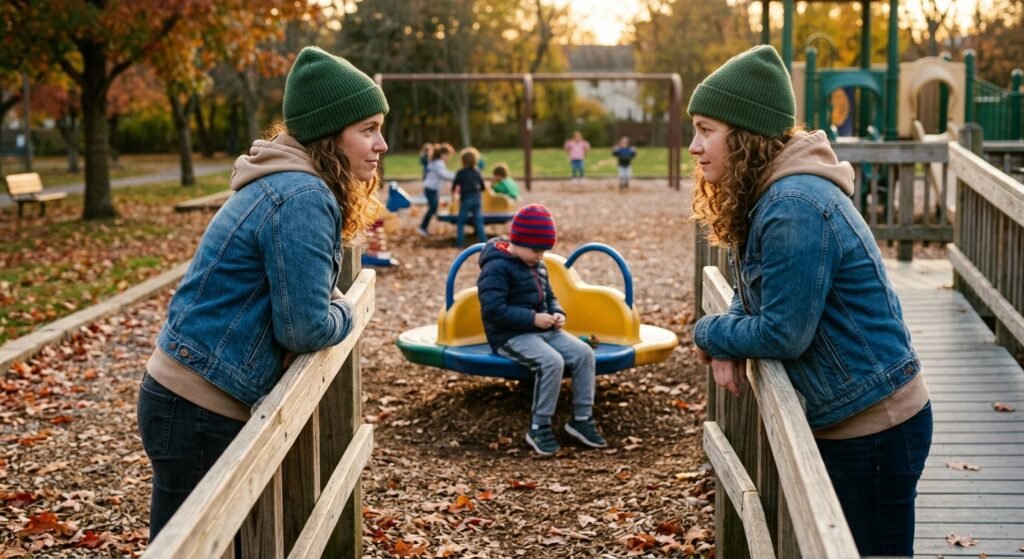
The Quiet Watch by the School Gate
You’re standing near the school entrance, waiting for the afternoon bell to ring, watching the usual end-of-day rush unfold. You see groups of children laughing, running in packs, and sharing inside jokes that seem to have their own secret language. And then you spot your child. They’re walking a few paces behind the rest, looking down at their shoes, or maybe holding their backpack straps just a little too tightly. It’s a fleeting moment, gone the second they look up, see you, and put on a quick smile, but the image stays with you all the way home.
It’s in those quiet, unscripted moments that a specific kind of parental worry takes root. You start noticing the smaller clues you might have missed before. It’s the lunchbox that comes home untouched because they spent recess walking the perimeter of the playground alone. It’s the weekend that stretches out with no plans, no text messages, and no invitations. When you ask how their day was, the answer is a brief, deflecting shrug. You want to believe everything is fine, but your instinct tells you that they’re quietly navigating a world where they feel entirely disconnected.
The Impulse to Protect and Fix
When you suspect your child is struggling to find their place, the protective instinct is almost overwhelming. You want to step in and fix the world for them. You find yourself mentally drafting emails to teachers, wondering if you should orchestrate playdates with children of your own friends, or trying to give them a step-by-step guide on how to start a conversation at recess. It feels like a problem with a simple solution, if only you could find the right leverage.
This urge doesn’t come from a place of control; it comes from love. Watching someone you love experience rejection or isolation is often more painful than experiencing it yourself. It quietly taps into your own childhood memories, bringing back the ancient sting of being chosen last for a team or sitting alone in a crowded cafeteria. You want to shield them from that specific grief because you know exactly how long those memories can linger.
Understanding the Landscape of Belonging
Researchers who study childhood development often talk about the vital role peer relationships play in a child’s sense of self. During middle childhood and early adolescence, the family remains the emotional foundation, but the peer group becomes the classroom where children learn who they are outside of the home. It is where they practice negotiation, test boundaries, and try on different versions of themselves. When those social connections fail to form easily, children can begin to internalize the silence, believing that their struggle to belong is a personal failure.
But child psychologists also remind us that social development isn’t a race with a single finish line. Some children are natural social butterflies, moving easily between groups. Others are quiet observers who require time, safety, and shared interests to form a bond. A child who spends recess reading under a tree isn’t necessarily suffering; they might simply be recharging. The worry arises when the solitude isn’t a choice, but a barrier they don’t know how to cross.
Creating a Safe Harbor at Home
If you spent your own youth worrying about fitting in, it’s easy to assume that popularity is the only shield against loneliness. But when we look closer at how children actually find their footing, we realize that having a vast circle of friends matters far less than having one or two spaces where they feel entirely seen. The pressure to be liked by everyone is exhausting, and it’s a burden no child should have to carry.
Sometimes, the most valuable thing you can offer isn’t a strategy for making friends, but a steady presence that doesn’t demand they change. When the school day feels like an endless audition where they don’t know the lines, home needs to be the place where they can drop the script entirely. It’s the space where they don’t have to be outgoing, funny, or athletic to feel like they belong. They just have to be themselves.
The Deep Value of the Slow Path
It’s natural to want your child’s social path to be smooth and crowded with friends. But sometimes, the children who struggle to find their group early on are simply developing a deeper, more intentional way of connecting with others. They are learning to value genuine connection over superficial popularity. They are discovering that it’s better to wait for people who truly understand them than to bend themselves into shapes that don’t fit just to belong to a crowd.
Perhaps our role isn’t to clear every obstacle from their social path or to guarantee they are always invited to the party. Maybe our role is to sit with them in the quiet spaces, holding their hand through the disconnect, and reminding them that their worth was never decided by the crowd at the school gate. When they know they are deeply loved just as they are, they gain the courage to keep looking for their people, no matter how long the search takes.