If you’ve ever stood in a store looking at tiny baby clothes, or sat quietly in a rocking chair during the middle of the night, you’ve probably played the game. It’s a quiet, private game of imagination where you project twenty years into the future. You picture the child you’re holding as a confident adult, perhaps wearing a graduation gown, speaking on a stage, or walking down a bustling city street with the easy confidence you always wished you had. We do this because we love them, and because the blank slate of a new life feels like a canvas where only beautiful things can be painted.
But then the years start unfolding, and the person in front of you begins to write their own story. Suddenly, the child you imagined as a star athlete prefers sitting in the quiet corner of their room, meticulously drawing creatures from their own imagination. The child you hoped would be the life of the party turns out to be deeply introverted, needing hours of quiet space to recover from a simple afternoon at the park. You realize the future you spent years quietly building in your mind doesn’t match the reality of the kid sitting at your kitchen table eating cereal.
The Invisible Blueprint We Carry
It’s completely natural to feel a quiet sense of loss when this happens, even if you’d never admit it out loud to another parent. We carry these unspoken blueprints for our children, constructed from our own triumphs, our deepest regrets, and the things we felt we missed out on during our own youth. If you struggled to fit in, you might desperately want your child to be popular. If you felt financially insecure, you might push them toward a stable, traditional career path that they have absolutely no interest in pursuing. The blueprint isn’t created out of a desire to control; it’s built out of a desire to protect.
The trouble is that our children can feel the pressure of that blueprint even when we think we’re hiding it. They notice the slight pause in our voice when they tell us they don’t want to try out for the team. They see the fleeting look of disappointment when they choose a creative path over an academic one. Over time, they can begin to feel like they are constantly competing with a ghost, an idealized version of themselves that lives only in their parents’ minds. It’s a complicated space for a young person to navigate, trying to figure out who they are while trying to avoid letting down the people they love most.
The Fantasy Versus the Person
Psychologists who study family dynamics often talk about this exact tension. They refer to it as the challenge of reconciling the imagined child with the actual child. Research shows that our satisfaction as parents, and our children’s emotional health, depends deeply on our ability to let go of the fantasy so we can appreciate the actual person in front of us. When we cling too tightly to the imagined future, we miss the quiet beauty of the present. We become so busy mourning the soccer player who never was that we fail to see the brilliant, sensitive artist who actually is.
Letting go of those dreams doesn’t mean you’ve failed as a parent. In fact, it’s one of the most profound acts of love you can offer. It requires you to look at your expectations and ask yourself where they truly came from. Are you pushing that specific college because it’s best for them, or because it makes you feel successful? Are you worrying about their quiet nature because they’re unhappy, or because their social style makes you uncomfortable? Asking these questions is difficult, but it’s how we begin to separate our own emotional needs from our children’s lives.
Creating Space for Who They Are
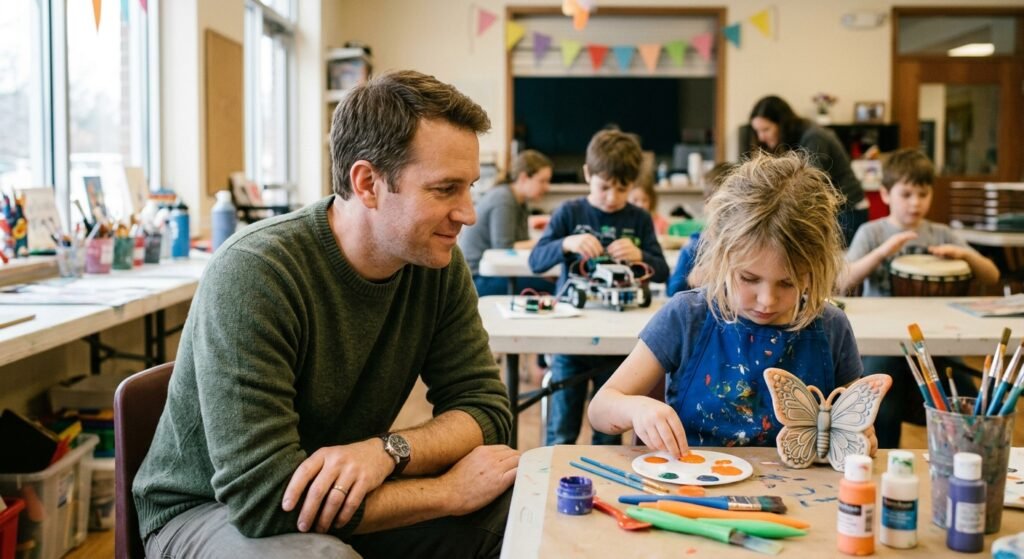
When you finally decide to put down the blueprint, something remarkable happens. The relationship changes from a series of negotiations and corrections into an act of discovery. You stop trying to guide their interests toward your preferred destinations and start simply watching where their natural curiosity takes them. You begin to appreciate the unique way their mind works, even if it’s entirely different from your own. You realize that their sensitivity isn’t a weakness to be corrected, but a strength that allows them to move through the world with deep empathy.
This transition doesn’t happen overnight. It’s a daily practice of catching yourself when you start to steer, and choosing instead to listen. It’s about learning to celebrate the small victories that matter to them, even if those victories don’t fit into your original plan. When they feel seen for who they actually are, rather than who you hoped they would be, their confidence begins to grow in a completely different way. They stop looking for your approval in every decision and start trusting their own internal compass, which is exactly what we actually want for them in the long run.
The Quiet Realization of Letting Go
Perhaps the hardest part of parenting is accepting that our children were never ours to design. They are temporary visitors in our homes, people who arrived with their own temperaments, their own passions, and their own destinies to fulfill. Our role isn’t to act as sculptors, shaping them into a predetermined image that makes us feel secure or proud. Our role is more like that of a harbor, providing a safe, warm place for them to rest before they set sail into their own lives.
Maybe the realization that changes everything is that our children don’t owe us the fulfillment of our unlived dreams. They don’t exist to correct our past mistakes or to carry the significance of our expectations. Once you let go of the life you imagined for them, you become free to love the life they are actually living. And in that space of complete acceptance, you might just find that the person they are becoming is far more wonderful than anyone you could have ever imagined.