
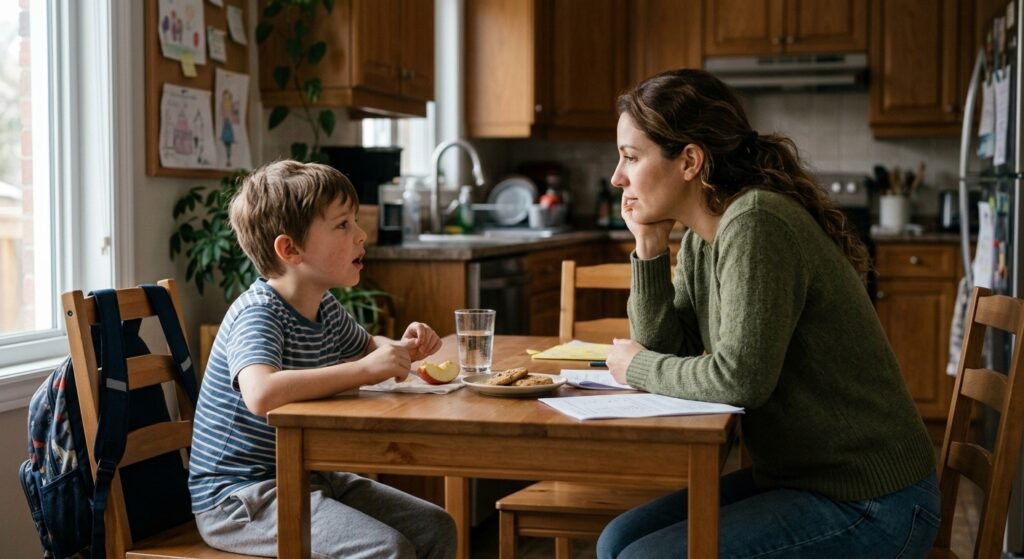
You probably know the exact sound of a backpack hitting the floor when something went wrong at school. It’s a specific, hollow thud that carries more emotion than any words your child could say. They walk into the kitchen, bypass the snacks, and slump onto a chair, looking suddenly much smaller than they did when they left the house this morning. When the story finally spills out—a classmate who excluded them, a teammate who made a sharp comment, or a friend who suddenly decided to play with someone else—your first instinct doesn’t just knock on your door. It bursts right through it.
That instinct is a fierce, protective surge. Within seconds, your mind is already drafting an email to the teacher, planning a conversation with the other parent, or rehearsing the exact words you’d use to set that difficult child straight. It feels like love, and in many ways, it is. We want to protect the people we love from suffering. But when we look closer at that urgent desire to step in and fix the situation, we might find something else hiding beneath our protective feelings.
The Beautiful, Painful Urge to Rescue
It’s deeply uncomfortable to watch your child experience social friction. When they’re hurting, a part of you hurts too, and sitting with that discomfort is one of the hardest parts of parenting. Stepping in to solve the problem feels like a relief because it gives us something to do with our own anxiety. If we can make the call, write the email, or arrange the playdate ourselves, we can make the pain go away faster. Or so we think.
The trouble is that when we leap over the fence to fight their battles, we accidentally send a quiet message. We think we’re saying, “I love you and I’ve got your back.” But what they might actually hear is, “I don’t think you’re strong enough to handle this on your own.” It’s a subtle distinction, but to a child trying to find their footing in a complex social world, that distinction means everything.
What We Lose When We Clear the Path
Researchers who spend their lives studying childhood development and resilience often point to a concept called emotional scaffolding. It’s the practice of supporting a child’s emotional growth by offering structure and warmth without taking over the task itself. Studies consistently show that children who are allowed to navigate minor social conflicts with guidance, rather than direct parental intervention, develop a much stronger sense of personal agency. They learn that discomfort isn’t a permanent state, and more importantly, they learn that they are capable of finding their way through it.
When we sweep away every difficult person and smooth out every rough patch, we inadvertently rob them of the chance to practice. They don’t get to experience the trial and error of standing up for themselves, setting a boundary, or walking away from someone who doesn’t treat them well. Those are social skills that can’t be taught in a lecture; they have to be felt, practiced, and sometimes messed up in real life.
Learning to Stand Behind, Not in Front
So, what does it look like to offer support without taking over? It often starts with a deep breath and a willingness to simply listen. It means sitting on the edge of their bed and letting them feel sad or angry without immediately trying to find a silver lining or a strategy. It means asking questions that help them think, rather than telling them what to do. Questions like, “How did you feel when that happened?” or “What do you think you want to do next?” can invite them into their own problem-solving process.
When we do this, we act as a secure base. We’re not running onto the field to play the game for them; we’re standing on the sidelines, ready with a water bottle and a word of encouragement when they need to take a break. We’re letting them know that the world can be tough, and people can be difficult, but they have a safe place to return to when they’re tired.
The Hardest Kind of Trust
This approach requires an immense amount of trust. It’s not trust that the other child will suddenly become kind, or that the teacher will notice everything, or that the world will always be fair. It’s trust in your own child’s capacity to grow through struggle. It’s believing that they have a natural strength that can only be revealed when they’re given the space to use it.
It’s a long-term investment. The immediate relief of solving their problem today is deeply tempting, but the true goal is helping them build a foundation for tomorrow. After all, we won’t always be there to make the phone call or write the email when they encounter difficult coworkers, demanding bosses, or challenging partners years from now.
Perhaps the quiet realization in these moments is that our job isn’t to shield our children from the wind. It’s to help them build roots deep enough to stand against it. When we step back and let them navigate those tricky playground dynamics, we aren’t abandoning them to the storm. We’re offering them the highest form of respect: the belief that they are strong enough to stand through it, and the quiet assurance that we’ll be right there waiting when they do.