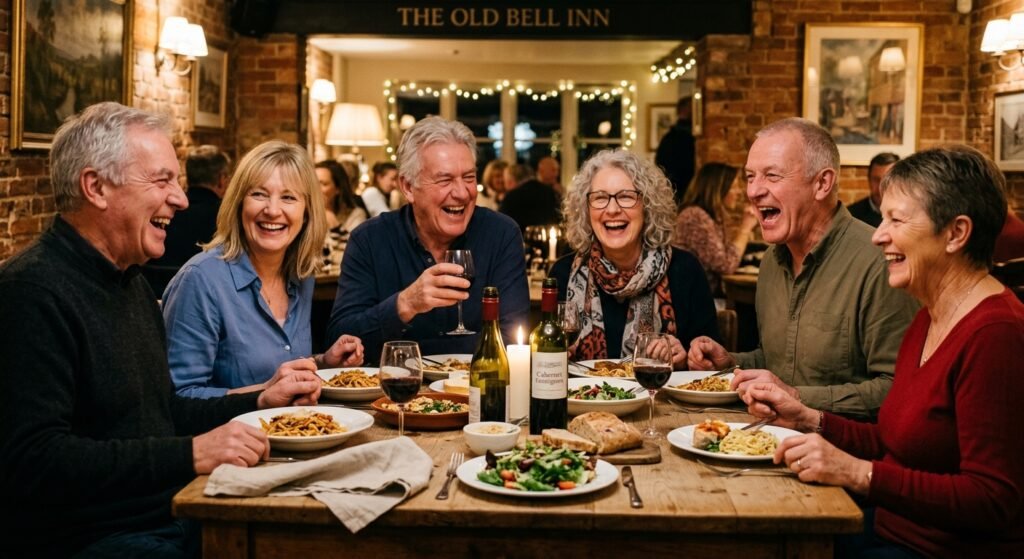
You’re sitting at a dinner table with new colleagues or acquaintance-level friends when someone mentions a completely ordinary word—maybe it’s a specific brand of cheap mustard, or a terrible nineties pop song. In an instant, your mind travels back a decade. You’re crammed into the backseat of a hatchback with broken air conditioning, laughing so hard your ribs hurt. You feel a sudden, intense urge to share the memory, but you stop yourself. You know that if you try to explain why a jar of mustard is hilarious, you’ll end up saying those dreaded five words: you had to be there.
It’s a strange kind of loneliness, isn’t it? Realizing that some of your most vibrant memories are entirely locked inside a vault that only a few people can access. You can describe the scene, you can paint the picture, and you can even explain the joke step by step, but the magic evaporates the moment it leaves your mouth. The new people in your life will smile politely, but they won’t feel the spark. That’s because the memory isn’t just about what happened. It’s about the invisible, shared library of moments you built with the people who were beside you.
The Secret Dialect of Old Friends
When we spend years navigating life alongside the same people, we slowly and quietly construct a private language. It isn’t made of new words, but of old experiences repurposed into shorthand. A single look across a crowded room can communicate an entire essay of exhaustion, amusement, or alarm. A specific vocal inflection can bring back an entire summer of shared history.
This shorthand is deeply comforting because it requires absolutely no translation. In our daily lives, we spend so much energy explaining ourselves to the world. We write detailed emails, we clarify our intentions, and we try to make sure we’re being perceived correctly. But with the friends who truly know us, the need for translation disappears. You don’t have to explain why you’re quiet, or why a certain comment made you uncomfortable, or why you’re suddenly nostalgic. They already have the context. They’ve been holding the key to your story for years.
Our brains are wired to connect through these shared reference points. Psychologists often talk about transactive memory, which is the way close groups of people share the work of remembering details. One friend remembers the names of the people you met on that random weekend trip, another remembers the name of the diner, and you remember the ridiculous song that was playing on the jukebox. Together, you form a single, complete mind that preserves a past that would otherwise fade. When you’re apart, the memory feels fragile. When you’re together, it becomes solid again.
The Keepers of Your Former Selves
There’s a quiet grief that comes with growing older and moving through different chapters of life. You change jobs, you move to new locations, you enter new relationships, and you leave older versions of yourself behind. Sometimes, you look back at the person you were years ago and feel like you’re looking at a stranger. You wonder where that version of you went, the one who was louder, or more adventurous, or less worried about the future.
And that’s why seeing old friends can feel so emotional, even if your lives look completely different now. Those friends are the custodians of your youth. They are the only people who remember you before you became responsible, before you got the mortgage, or before you went through that difficult loss. When you sit down with them, you don’t just talk about the past. You actually get to inhabit it for a little while.
For a few hours, you’re allowed to be the version of yourself that didn’t have everything figured out. You can laugh at the same foolish things, use the same silly nicknames, and feel the lightness of a time when life felt a bit more open-ended. They don’t just remember your stories; they remember your essence. They hold up a mirror that reflects a part of you that the rest of the world never got to see.
Why We Can’t Take the Memories With Us
We often try to recreate those old feelings with new people. We take our current friends to our favorite old spots, or we play the music that defined our younger years, hoping to spark that same warmth. But the truth is, you can’t export a feeling that was grown in a specific soil.
The closeness we feel with old friends isn’t just about the fun times we had. It’s about the dull, unglamorous hours we logged together. It’s the rainy Tuesdays when nothing was happening, the long drives where nobody spoke, and the shared struggles of trying to figure out how to be adults. You can’t fast-forward through those hours to build instant shorthand with someone new. Closeness takes time, and more importantly, it takes shared context.
Perhaps we don’t actually need everyone in our lives to understand every story we have. There’s a quiet beauty in having a past that belongs only to a select few. It makes those relationships feel like a sanctuary. The world keeps moving, neighborhoods change, and we grow older every day, but those shared memories remain exactly where we left them, safe in the keeping of the people who were there.
Maybe we aren’t just missing the old days when we think about those inside jokes. Maybe we are realizing that our history isn’t something we carry alone. It lives in the spaces between us and the people who helped us live it. And knowing that someone else out there remembers the exact flavor of that specific, ridiculous moment is sometimes all the connection we need to feel anchored in the present.