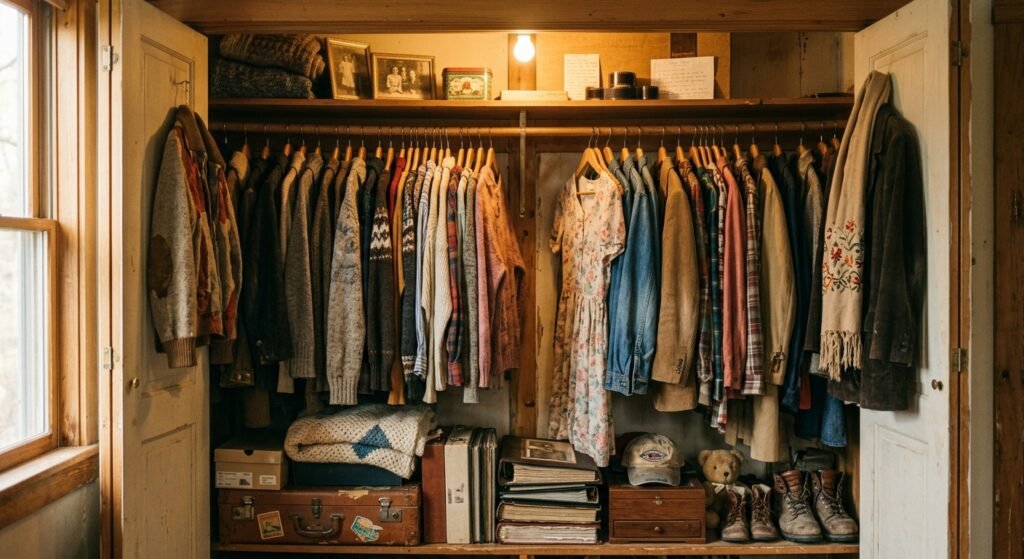
If you open your closet right now and push past the daily rotations of soft tees and jeans, you’ll probably find at least one item that doesn’t belong in your current life. Maybe it’s a pair of formal shoes with heels too high for your current routine, a worn out leather jacket from a decade spent chasing live music, or a crisp corporate blazer from a career you walked away from years ago. You don’t wear it. You know you probably won’t ever wear it again. Yet, every time you clean out your closet, you look at it, run your fingers over the fabric, and slide the hanger right back into place.
It’s easy to label this as simple clutter or tell yourself that you’re just being sentimental. But there’s a quieter story happening in those dark corners of our wardrobes. We aren’t just saving fabric and thread. We’re holding onto physical evidence of who we used to be, keeping a small anchor to a version of ourselves we aren’t entirely ready to let go of just yet.
The Wardrobe of Past Selves
Every closet is a museum of personal history. When you look at that old dress or that college sweatshirt, you don’t just see a piece of clothing. You see the person you were when that item was the center of your world. You remember the optimism of your early twenties, the ambition of your first real office job, or the freedom of a time before mortgage payments and family responsibilities. The clothing becomes a bridge to a past state of mind.
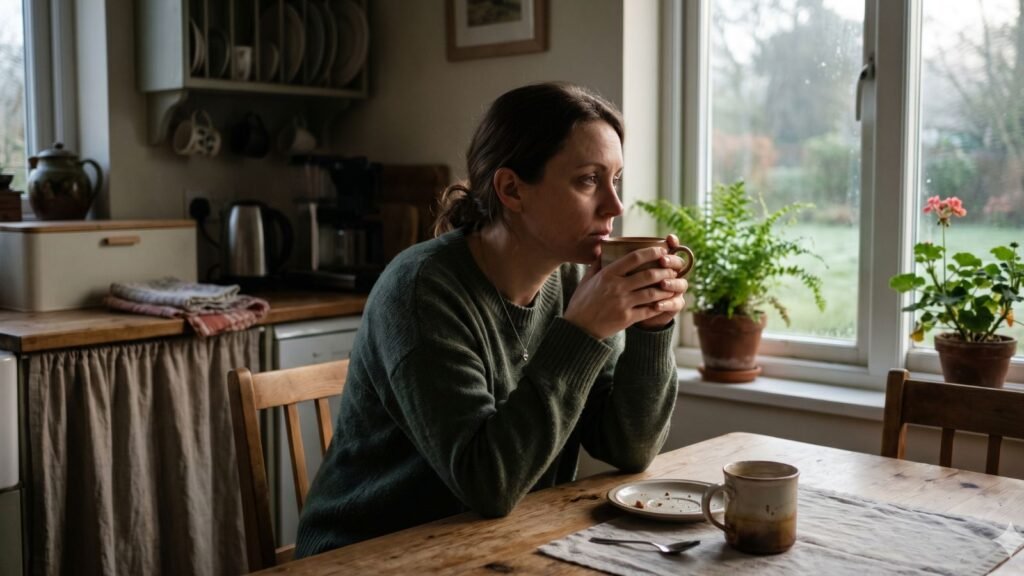
Think about the last time you tried on something you haven’t worn in years. You stood in front of the mirror, looking at your reflection, trying to see if you could still find that former self inside the fabric. Sometimes, the fit is wrong, or the style feels completely foreign. But that moment of trying it on isn’t about fashion. It’s an attempt to feel what it felt like to walk through the world with that specific set of dreams, fears, and expectations.
We do this because our lives move faster than our internal sense of self. You can change your job, move to a new city, or enter a completely new season of life in a matter of weeks. Your physical reality changes quickly, but your mind needs time to process who you are now that the old roles are gone.
Why We Keep the Closet Full
People who study the connection between possessions and identity have noticed that our belongings serve as a physical scaffolding for the self. Experts in consumer behavior often point out that during major life transitions, we experience a sort of identity disruption. When we lose a role, whether it’s through retirement, a career pivot, or simply growing older, we feel a deep need to preserve our continuity. Keeping old garments is a way of telling ourselves that the past version of us still exists, even if we don’t live that way anymore.
This isn’t a sign of weakness or an inability to move forward. In fact, keeping these items can actually help us navigate change. By keeping a physical link to our history, we create a sense of stability. We don’t have to completely erase who we were to become who we are today. The clothes act as a bridge, allowing us to step into the future without feeling like we’ve abandoned our past entirely.
But there comes a point when the closet starts to feel crowded, not just with fabric, but with the expectations of those bygone days. You might look at a pair of running shoes from your marathon days and feel a quiet sense of guilt because your body doesn’t move that way anymore. Or you might look at a stylish outfit from your single years and feel a sudden disconnect from your quiet Friday nights at home. That’s when the objects stop being comforting anchors and start becoming silent critics.
The Quiet Art of Moving On
Letting go of these items is rarely about making more physical space. It’s about accepting that a particular chapter of our story has closed. When you finally decide to donate that suit or pack away those old boots, you are performing a quiet ritual of acceptance. You are acknowledging that you don’t need the physical garment to prove that you lived those years, made those friends, or achieved those goals. The strength of those memories lives in you, not in the cotton or wool hanging in the dark.
It’s a process that takes much longer than we expect. We often think that once we make a big decision, like leaving a job or entering parenthood, the change is complete. But the emotional tail of our past identities is long. It can take years of quiet reflection to fully step into our present reality without looking back to see if the old clothes still fit.
So if you’re still holding onto that old jacket, don’t rush yourself to throw it out. It’s doing a job for you, keeping watch over a version of you that deserved to be loved and remembered. When you’re ready, you’ll find it easier to let it go, realizing that the person who wore it never truly left you. They just grew up, stepped into something new, and made room for the person you’re still becoming today.