You’re sitting on a living room floor surrounded by flat-packed cardboard, several wooden pegs that don’t seem to fit any of the pre-drilled holes, and a single page of instructions printed in a language you don’t speak. Your friend is holding a screwdriver upside down, laughing so hard they can barely breathe. In this moment, you aren’t thinking about your stressful work week or the chores you need to finish. You’re just trying to figure out how to attach shelf ‘B’ to side panel ‘A’ without collapsing the whole structure.
There’s a particular kind of joy that belongs entirely to friends who decide to make things together. It doesn’t matter if you’re building a garden bed, planning a neighborhood potluck, recording a bedroom podcast, or attempting to bake an overly complicated pastry. When you step out of your everyday routine to build something from scratch with someone else, the relationship enters a different space. You’re no longer just observers in each other’s lives; you’ve become co-conspirators in a tiny world of your own making.
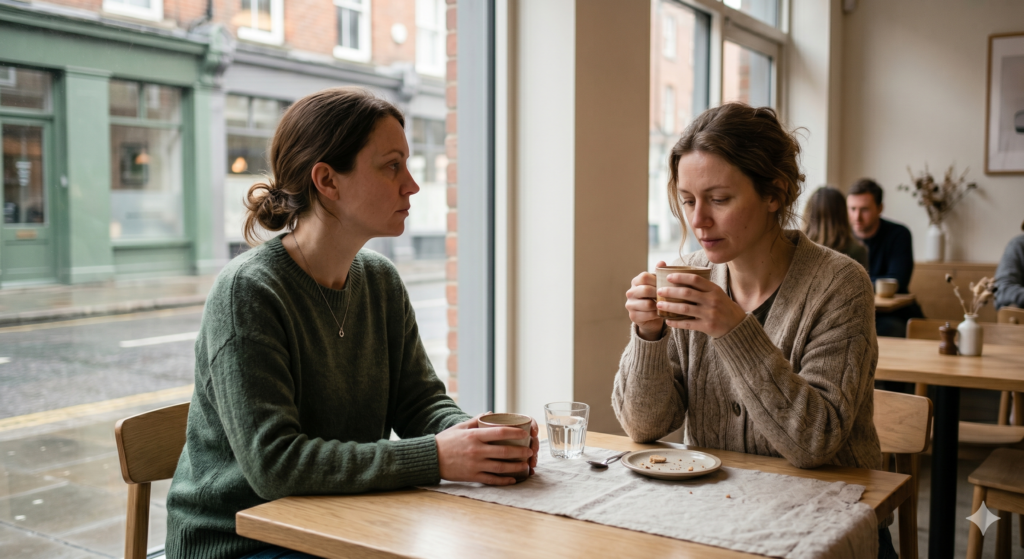
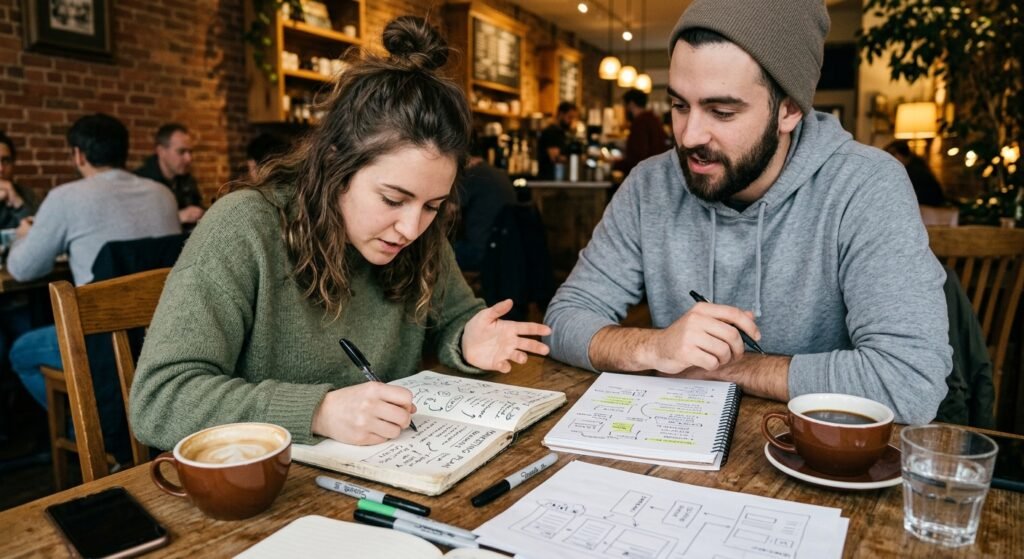
We often think of closeness as something that happens when we sit face-to-face over coffee and talk about our deepest secrets. While those heart-to-heart conversations are vital, there’s another path to connection that gets far less attention. Relationship researchers often talk about the difference between looking at each other and looking at something else together. When you and a friend focus your attention on a shared project, you enter what experts call joint action. It’s a state where our brains quietly synchronize, matching our movements and coordinating our thoughts as we work toward a single goal.
The Magic of Looking in the Same Direction
Think about how different it feels to sit across a table from someone versus sitting side-by-side on a workbench. When we’re face-to-face, there’s a subtle pressure to perform, to keep the conversation flowing, and to present our best selves. But when you’re both staring at a crooked shelf or trying to untangle a massive knot of yarn, that pressure completely evaporates. You don’t have to worry about maintaining eye contact or finding the perfect thing to say because the work itself carries the silence for you.
This side-by-side dynamic creates a unique emotional buffer. It allows you to talk about things that might otherwise feel too difficult or intense. You might find yourself sharing a childhood memory or admitting a deep personal worry while you’re focused on sanding a piece of wood or chopping vegetables. Because your hands are busy and your primary focus is on the task, your guard naturally drops. The project becomes a safe harbor for conversations that might feel too vulnerable in a formal setting.
Building a Shared Language of Two
When you collaborate with a friend, you’re doing more than just completing a task; you’re building a private culture. You create inside jokes about the mistakes you made, nicknames for the tools you used, and stories that will be retold for years. That clumsy bookshelf might end up slightly slanted, but every time you look at it, you don’t see a manufacturing error. You see the afternoon you laughed until your stomach hurt because you accidentally glued a piece upside down.
This shared history is deeply precious because it’s entirely unique to the two of you. Research on group bonding suggests that when we overcome small, low-stakes obstacles with someone else, our brains register the experience as a successful survival moment. We feel safer with that person. We trust them more because we’ve navigated a miniature crisis together and came out laughing on the other side. It turns out that a minor kitchen disaster or a poorly measured piece of wood is actually the perfect glue for a lasting bond.
The Joy of Co-Creation
There’s also a profound sense of play that we often lose as we grow older. When we’re children, almost all our friendships are built around making things: sandcastles, blanket forts, imaginary games, and drawing pictures. But as adults, we tend to relegate our friendships to consumption. We go to movies together, we eat at restaurants together, or we watch sports together. We consume other people’s creations rather than making our own.
Stepping back into that playground state of mind with a friend is deeply therapeutic. It reminds us that we’re allowed to make mistakes, to be silly, and to try things we aren’t highly skilled at. When you paint a canvas together or try to plan a backyard garden, you’re giving yourself permission to play. That sense of shared vulnerability and creativity creates a distinct kind of joy that you simply can’t find anywhere else. It’s the joy of knowing that your ideas are safe with someone else, and that their ideas are safe with you.
A Different Kind of Connection
In a world that often measures the success of relationships by how much we talk, collaboration offers a beautiful alternative. It suggests that some of our strongest bonds aren’t forged through intense discussions, but through shared curiosity. It’s the quiet understanding that comes when you’re both trying to figure out a difficult step, or laughing at a spectacular failure. It’s a way of showing up that doesn’t require us to have all the answers; it only requires us to be willing to try.
When we look back at the friendships that have sustained us over the years, we often find that our favorite memories aren’t the polished moments. They’re the messy afternoons spent in garages, kitchens, and backyards, surrounded by unfinished projects and shared ideas. The things we made might have eventually broken, faded, or been given away, but the feeling of creating them together remains completely intact.
Perhaps we don’t always need to sit face-to-face to understand each other deeply. Maybe the strongest connections are built side-by-side, looking at a messy, imperfect creation we brought into the world together.