You are driving home from a routine errand, taking a route you haven’t used in years, when you pass a completely unremarkable strip mall. It has the usual suspects: a dry cleaner, a faded convenience store, and a patch of cracked asphalt where the yellow lines have mostly peeled away. To anyone else, it’s just a place to park before buying milk. But as you glance at the corner space near the dumpster, your heart does a strange little somersault. For a split second, you aren’t a thirty-something driver with a trunk of groceries. You’re nineteen, sitting on the warm hood of a beat-up sedan at two in the morning, sharing a sleeve of cheap cookies with your best friend, solving mysteries of the universe that you’ve both since forgotten.
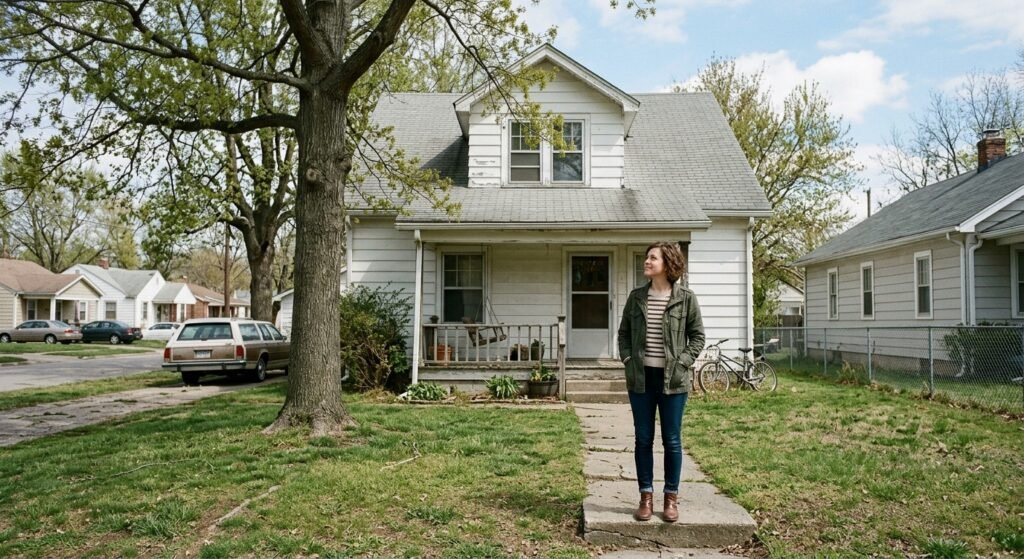
It’s fascinating how a physical location can hold onto a specific season of our lives so much better than we can. We go about our days, getting jobs, moving to new cities, changing our hair, and growing up. We believe we’ve packed up those old versions of ourselves and carried them along. But then we stumble across an ordinary corner, a specific park bench, or a tiled kitchen floor in a rental we haven’t lived in for a decade, and we realize we didn’t take those selves with us at all. We left them there, suspended in the air, waiting for us to pass by and remember.
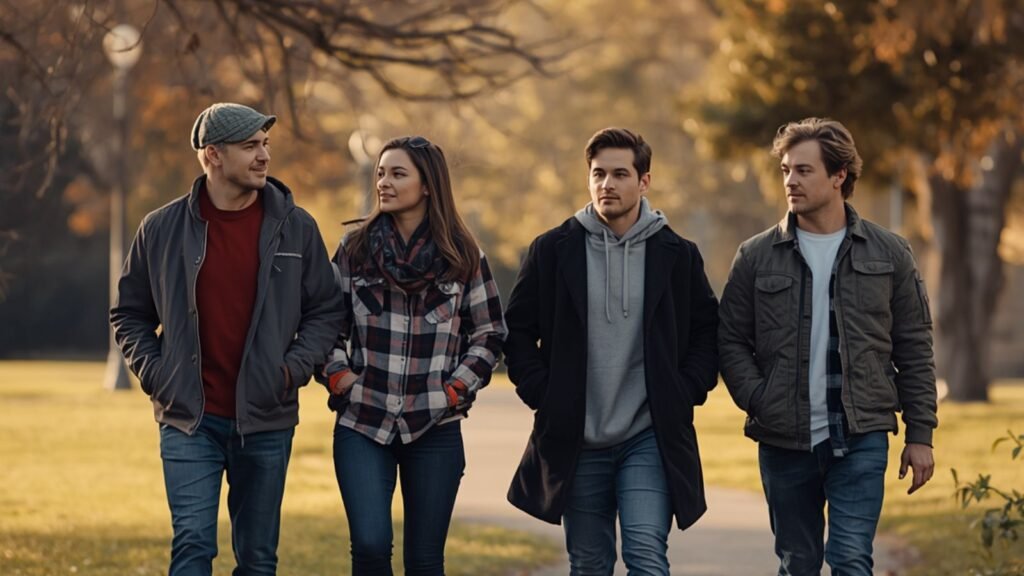
These spots don’t have to be beautiful. In fact, the places that hold the most potent nostalgia are rarely the ones we put on postcards. They are the lime-green booths of a 24-hour diner where you cried over a college breakup, or the specific step on a porch where you and a friend had a quiet, difficult conversation that turned the course of your entire friendship group. To the rest of the world, these are just random coordinates in a city. To you, they are museums of a friendship that shaped who you became.
The Geography of the Heart
There is a quiet branch of psychology that looks at how we relate to the spaces around us, often talking about how we anchor our identities to our environments. Experts suggest that we don’t just experience a place; we physically integrate it into our autobiographical memory. When we are sharing deep, emotional moments with someone we love, our brains are quietly recording the scent of the nearby pine trees, the texture of the plastic seat, and the way the streetlights flicker. The space becomes a physical container for an invisible connection.
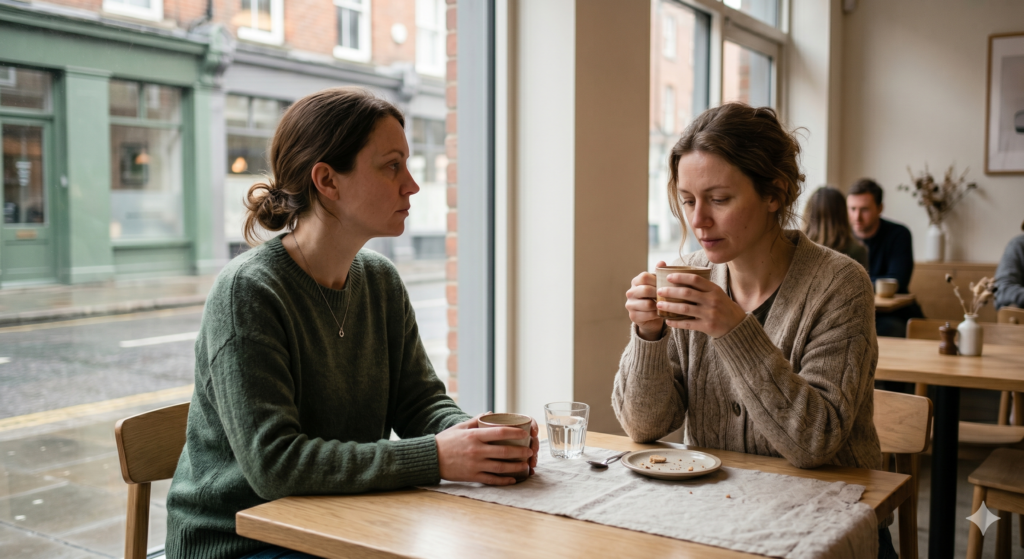
This is why visiting these places years later can feel so disarming. You might have lost touch with that friend, or perhaps you’ve simply grown into different lives that don’t intersect much anymore. There is no anger there, just the natural distance that time and responsibilities create. Yet, when you stand in that specific spot, the distance dissolves. You aren’t just recalling a memory; you are feeling the exact texture of a bond that once felt like the center of your world.
It can feel like a gentle haunting. You look at the empty space and can almost see the ghosts of who you used to be, laughing at jokes you no longer find funny, wearing clothes that have long been donated, and worrying about things that turned out to be completely fine. It’s a reminder that we are built out of the places we’ve been and the people who stood there with us.
The Safekeepers of Who We Were
When friendships change or fade, we often feel a sense of loss that’s hard to put into words. It isn’t just that we miss the person; we miss the version of ourselves we were when we were with them. We miss our own lightness, our easy laughter, or the unfiltered way we used to speak before we learned to be more cautious with our words. It’s easy to worry that those parts of us are gone forever, buried under the responsibilities of adulthood.
But returning to these ordinary landmarks offers a comforting revelation. The lightness isn’t gone; it was just parked. The strip mall dumpster, the quiet curve of the riverbank, the specific corner of a library basement—they’ve been guarding those pieces of you this whole time. They didn’t forget how loud you used to laugh, or how big your dreams were, or how fiercely you loved your friends.
A Quiet Space to Return To
Perhaps that is the real beauty of these everyday spaces. They don’t demand that we stay nineteen forever, and they don’t judge us for moving on. They simply stand there, quiet and patient, holding onto our history. And when we happen to drive by, they offer us a brief, beautiful chance to look in the rearview mirror and recognize the young people who set us on the path to who we are today.