
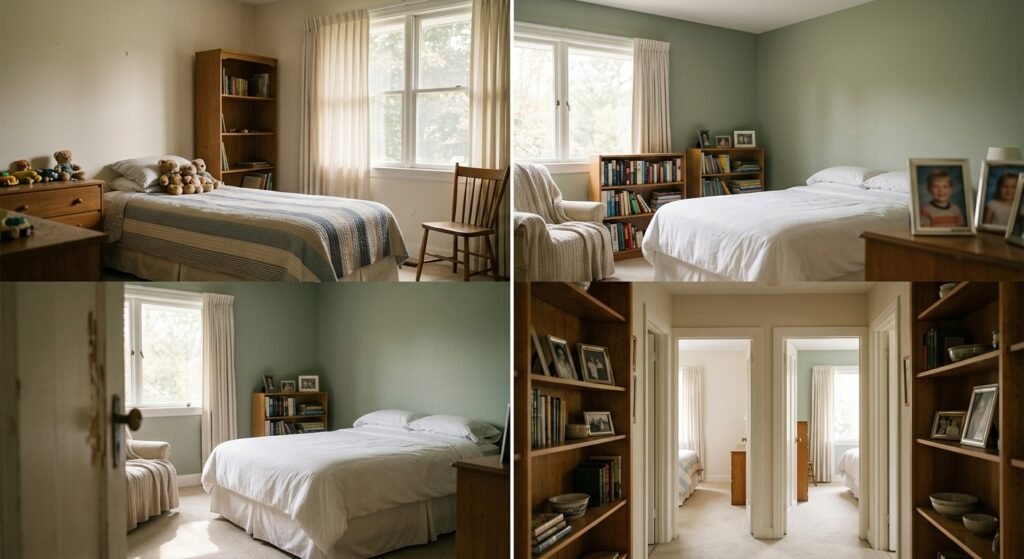
The front door clicks shut, and the silence doesn’t just enter the room; it seems to settle into the furniture. You stand in the hallway for a moment, listening to the hum of the refrigerator, a sound that’s completely drowned out when the kids are home. On the kitchen counter, there’s a half-drawn coloring book, and by the sofa, a stray sock sits exactly where it was kicked off two hours ago. It’s Friday evening, the start of another weekend where the bedrooms are dark and the toys are still.
For anyone who shares custody, this transition is a familiar routine, yet it never quite feels routine. You spend the days leading up to it planning, organizing, and rushing through schedules, trying to cram a week’s worth of parenting into a few precious days. Then, in the span of a single car ride and a brief wave goodbye, the pace of your life drops from a sprint to an absolute standstill. The contrast can feel so sharp that it’s almost disorienting.
The Echo of What Was Just There
At first, you might try to fill the emptiness. You schedule dinners with friends, tackle those home projects you’ve been putting off, or stream the shows you can’t watch when little eyes are around. But eventually, the distractions fade, and you’re left sitting with the quiet. It’s not the peaceful quiet of a relaxing spa; it’s an expectant quiet, the kind that keeps your ears tuned for a cry, a laugh, or the sudden thud of footsteps overhead.
People who study family dynamics often talk about how deeply our bodies and minds adapt to the sensory patterns of our children. We become accustomed to a specific level of ambient sound, a constant movement in our peripheral vision, and the continuous mental tracking of another person’s needs. When that suddenly vanishes every other week, our nervous system doesn’t instantly adjust. It keeps searching for the missing signals, leaving us feeling restless and strangely detached in our own homes.
This experience is a quiet form of grief that we rarely discuss. It’s not the final grief of a permanent loss, which makes it even harder to name. It’s a cyclical, recurring absence where you’re constantly negotiating the space between being a full-time parent and an individual living alone. You find yourself wandering into their empty rooms, adjusting blankets on empty beds, and realizing that parenting doesn’t stop just because your children are sleeping under a different roof.
The Strange Guilt of Free Time
There’s also a subtle guilt that often accompanies these weekends. You might look forward to the break, desperately needing the sleep and the chance to simply exist without being responsible for someone else’s survival. Yet, the moment the quiet arrives, you feel a pang of regret for wishing the busyness away. You wonder if you should be missing them more, or if you’re allowed to enjoy the solitude.
This emotional knot is something many co-parents carry in secret. We live in a society that loves to categorize parenting as an all-or-nothing venture, but split custody asks you to constantly jump between two entirely different lives. One version of you is making pancakes, finding lost shoes, and managing meltdowns. The other version of you is eating dinner over the sink in a silent kitchen, trying to remember who you were before you became a parent.
It helps to realize that this split isn’t a failure of your family structure; it’s simply the reality of loving across distance. The restlessness you feel isn’t a sign that you’re doing something wrong. It’s actually a testament to how deeply connected you remain, even when you’re physically apart. Your home isn’t empty because love has left; it’s simply holding space for their return.
Finding Peace in the Stillness
Over time, the transition might not get easier, but it does become more familiar. You learn to stop fighting the quiet and instead allow it to be a part of your parenting journey. You realize that being a good parent doesn’t require constant physical presence. The care you put into their lives, the meals you plan, the worries you carry, and the love you feel don’t pause when the front door closes.
Maybe the realization we’re all searching for on those quiet weekends isn’t how to make the house feel less empty. Maybe it’s understanding that the silence isn’t a void at all. It’s a reminder of how vibrant and active your life becomes when they are there, and a gentle holding pattern for the love that never actually leaves the room. You’re not parenting in absence; you’re simply keeping the hearth warm until they walk back through the door.