You are standing in your kitchen on a random Tuesday evening, waiting for the water to boil, when you experience a strange, quiet jolt of unfamiliarity. It isn’t a crisis. Nothing is wrong. It’s just that you suddenly realize the life you’re currently standing in doesn’t quite match the one you used to picture for yourself. It feels like waking up in a house you’ve lived in for years, only to notice for the first time how different the light looks coming through the windows.
Maybe you notice the stack of books on your nightstand, full of titles you never would have chosen a decade ago. Maybe you look at your phone and see a message thread with someone who has become your daily anchor, a person you didn’t even know existed a few years back. Or maybe it’s as simple as realizing you actually look forward to the quiet of a Friday night at home, an evening that younger versions of you would have avoided at all costs. There was no grand announcement. You didn’t wake up one morning and decide to become a completely different person. Yet, here you are, living a life that feels entirely yours, even though it looks almost nothing like your past.
It’s easy to think of life transitions as massive, dramatic events. We expect change to arrive with a clear turning point, a new job offer, a packed moving truck, or a significant milestone. Those are the moments we write down in our planners and celebrate with friends. But the most profound transformations don’t usually happen during those big moments. They happen in the quiet spaces between them, when we are busy paying attention to everything else.
The Invisible Nature of Our Own Growth
Think about how we experience the turning of the seasons. You don’t actually watch the leaves turn gold. You don’t sit in your yard and witness the grass growing. You simply walk outside one morning and realize the world has changed color while you were living your life. Personal growth works in much the same way. It’s an accumulation of tiny, almost invisible choices. It’s choosing to let a minor offense slide because you don’t want to carry the tension. It’s choosing to rest instead of pushing through another hour of work. It’s the slow, steady practice of learning what actually matters to you and quietly letting go of the rest.
There’s a reason why we are often the last people to notice our own evolution. Our brains are wired to focus on immediate changes. If something sudden happens, we react instantly. But when things change by a tiny fraction of a percent every day, our internal radar barely registers it. We adjust to our new reality so quickly that we always feel like the same person we’ve always been, even when our daily reality has been completely rebuilt.
Researchers who study how we perceive time have observed a fascinating pattern called the End of History Illusion. When they ask people to look back on their lives, almost everyone readily admits they have changed dramatically over the last decade. We laugh at our old clothing choices, shake our heads at our old anxieties, and wonder how we ever tolerated certain situations. But when those same people are asked if they think they will change over the next ten years, they almost always predict they will stay exactly the same. We have a deep tendency to assume that the person we are right now is the final, finished version of us.
It’s a comforting thought, but it’s completely wrong. We are always under construction. You are currently growing in ways you won’t fully understand for another five or ten years. The things that worry you today might feel remarkably small in the future. The connections you can’t imagine living without might slowly fade, while people you haven’t even met yet will become the center of your world.
Grieving the Versions of Ourselves We Left Behind
This slow evolution can sometimes bring a quiet, confusing sense of sadness. It’s the feeling you get when you visit your hometown and walk through a neighborhood you used to know by heart. The streets might look similar, but you realize you don’t fit there anymore, and not just because you’ve grown older. The person who used to dream inside those spaces is gone, replaced by someone who has lived through things that younger version couldn’t even comprehend.
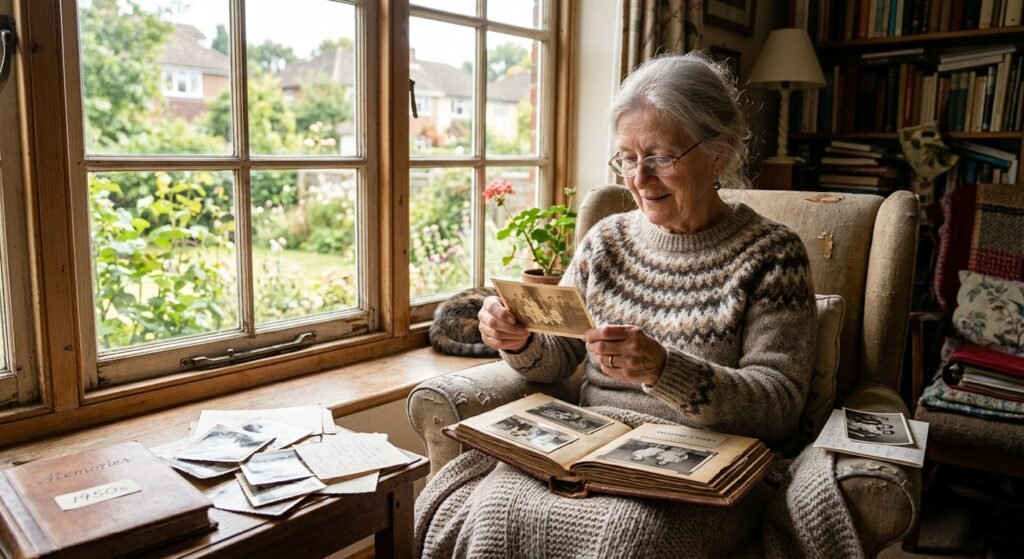
Sometimes you might miss the version of you who was bolder, or simpler, or less cautious. You might look at old photos and wonder where that specific spark went, or why you stopped caring about things that used to consume your entire mind. But looking back with nostalgia can cloud the reality of what those times actually felt like. The version of you from five years ago might have seemed lighter, but they were also carrying worries that you’ve since resolved. They were trying to figure out things you now understand completely. That younger self was working remarkably hard to get you to where you are standing today.
Perhaps the most reassuring thing about slow change is that you don’t have to figure everything out today. You don’t need a perfect plan for the next ten years, because the person who will live those years doesn’t exist yet. You are still building them, day by day, choice by choice.
The next time you find yourself feeling stuck or wondering if you’re making any progress at all, take a look back. Not to compare yourself to others, but to see how far you’ve traveled from where you started. Look at the hard situations you survived that you once thought would break you. Look at the quiet peace you’ve cultivated in your daily routine. Maybe the realization we need isn’t that we have to work harder to change. Maybe it’s that we are already changing, quietly and constantly, even when we feel entirely still. You don’t have to force your own growth. You just have to trust that the slow, steady tide of life is already carrying you toward the person you are meant to become next.