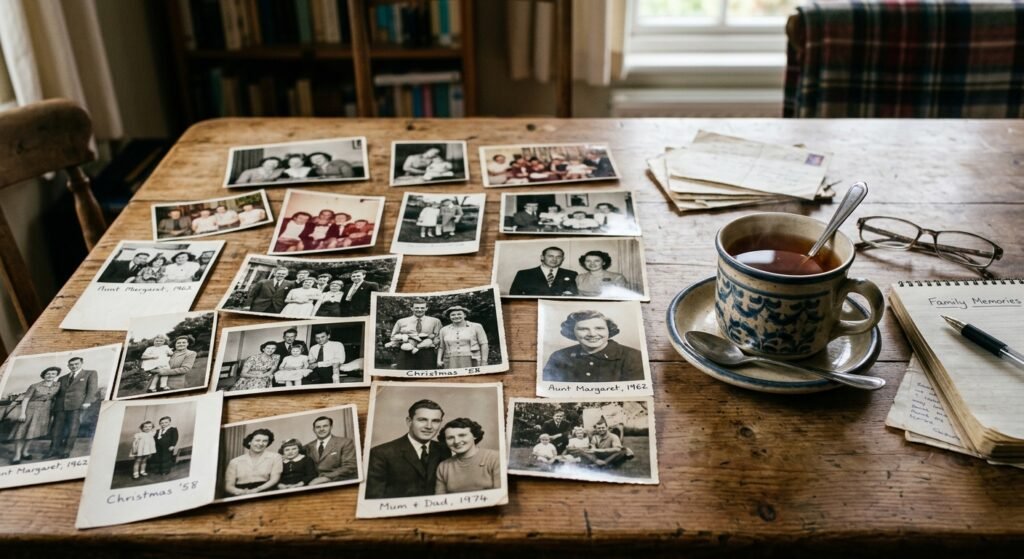
If you close your eyes and think about a period of your life that now feels golden, there is a good chance you didn’t think it was golden while you were living it. You might remember a cramped apartment with mismatched furniture, a demanding job that kept you up late, or a season of parenting when your kitchen floor was constantly sticky. At the time, you probably felt tired, a bit overwhelmed, and eager to move on to whatever came next.
You didn’t wake up back then and think about how much you would someday miss the sound of your old roommate making coffee in the morning, or the specific way the afternoon light hit that cheap rug. You were simply trying to get through the week, pay the bills, and find a little bit of quiet. It is only now, with the benefit of time, that those chaotic moments have softened into something precious.
The Quiet Beauty of the Unremarkable
We spend so much of our lives looking forward, preparing for the milestones we believe will finally bring us satisfaction. We wait for the promotion, the larger home, the retirement, or the day when life finally feels organized. We convince ourselves that happiness is something waiting for us around the next corner, just beyond the current struggle.
But while we are looking toward the horizon, the actual substance of our lives is happening in the quiet spaces we rarely pay attention to. It is found in the repetitive routines, the daily commutes, the familiar jokes with coworkers, and the evening walks around the neighborhood. These moments don’t feel like history when they are happening. They just feel like Tuesday.
It is only when a season ends that we realize how much we loved it. A child grows up, a group of friends scatters to different cities, or we leave a workplace we complained about for years, and suddenly the ordinary routines we took for granted are gone. We are left with a strange sense of longing for the very things we once found mildly annoying.
Why Memory Plays Tricks on Us
Memory has a beautiful way of filtering out the daily friction of our lives. When we look back on an old chapter, we don’t remember the exact feeling of frustration we had when we were stuck in traffic, or the mild anxiety of a looming deadline. Instead, we remember the comfort of the routine itself. We remember the people who were there with us, the shared struggles, and the simplicity of knowing exactly where we belonged.
There is also a deep sense of safety in the past because we already know how the story ends. The uncertainty that made those days feel stressful has evaporated. We know now that we survived the difficult project, that we paid off the debt, and that the relationship worked out or taught us what we needed to learn. Looking backward, we can enjoy the scenery because we are no longer worried about getting lost.
This is why nostalgia can feel so tender and sometimes a little painful. It isn’t just that we miss a specific place or person. It is that we miss the version of ourselves who lived there, a person who was still figuring things out, completely unaware of what the future held.
The Exhaustion of Trying to Cherish Everything
We are often told by well-meaning onlookers to appreciate every single moment because time goes by so quickly. We hear it at grocery stores from older generations watching us struggle with restless toddlers, or we read it online. While the sentiment is sweet, it can also create a quiet sense of guilt. It makes us feel as though we are failing if we aren’t actively swooning with gratitude while doing the laundry or answering endless emails.
The truth is, it is impossible to live in a constant state of appreciation. Life requires us to focus on the task at hand, whether that is paying attention to the road, washing the dishes, or managing a complicated schedule. If we tried to feel the profound emotional significance of every single minute, we would quickly become emotionally exhausted. We need the mundane to feel mundane so we can simply get through our days.
So, if you find yourself wishing away a rainy afternoon or counting down the hours until bedtime, you don’t need to feel bad about it. You aren’t wasting your life; you are simply living it. The pressure to constantly document, celebrate, and revere our daily lives can actually pull us out of the experience entirely, turning us into observers of our own existence rather than active participants.
The Gift of Not Knowing
Perhaps the most comforting realization is that the magic of those past chapters didn’t exist despite your lack of awareness, but because of it. If you had known back then that those ordinary days would eventually become the ones you would long for, you would have held onto them too tightly. You would have tried to make every dinner party perfect, every conversation profound, and every quiet morning significant. The natural ease of those moments would have been replaced by the strain of trying to build a memory.
The beauty of the good old days is that they were lived without performance. You were just there, eating cereal at the kitchen counter, complaining about the heat, and laughing at a joke that you’ve now forgotten. You were fully immersed in the simplicity of being, without the burden of having to appreciate how precious it was.
So, as you look around at your current life, with all its unfinished projects, minor annoyances, and daily fatigue, you can take a deep breath. You don’t have to force yourself to feel overwhelming gratitude for the cluttered table or the long to-do list. You can trust that the future version of you is already looking back at this very moment with a soft, envious smile. You are in the good old days right now, and the best way to live them is simply to let them be ordinary.