
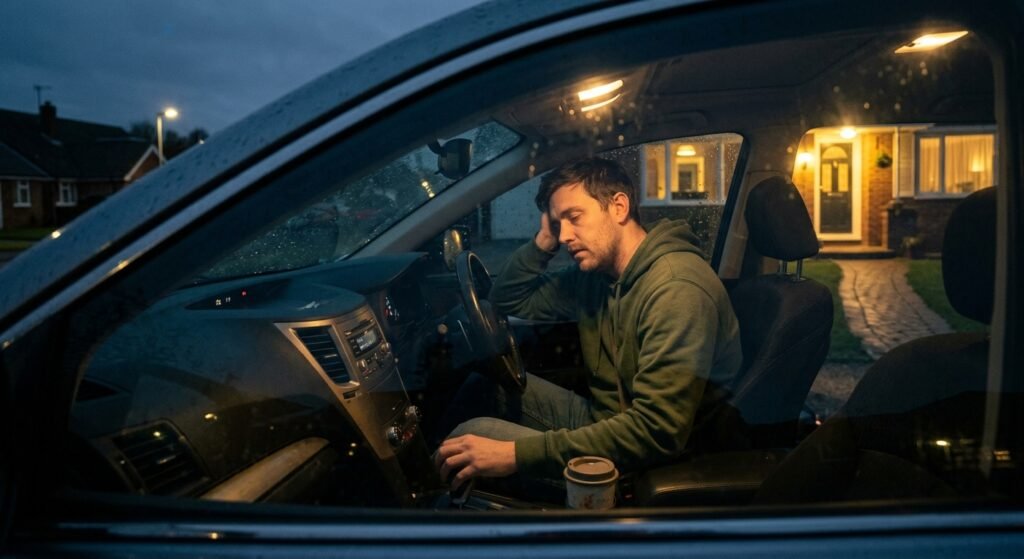
You are sitting in your car in the driveway, or perhaps at the kitchen table with a mug of coffee that went cold twenty minutes ago, and you realize you are just staring. The keys are in your hand, or the laptop screen is open, but your mind has temporarily exited the room. Outside, life is happening at its usual busy pace. A neighbor is wheeling out a trash can, a delivery truck is idling down the street, and your phone is vibrating with notifications you don’t want to read. You feel a deep, quiet urge to simply pull the emergency brake on everything and stop the world for a few days, just so you can catch your breath.
But you can’t. You have a meeting at ten, an appointment for your kid at three, dinner to figure out by six, and a mountain of laundry that has slowly taken over the armchair in the corner of your bedroom. The idea of pausing feels like a luxury reserved for someone else. So, you take a deep breath, unlock your phone, and step back into the rush, telling yourself that you just need to get through this week.
The Myth of the Perfect Stopping Point
We’ve all told ourselves that lie before. We tell it to ourselves on Sunday nights, on Monday mornings, and during those long stretches of the afternoon when our eyes struggle to focus on the screen. We promise ourselves that as soon as this project is finished, or as soon as the family schedule clears up, or as soon as the holidays are over, we will finally take a real break. We treat rest like a destination we are traveling toward, a quiet oasis just past the next hill.
The trouble is that the hills never actually end. Once you climb over the one in front of you, you find another one waiting, complete with its own set of demands, expectations, and small emergencies that require your immediate attention. Life doesn’t pause its rotation just because you are tired. The dishes keep getting dirty, the emails keep arriving, and the people you love keep needing your presence and energy.
When you are living in this state of constant forward motion, you begin to view any pause as a failure. You start to believe that if you slow down even for a moment, the fragile tower of your daily life will come crashing down around you. So instead of stopping, you tighten your grip. You sleep a little less, you drink a little more coffee, and you keep pushing, hoping that your body and mind won’t notice how empty the tank has become.
Why We Ignore the Warning Signs
Psychologists who study chronic stress often talk about how our minds adapt to high levels of pressure. When you live with constant demands for long enough, your system resets its baseline. What used to feel like an emergency begins to feel like a normal Tuesday. You become so accustomed to the background buzz of tension that you don’t even realize how much energy it takes just to keep standing.
This is why we rarely recognize burnout until we are already deep inside it. We think of it as a sudden event, like a car running out of gas on the highway. But in reality, it’s a slow leak. It’s the gradual loss of enthusiasm, the sudden spike of irritability over a spilled glass of water, or the feeling of being completely detached from the things that used to bring you joy. Your system is trying to protect itself by shutting down non-essential functions, but because you cannot physically stop, you experience this protective response as a sense of numbness.
Interestingly, research into recovery shows that our minds actually require small, frequent intervals of disengagement rather than one massive vacation at the end of the year. When we deny ourselves those small moments of rest, our brains begin to take them anyway, usually in the form of brain fog, forgetfulness, and a complete inability to make simple decisions. Your inability to choose what to have for dinner isn’t a personal failing; it’s your mind desperately trying to save its remaining energy.
The Difference Between Repairing and Resting
Think about how you actually spend your time when you finally do get a moment to sit down. For many of us, that time isn’t actually restful. We sit on the couch while our minds continue to run through the mental checklist of everything we didn’t get done today. We scroll through our phones, absorbing the lives and opinions of strangers, which only adds more input to a system that is already struggling to process the day we just lived.
We often confuse collapse with recovery. When you collapse onto the bed at the end of a long day, completely depleted, you aren’t actually resting. You are simply repairing the damage of the last twelve hours. You are surviving. True rest is something different. It is an active choice to step out of the cycle of productivity, even if only for a few minutes, without feeling the need to justify why you deserve to do so.
But choosing that path is surprisingly difficult when the world around you is constantly celebrating hustle. We live in a culture that treats busyness as a badge of honor, a sign that we are important, needed, and successful. To pause, even briefly, feels like admitting that we cannot keep up with the pace that everyone else seems to be maintaining so effortlessly.
The Hidden Cost of Waiting
The hardest part of this cycle is realizing that you are the one holding the keys to your own cage. Nobody is going to walk into your office or your living room and hand you a golden ticket that grants you permission to stop. The world will keep asking for your time, your focus, and your energy as long as you are willing to give it away. There will always be one more chore, one more message, and one more task that feels urgent.
When we wait until we are completely empty to ask for rest, we are operating under the belief that our needs are only valid when we are on the verge of breaking. We tell ourselves that we have to earn the right to sit down. But by the time we allow ourselves that luxury, the recovery process takes twice as long, and we spend our precious free time simply trying to feel like ourselves again.
Perhaps the real turn happens when we stop looking for a massive block of empty space on the calendar and start looking for the small, quiet margins that already exist within our days. The five minutes we spend sitting in the driveway before walking inside. The fifteen minutes of drinking tea in the morning before turning on the computer. The choice to leave the dishes in the sink for one night so we can sit on the porch and watch the evening arrive.
These small moments won’t solve your busy schedule, and they won’t make your responsibilities disappear. But they do something far more important. They remind you that you are a person, not a machine. They remind you that your life is happening right now, in the middle of the mess and the rush, and that you are allowed to inhabit it fully, even when you haven’t finished everything on your list.
Maybe we don’t need the world to stop so we can rest. Maybe we just need to realize that rest is something we must carry with us, in the quiet spaces we choose to claim, long before we ever feel like we’ve earned it.