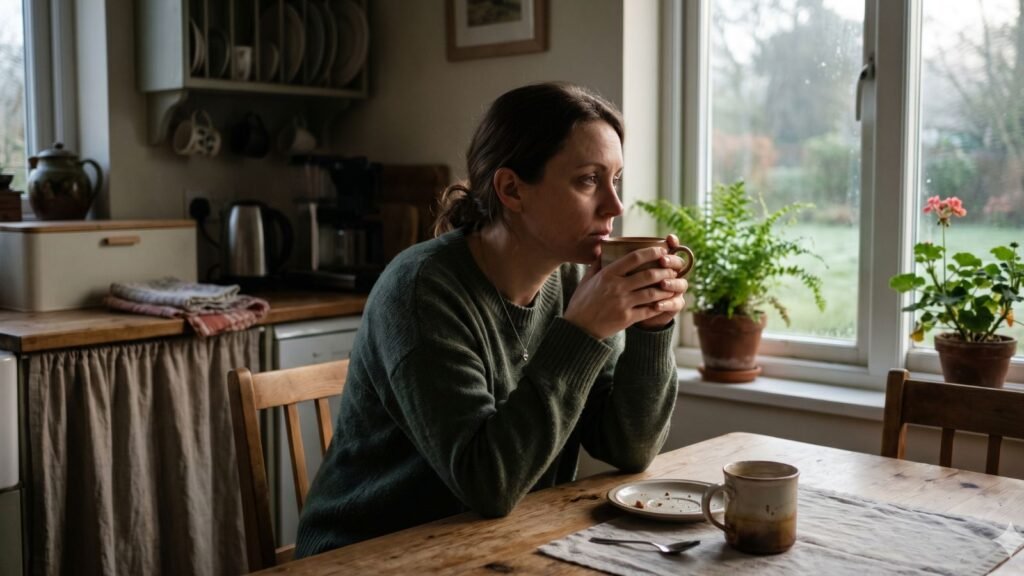
If you grew up in a certain era, you probably remember a very specific sound. It was the distinct metallic click of a brass key turning in a deadbolt on an empty afternoon. You let yourself into a quiet house, dropped your backpack on the floor, and began the daily ritual of navigating the hours until your parents got home from work. There was no tracking app on your phone, no smart device buzzing on your wrist, and no adult waiting in the kitchen with a pre-planned snack. You simply stood in the quiet kitchen, looked inside the cupboard, and figured out how to make something out of whatever was there.
For millions of people born between the mid-sixties and the early eighties, this wasn’t a crisis. It was just a regular Tuesday. It was the era of the latchkey kid, a time when independence wasn’t a parenting strategy so much as it was a practical necessity. We learned to manage our own time, resolve our own playground disputes, and figure out what to do when the bike chain popped off miles from home. We didn’t realize it then, but those quiet afternoons were quietly preparing us for a world that rarely comes with an instruction manual.
The Art of Standing on Your Own Two Feet
When life takes an unexpected turn today, you can often spot the folks from this generation by how they react. While others might look around for someone in charge or wait for a detailed plan to be handed to them, Gen X tends to quietly pull up their sleeves and get to work. There is a distinct lack of panic in their approach. It is as if they have an internal thermostat that keeps them cool when the surrounding room starts to heat up. This isn’t because they don’t care, but because they have spent a lifetime practicing the art of figuring things out on their own.
Psychologists who study how people adapt to stress often talk about a concept called an internal locus of control. This is the deeply held belief that your own actions, rather than external forces, determine the course of your life. When you spend your childhood solving your own minor emergencies, you build a sturdy foundation of trust in your own capabilities. You learn that if you make a mistake, you can fix it. You learn that if you get lost, you can find your way back. Over time, this belief becomes a natural part of who you are, acting as a buffer against the unpredictability of adult life.
The Quiet Strength of Low Expectations
There is a certain freedom in growing up without the constant spotlight of parental anxiety. Gen X was largely left to their own devices, which meant they were allowed to skin their knees, make terrible fashion choices, and experience natural consequences without a hovering guardian stepping in to smooth things over. This lack of constant curation created a highly realistic view of how the world works. They didn’t expect life to be perfectly fair, nor did they expect every obstacle to vanish at the first sign of discomfort.
Research into resilience suggests that moderate exposure to manageable challenges during youth acts like an immunization against future stress. Sociologists have noted that generations raised with high levels of autonomy often develop a strong capacity for regulating their own emotions and solving problems. They are comfortable with ambiguity because their childhoods were full of it. When a professional crisis strikes, or when a personal plan falls apart, they don’t view it as a systemic failure. They view it as a normal day that requires a bit of creative troubleshooting.
Learning to Trust the Process
This independent streak can sometimes look like detachment to those who don’t understand it. It is easy to mistake a calm demeanor for indifference, or relying on oneself for isolation. But the truth is often much warmer. People who learned early on that they could survive their own mistakes tend to be remarkably patient with the mistakes of others. They don’t expect perfection from their partners, their coworkers, or themselves. They know that things break, systems fail, and plans fall apart, and they also know that none of those things represent the end of the world.
When you look back at those afternoons spent in empty kitchens, you realize that the most valuable thing you learned wasn’t how to make a sandwich or how to occupy your time. It was the realization that you were capable of handling the quiet. You learned to trust your own mind, to live with your own thoughts, and to face a blank canvas of time without fear. That is a rare kind of strength, and it is one that stays with you long after the childhood keys have been put away.
Finding Peace in the Unplanned Moments
In a world that increasingly demands constant connection and immediate answers, there is something beautiful about preserving that old independent spirit. We live in an era where every moment is scheduled, every risk is calculated, and every path is digitized. Yet, the moments that define us are still the ones we never saw coming. The unexpected changes, the sudden losses, and the quiet challenges are the places where our real lives are put together.
And maybe that is the real realization waiting for us at the end of the day. Perhaps strength isn’t about having all the answers before the trouble starts, or making sure nothing ever goes wrong. Maybe it is the quiet confidence of knowing that when the lights go out, you already know how to navigate the room in the dark. It is the realization that you don’t need the world to be perfectly safe to feel secure, because you have spent a lifetime learning how to be your own safe place to land.