
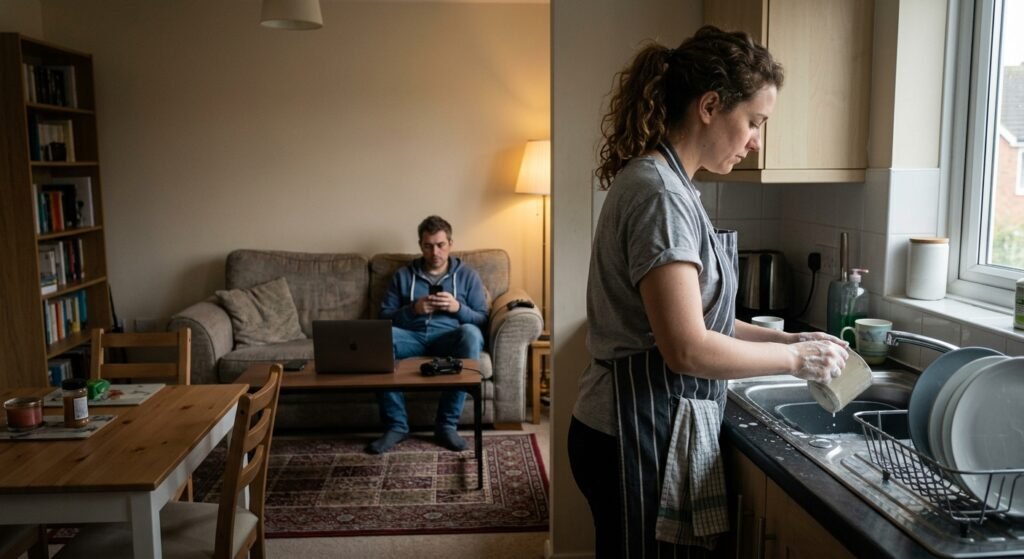
You’re standing by the kitchen counter, quietly wiping down the surface for the third time today, or maybe you’re sitting in the driveway for an extra minute just to breathe after running another errand. From the other room, you hear a brief, cheerful thank you. It’s polite, and on paper, it’s exactly what partners are supposed to say. Yet, instead of feeling warm, you feel a strange, hollow ache in your chest.
It’s the kind of hurt that’s difficult to explain because, technically, nothing is wrong. Your partner isn’t being unkind, and they aren’t ignoring your contributions. In fact, they might be very diligent about acknowledging the chores you finish, the dinners you organize, or the bills you pay. But lately, you can’t shake the feeling that they are thanking a very efficient utility company rather than the person they fell in love with.
When we first start dating someone, we spend hours studying them. We notice the exact way their eyes crinkle when they’re genuinely amused, how they get quiet when they’re thinking about a childhood memory, or how they play a specific song when they need a little comfort. We’re fascinated by their inner world. But as the years pass and the logistics of shared life take over, that deep curiosity can quietly get replaced by a checklist.
The Danger of the Shared Checklist
It starts innocently enough. You divide the responsibilities of running a life together because that’s what functional partners do. One person handles the grocery shopping, the other handles the yard. One remembers the birthdays, the other manages the calendar. This coordination is necessary, but it can create a subtle trap where we begin to value our partner primarily for their operational efficiency.
When appreciation becomes purely transactional, it starts to feel precarious. You begin to wonder, deep down, what would happen if you simply stopped doing. If you didn’t fold the laundry, or plan the weekend, or manage the quiet details that keep your shared world spinning, would your partner still see you? This silent question is where the hurt lives. It isn’t that you mind helping, but rather that you fear your value has become entirely tied to your productivity.
The Difference Between Thanks and Noticing
There is a vast gulf between being thanked for what you do and being seen for who you are. A thank you is often about the recipient’s comfort. It acknowledges that a burden was lifted or a task was completed. Noticing, on the other hand, requires us to pay attention to the person behind the action. It’s the difference between saying thanks for making dinner and realizing that your partner looked exhausted when they walked through the door.
When we focus only on the tasks, we miss the quiet emotional signals our partners are constantly sending. We don’t notice the sigh that goes with setting down the keys, or the subtle change in their laughter when they’re feeling stressed. Relationships need these small moments of observation to stay alive. Without them, we’re just two coworkers managing a household, occasionally nodding in approval at each other’s performance reviews.
The Autopilot Trap
Most partners who behave this way aren’t trying to be cold or ungrateful. The mind naturally looks for shortcuts to save energy, and once a relationship feels safe and established, we easily slip into autopilot. We assume we already know our partner, so we stop looking at them with fresh eyes. We look at the clean kitchen, the paid bills, or the organized garage, and we assume everything is fine because the machinery is running smoothly.
This habit of looking at the results rather than the person is easy to fall into, especially when life gets busy. But it leaves both people feeling isolated in different ways. One partner feels like a machine that exists only to produce, while the other might feel like they’re doing everything right by saying thank you, yet they can’t understand why there’s a growing distance between them.
Finding the Person Beneath the Tasks
To find our way back, we have to look past the checklist. True connection doesn’t happen when we praise our partner for their usefulness; it happens when we catch them in the act of just being themselves. It’s about remembering that the person who folds the towels also has a quiet dream they haven’t mentioned in years, or that the partner who always manages the finances is secretly anxious about the future.
Maybe the realization we’re looking for isn’t that our partners need to say thank you more often. Perhaps it’s that appreciation was never meant to be a performance review. When we stop measuring our partners by what they do for us, we finally become free to see them clearly again. We notice the person sitting across from us, not for what they bring to the table, but simply because we are lucky enough to share the table with them.