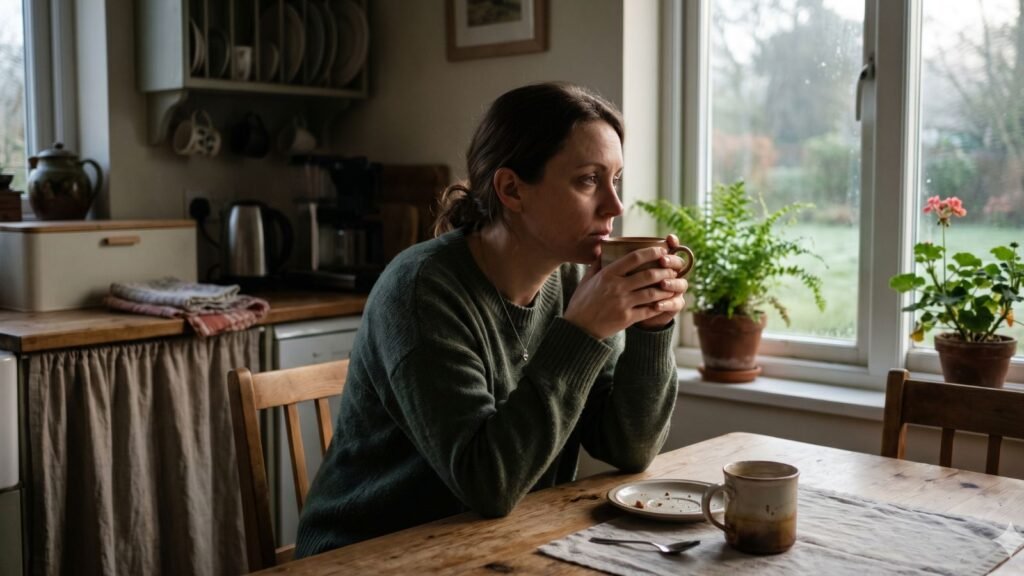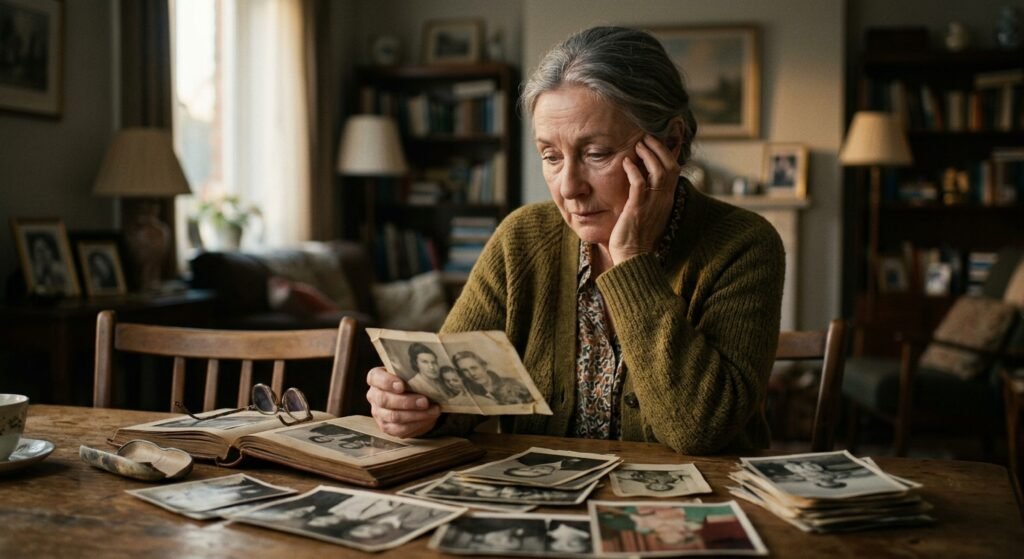
You’re cleaning out a closet or scrolling through the archives of your phone on a quiet evening when you stumble across a photo of yourself from a decade ago. Maybe you’re standing on a street corner in a city you used to love, or laughing at a kitchen table surrounded by faces you haven’t seen in years. You look closely at your younger face, noticing the absence of lines around your eyes, but more than that, you notice the look in your eyes. There’s a lightness there, a sense of ease that feels almost unfamiliar now. A quiet, uninvited thought slips into your mind: what if that was the peak of my life, and everything else is just a long, slow walk downhill?
It’s an unsettling feeling, yet it’s one that almost everyone encounters at some point during adulthood. We look back at certain chapters of our lives, our twenties, our early careers, the years before children, or even the years when our children were small, and we paint them in the warmest possible colors. We convince ourselves that those were the golden eras, the times when we were truly alive, happy, and full of promise. In comparison, our current reality can feel a bit gray, defined more by obligations, routines, and the predictable rhythms of daily life.
But if you sit with that nostalgia for a moment, you might begin to notice something interesting about the way your mind curates your history. Memory is a highly selective editor. When you look back at that old photo, you see the laughter, but you don’t see the deep uncertainty you felt about your future that very same night. You don’t recall the sleepless nights spent worrying about your bank account, the painful relationship that was falling apart, or the quiet fear that you would never figure out what you were supposed to do with your life. We tend to remember the freedom of youth while completely erasing the anxiety that paid for it.
The Illusion of the Open Road
Psychological research suggests that this tendency to look backward has less to do with the actual events of our past and much more to do with how we perceive our remaining time. When we’re young, we look at the future as a vast, open landscape where any path is possible. This expansive outlook naturally brings a sense of excitement. But as we get older, our perspective on time changes. We begin to see time as a limited resource, and our goals change from exploring new horizons to protecting what we’ve already built.
When we feel like our best years are behind us, we aren’t necessarily wishing we could go back to school, or live in a tiny apartment, or work long hours at a first job again. What we actually miss is the feeling of unlimited possibilities. We miss the version of ourselves that believed anything could still happen. As our lives become more settled and our choices become more defined, we mistakenly confuse stability with stagnation. We assume that because our lives have structure, they no longer have room for discovery.
This longing is often amplified by the way our modern world measures progress. We’re taught to celebrate the beginnings, the first jobs, the new marriages, the early achievements. There’s a great deal of social excitement around the act of building a life. But nobody really teaches us how to inhabit the life we’ve built once the scaffolding comes down. When you’re no longer hitting those obvious, socially celebrated milestones, it’s easy to feel as though you’ve run out of things to look forward to.
The Quiet Safety of a Finished Story
There’s another, more comforting reason we tend to look backward: the past is safe. The past is a finished book where we already know how every chapter ends. We know we survived the heartbreaks, we know how the career questions resolved, and we know that the risks we took eventually led us to where we are today. There are no surprises in our memories, which makes them a beautiful place to escape when the present feels demanding or uncertain.
The Risk of Looking Forward
Looking toward the future, however, requires us to face the unknown. It asks us to accept the risk of failure, disappointment, and change. When we convince ourselves that our best days are behind us, we’re often quietly protecting ourselves from the vulnerability of trying something new. It’s much easier to say, “I’ve already had my turn,” than to admit that we still want things we don’t have, or that we still desire to grow, change, and reinvent ourselves in ways that might feel uncomfortable.
But this perspective overlooks a beautiful truth about the passage of time. The chapters of our lives don’t have to compete with one another for the title of “best.” The wild, unstructured freedom of your youth was beautiful, but so is the quiet, deeply earned wisdom of your present. The excitement of starting out was necessary, but the deep roots you’ve grown since then carry their own quiet grace. One doesn’t invalidate the other.
Perhaps the realization we need isn’t that our best years are gone, but that we’ve been looking for the wrong kind of magic. You don’t need to recreate the open road of your youth to find joy today. You don’t need to be twenty again to feel a sense of wonder. Maybe the future isn’t a narrow path of diminishing returns, but a different kind of clearing altogether, one where you finally have the self understanding and the quiet courage to live on your own terms. The door to new possibilities didn’t lock when you blew out the candles on your last major birthday; you just have to stop looking at the rearview mirror long enough to see the handle.