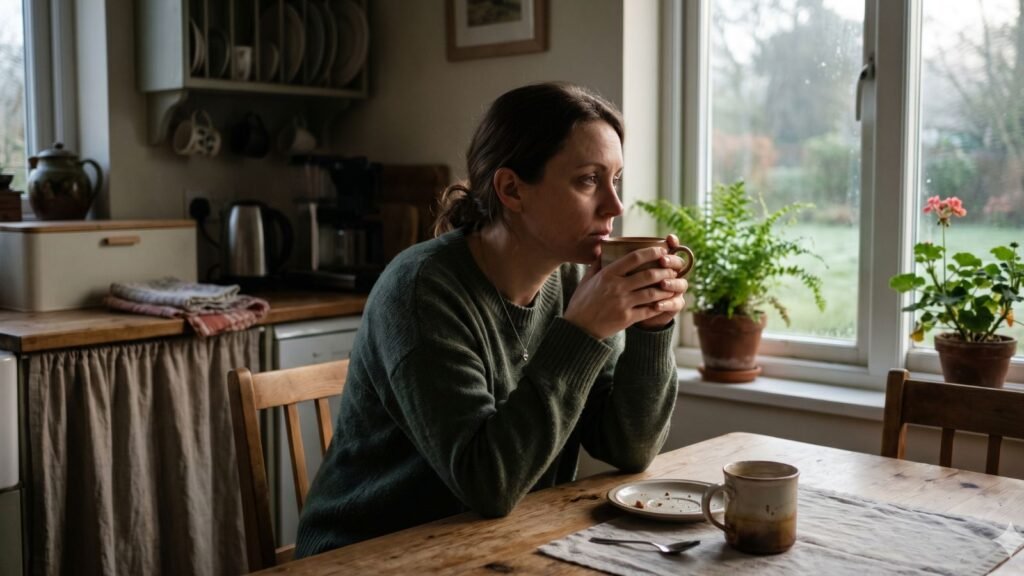

You write out a message that feels a little too honest, stare at the blinking cursor for a few seconds, and then delete the whole thing. Or maybe you find yourself sitting in your car outside a friend’s house, taking a deep breath before going inside, wondering if you actually have the energy to let people see you today. You want to be there, and you genuinely want to share what has been on your mind, but some quiet, protective part of you decides it’s safer to keep the conversation light and agreeable.
It’s a strange, quiet friction that many of us live with every day. You might feel a deep, aching desire to be known, to be understood, and to have someone sit with you in your messy reality. Yet, the moment someone tries to step across the threshold into that reality, you instinctively take a step back. You laugh off a sincere compliment, you make a joke to deflect a personal question, or you suddenly find yourself too busy to schedule that next dinner. We tell ourselves we’re just tired, or that the timing is wrong, but deep down, we know we’re simply pulling the emergency brake.
This dance of wanting closeness while simultaneously retreating from it can feel deeply exhausting. It makes you feel divided against yourself, as if you’re trying to drive with one foot pressed firmly on the gas and the other slammed down on the brake. You’re not trying to be difficult, and you certainly don’t want to be lonely. You’re simply trying to navigate a world where the things we want the most are often the very things that have the ability to hurt us.
The Safety of the Waiting Room
When we hold people at a distance, we often believe we’re just being careful. We tell ourselves we’re protecting our energy, or waiting until we feel more secure before we let down our guard. It feels like a temporary measure, a brief pause in the waiting room of life until the conditions are absolutely perfect for vulnerability.
But the waiting room has a way of becoming a permanent residence. When you spend years practicing the art of the polite retreat, you become very good at it. You learn how to ask people about their lives so they don’t ask about yours. You learn how to show up for everyone else’s struggles so you never have to invite them into your own. It’s a highly effective way to avoid rejection, but it also means you end up watching your own life from a safe, comfortable distance.
This behavior isn’t a personal failure, nor is it a sign of weakness. Decades of relationship research show that our minds are wired to treat emotional risk with the same seriousness as physical danger. When psychologists study what they call the approach-avoidance conflict, they find that the desire to connect and the urge to protect ourselves often fire in the brain at the exact same time. It’s a natural response to a complicated world, designed to keep us safe from the pain of being unseen or cast aside.
The Memory of the Cost
Nobody starts out holding back. If you look at young children, they offer their hearts with an almost terrifying lack of caution. They share their drawings, tell you their grandest dreams, and cry openly when they’re hurt, never questioning whether they have permission to occupy space in the room. They assume they belong, and they assume their feelings matter.
Then, life happens. We share something precious and watch someone laugh at it, or we show up with open arms only to find the door has been quietly shut. We learn that vulnerability has a price tag, and sometimes that price tag is higher than we’re prepared to pay. Holding back isn’t a random habit we picked up out of thin air; it’s the strategy we built to survive the moments when our openness was met with silence or disapproval.
The trouble is that our protective strategies don’t know how to update themselves for the present. They keep fighting old battles, treating the safe, kind people in your current life as if they’re the ones who hurt you years ago. Your mind remembers the sting of past disappointments, and so it treats every new opportunity for closeness as a potential threat. You end up protecting yourself from the very experiences that could actually help you heal.
The Dual Nature of Our Desires
Perhaps the most comforting thing to realize is that your fear of closeness doesn’t mean you don’t want it. In fact, the opposite is often true. The people who hold back the most are frequently the ones who care the most about connection, recognizing on some level just how profound and life-altering it can be.
When you fear the fall, it’s only because you understand how high the mountain is. You hold back because you know that letting someone in means giving them the power to disrupt your peace, to change your perspective, and to leave a lasting mark on your life. Your caution isn’t a sign that you’re cold or unfeeling; it’s a quiet testament to how deeply you respect the significance of true connection.
Maybe the goal isn’t to somehow cure yourself of fear before you allow yourself to connect. Perhaps we don’t need to wait until we are completely fearless to step out of the waiting room. Instead, we can simply recognize that longing and fear are allowed to exist in the same space. You can feel nervous about opening up, and you can still choose to share that honest thought anyway, trusting that the risk of being seen is ultimately the only path to the belonging you’ve been searching for all along.