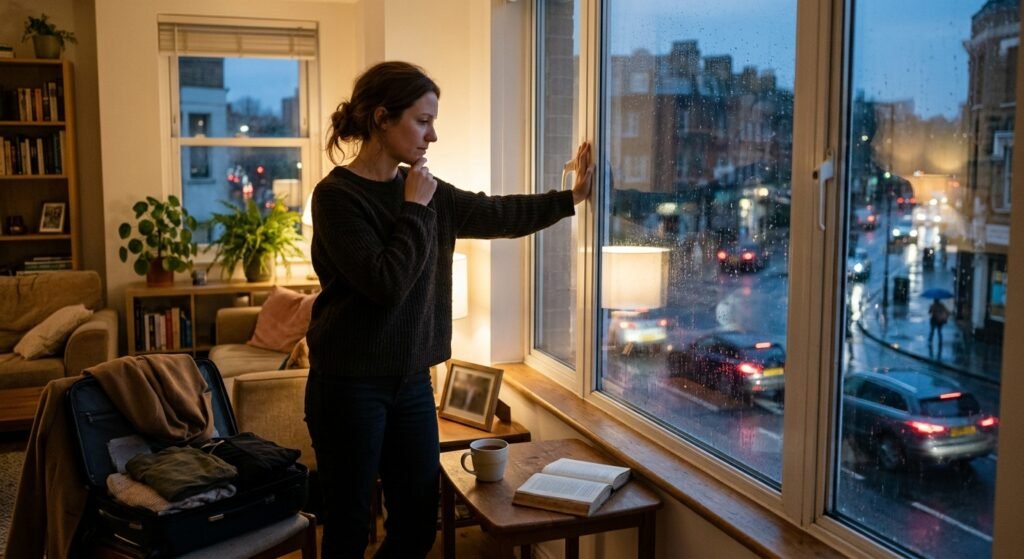
If you’ve ever spent an afternoon with someone you care about, left feeling warm and connected, only to encounter a sudden silence the moment you drive away, you know how confusing that distance can feel. You might find yourself wondering if the closeness was real or if you were the only one feeling it.
It’s easy to assume that emotional connection happens in real time. We’ve been taught to believe that if someone truly values your presence, they’ll express it right then, in the middle of the conversation, while sitting across the table from you.
Yet for many people, affection doesn’t work like a live broadcast. It works more like a photograph that needs quiet space to develop.
The Difference Between Feeling And Processing
There’s a quiet distinction between experiencing a moment and understanding what that moment meant to you. Some people are built to process everything as it happens. They know they’re having a wonderful time while the meal is still being served, and they can share their warmth before the evening even ends.
Others operate on a different timeline. When they’re sitting in a room with you, their attention is completely occupied by the present moment. They’re listening to your words, managing their own responses, and navigating the energy of being around another person.
For these individuals, the full depth of a connection doesn’t land while you’re standing in front of them. It arrives later, when the house grows quiet and the need to respond disappears. It’s only in that stillness that their emotions finally have room to surface.
Why Space Feels Safe To Certain Nervous Systems
Psychologists who study attachment patterns often talk about how different people manage closeness. For some, physical presence brings an immediate sense of comfort and ease. For others, even a deeply desired connection can spark a subtle, subconscious tension.
When someone has a nervous system that easily feels overwhelmed by social interaction, being present takes real energy. They aren’t trying to be distant. Their mind is simply working hard to stay grounded while staying engaged with you.
Studies on emotional regulation suggest that space gives the nervous system a chance to settle down. When you leave the room, the quiet expectation to react drops away. That quiet pause isn’t a retreat from you. It’s the exact window of time they need to realize how much they enjoyed being with you.
Closeness Is Not Always Measured In Immediate Responses
It can feel unsettling when you’re the type of person who feels emotions immediately. You send a thoughtful text after a great day together, expecting a quick echo of your excitement, only to receive a brief reply hours later. It’s natural to interpret that delay as a lack of interest.
We tend to measure another person’s care by our own internal timing. If you express warmth quickly, you likely expect others to match your pace. When they don’t, it’s easy to fill that silence with doubt and assume you cared more than they did.
Understanding delayed emotional processing changes how that silence feels. A slow response isn’t always a sign of pulled back affection. Sometimes, it’s simply evidence of someone who needs to sit with a good experience for a while before they know how to put it into words.
The Quiet Space Where Connection Settles
If you’ve ever felt anxious waiting for someone to match your emotional speed, it helps to pause and look at the situation from a different perspective.
Wanting someone to miss you right away is often about wanting proof that you matter. But affection isn’t always proven in the speed of a reaction. Sometimes, the most genuine feelings are the ones that quietly linger after the front door closes and the room settles into stillness.
Maybe space isn’t the distance that pulls two people apart. Maybe space is the very room where some people finally realize how much they want you nearby.