Can we talk about this for a second?
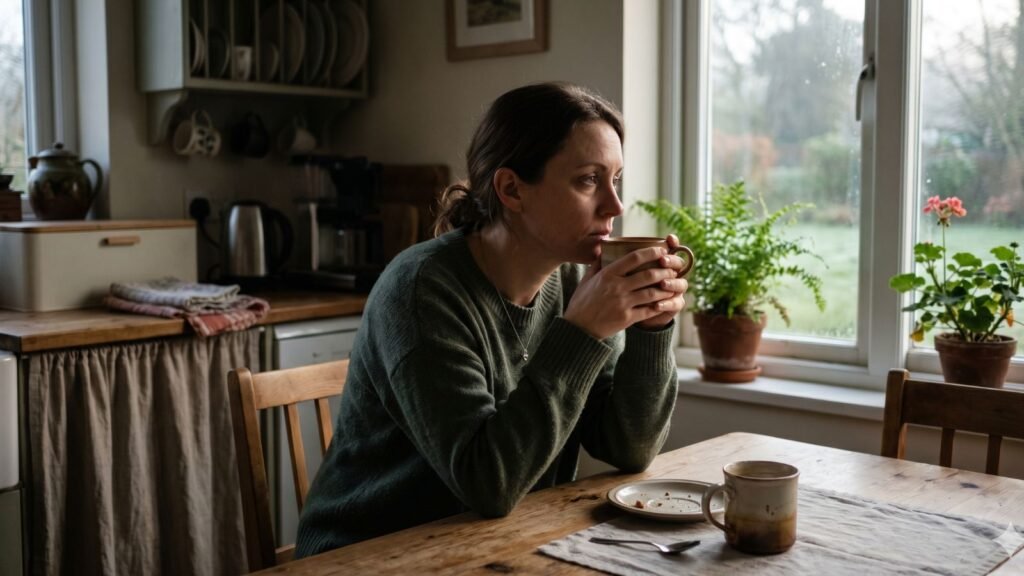
It’s a quiet Saturday morning, and you’ve made a firm, definitive decision to stay inside the entire day. The comfortable lounge pants are officially on. The couch cushion is already molding to your precise shape. You’ve mentally canceled every possible errand, outside obligation, and social invitation. You aren’t leaving the house today, and quite frankly, nobody could pay you to step foot out onto the driveway.
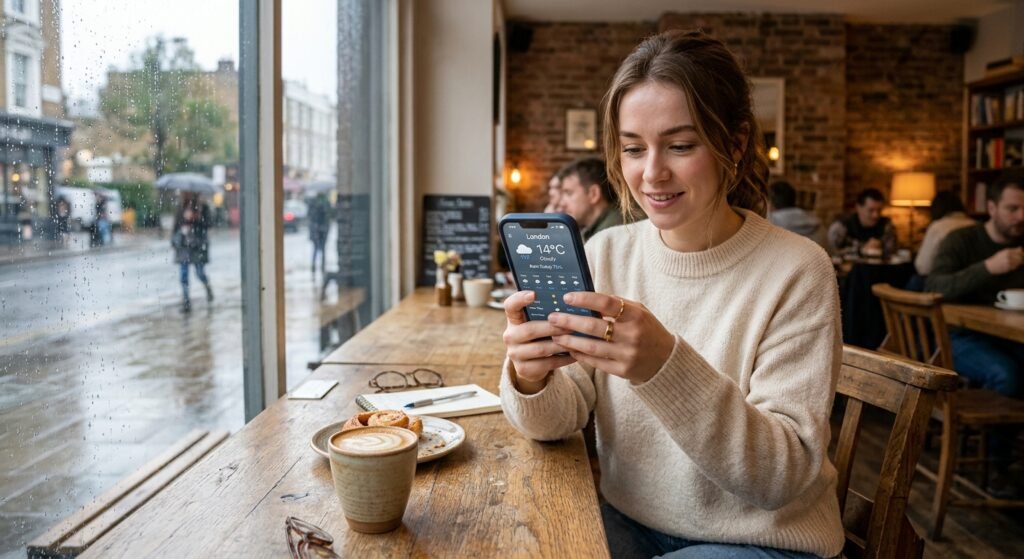
Then, without even thinking about it, you pick up your phone, swipe open your favorite forecast app, and spend three full minutes carefully examining the temperature outside.
Why do we do this?
You aren’t going anywhere. Your personal indoor atmosphere for the next twelve hours is being completely regulated by a thermostat set to 71 degrees and whatever soft warmth your favorite blanket can provide. Yet there you are, deeply invested in knowing that at two o’clock this afternoon, it’s going to be 67 degrees with a light breeze coming from the west.
You scroll down to inspect the hourly breakdown. You analyze the humidity percentage. You tap on the live radar map to see if that little green cluster is moving toward your neighborhood or drifting safely away from it. You even do that subtle little head nod when you notice a sudden five degree drop scheduled for five PM.
“Looks like it’s going to cool down later,” you announce to nobody in particular.
As if you were planning to stand in the yard at five o’clock to test the condition yourself.
The funny part is the quiet authority this information gives us in the moment. Suddenly, you feel like a local expert on the conditions outside a door you’ve actively locked against the outside world.
Then comes the moment when you glance out the living room window and notice it’s starting to sprinkle. Normal behavior would be to look at the drops hitting the glass and think, “Oh, look, rain.”
Instead, what do we do?
We unlock our phones, open the app again, and check the radar to double check that it is, in fact, raining right now.
We see the bright blue patch sitting directly over our street on the screen, look back at the actual window, and think to ourselves, “Yep, that radar is remarkably accurate today.”
It’s almost as if the sky isn’t officially allowed to rain unless the digital map approves it first.
We convince ourselves that we need this information just in case. But in case of what, exactly? In case the roof suddenly vanishes? In case a friend calls from three states away to ask how the afternoon sky is holding up over our neighborhood?
The real delusion is believing that knowing what’s happening outside somehow makes our indoor choices feel more legitimate.
If it’s pouring rain outside, we look out the window and feel deeply satisfied with our choice to stay on the sofa. “Look at that downpour,” we think to ourselves. “I picked the absolute best day to stay inside.”
If it’s bright, sunny, and 75 degrees outside, we look at the app, feel a tiny flash of guilt, and then immediately rationalize our way out of it. “It’s actually pretty windy out there,” we decide, relying on a tiny three mile per hour wind reading to justify another three hours of streaming television shows.
Either way, the app wins, and we get to feel completely justified in doing whatever relaxed activity we were already planning to do in the first place.
There’s a simple reason for this quiet habit. We naturally love gathering information, even when that information changes absolutely nothing about our day. Having data gives us a comfortable little illusion of control, even if that control consists entirely of choosing between a fleece throw and a lighter cotton blanket.
It’s completely harmless, really. It doesn’t cost anything, it doesn’t hurt anyone, and it gives us something engaging to glance at during commercial breaks or while waiting for water to boil.
There’s something undeniably charming about the tiny stories we construct around these numbers. We track hourly percentage chances of precipitation like we’re preparing an outdoor expedition, only to spend the entire afternoon taking a very thorough two hour nap in the living room.
We check the air quality index. We check the UV index. We look at the exact sunset time and think, “The days are really getting shorter,” while sitting in a dimly lit room with the window blinds pulled all the way down anyway.
We all know how this ends.
Tomorrow morning, you’ll wake up, reach for your phone, and check the afternoon sky report before your feet even touch the floor. You might spend another full day sitting in your favorite armchair, watching rain clouds float across a tiny smartphone screen while completely ignoring the real ones outside your window.
And honestly, that’s completely fine.
Keep checking the radar.
Keep nodding sagely at the hourly percentage drops.
Because even if you aren’t stepping outside today, it’s nice to know exactly what kind of afternoon you’re choosing to ignore.