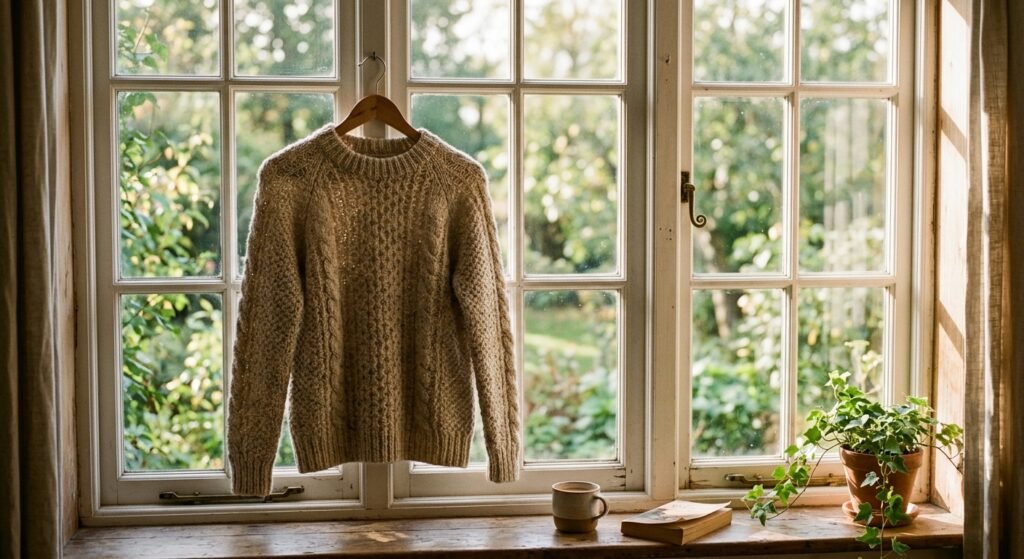
If you reach into the back of your closet on a random Sunday, there’s a good chance you’ll find something that doesn’t quite belong in your present life. It might be an oversized flannel shirt, a worn-out denim jacket, or a soft cotton t-shirt tucked behind winter coats you haven’t worn in years. You don’t wear it anymore, but you haven’t brought yourself to donate it either.
You lift the fabric to your face, and before you even make a conscious choice, a faint smell takes you somewhere else. It’s the subtle mix of laundry detergent, crisp autumn air, and a familiar cologne someone used to wear. In less than a second, you aren’t sitting on your bedroom floor in front of an open wardrobe. You’re sitting in the passenger seat of an old car, watching streetlights pass by while someone you used to love reaches for your hand.
That single piece of clothing sitting quietly in your drawer isn’t really about fashion. It’s a container for a feeling you haven’t felt in a very long time.
The Small Vaults We Keep in Our Closets
Most people have kept at least one object from a past relationship longer than logic would suggest. We clean out our living spaces, throw away old receipts, sell extra furniture, and purge clutter whenever life feels messy. Yet that one soft hoodie or vintage shirt stays quietly hung on a wooden hanger, tucked safely out of view.
When an important connection ends, we’re told to move on, clear the slate, and start fresh. Society loves a clean break because it looks tidy and efficient. But emotional life rarely follows a neat timeline, and our hearts don’t operate like a computer clearing its hard drive. We hang onto physical items because they anchor moments that once made us feel deeply safe and cherished.
Keeping an old sweater isn’t necessarily proof that you want your ex back, nor does it mean you’re stuck in the past. It simply means you honor the version of yourself who loved someone with everything they had. The fabric becomes a quiet vault, holding a version of your life that was real, meaningful, and deeply tender.
Why Scent Holds On Longer Than Memories
There’s a fascinating reason why smell triggers such an immediate emotional response compared to a photograph or a text message. The olfactory system in the brain connects directly to the emotional centers that handle long-term memory and feelings. When you see an old photograph, your mind analyzes it visually first. But when you catch a familiar scent, your feelings respond before your logical mind even has time to process what is happening.
Psychological research around object attachment shows that people often use physical items as comfort bridges during times of change. Psychologists sometimes call these sentimental objects transitional anchors. They help us navigate the space between who we were with a partner and who we are becoming on our own. The scent trapped in the cotton fibers feels personal because it carries the quiet essence of a shared life that once felt permanent.
When you hold that fabric, you aren’t just remembering another person. You’re remembering how it felt to be seen, understood, and chosen by them during that specific season of your life.
Bridging the Person You Were with Who You Are Now
Over time, the smell on an old shirt slowly fades. The detergent loses its strength, the cologne evaporates, and eventually, it just smells like cedar wood or the laundry soap you use today. Yet even after the physical scent vanishes, the emotional connection remains tied to the item itself.
You might notice that holding onto these items feels different during different chapters of your life. In the early months after a breakup, holding a shared sweater can bring a sharp ache and tears. A few years later, finding that same sweater in the back of a box brings a quiet, gentle warmth instead of pain. The item hasn’t changed at all, but the way you carry the memory has.
We often carry a hidden fear that if we let go of the physical reminder, we’ll lose the feeling entirely. We worry that giving away the jacket means erasing the trips you took together, the quiet Sunday mornings, or the late night conversations in dark kitchens. But memories don’t live in the cotton threads. They live inside you, safe and permanent, regardless of whether that shirt stays in your closet.
Releasing Things Happens in Small Quiet Stages
People often treat moving forward like a grand, decisive moment, like closing a book with a final dramatic snap. We imagine that one day we’ll simply wake up completely over it, clear out every trace of the past, and never look back. But real emotional healing is almost always much softer and slower than that.
Releasing a past love happens in tiny, almost invisible steps. It happens the first time you put the sweater in a storage container instead of keeping it in your top drawer. It happens when you pull it out years later, smile at the memory, and realize it no longer hurts to think about them. And eventually, it happens on a random morning when you fold it up and place it in a donation box, knowing someone else will stay warm in it.
Maybe holding onto an old piece of clothing was never about holding onto the person who left. Maybe it was always about giving yourself permission to take your time while you learned how to put yourself back together.