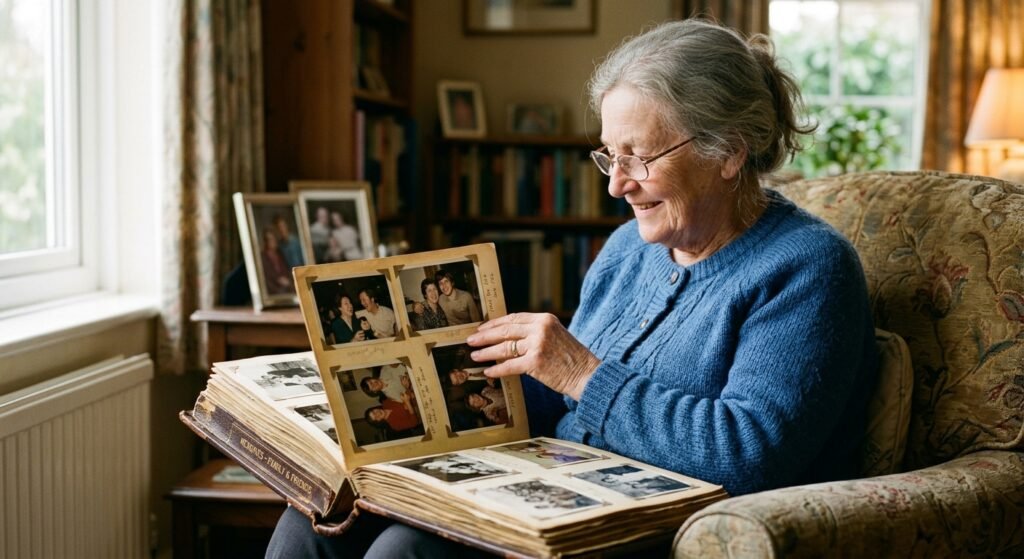
If you’ve ever found yourself looking through old photos on your phone late at night, you’ve probably noticed a strange thing happen. A picture of a cluttered apartment kitchen, a blurry photo of a group of friends sitting on a porch, or even an old car you used to drive can suddenly feel warm, almost glowing with a kind of magic that definitely wasn’t there at the time.
In your memory, that period of your life feels lighter, softer, and somehow more meaningful than today. You remember the laughter, the long summer evenings, and the feeling that anything could happen next. You catch yourself thinking that those were the good old days, and a quiet longing settles into your chest.
What you’re usually forgetting in those quiet moments of longing is the rest of the picture. If you really look back, that messy apartment came with terrifying bills and constant worry about the future. That summer porch conversation happened during a month when you weren’t sure where your career was going, or whether you were making the right choices with your life.
You weren’t actually living in a warm, glowing movie back then. You were stressed, exhausted, and probably wondering when life was finally going to feel stable. Yet somehow, years later, all of those sharp, uncomfortable edges seem to have completely smoothed out.
The Way Our Minds Filter The Past
Psychologists have spent a lot of time studying how memory works, and they’ve found that our brains are surprisingly kind editors. When we store memories, the emotional sting of bad days fades much faster than the warmth of good days. It’s a natural tendency that helps us move forward without carrying every past disappointment around with us.
Researchers refer to this quiet filtering process as a way our minds maintain emotional balance. Instead of keeping a perfect, literal recording of every single detail, our memory chooses what to preserve. It keeps the feeling of connection, the feeling of discovery, and the feeling of hope, while letting the day to day stress fade quietly into the background.
That means when you look back on a past chapter, you aren’t looking at a clear photograph of reality. You’re looking at a painting where your mind has softened the gray days and highlighted the sunlight.
It Isn’t The Time You Miss, It’s The Feeling
It’s easy to assume that longing for the past means you want your old life back. You might think you want to move back to that old city, work at that old job, or spend every night with the friends you used to see every day. But if you were magically transported back to that exact month, you’d probably feel an instant urge to return to the present.
You wouldn’t actually enjoy sitting in that drafty apartment worrying about your bank account again. You wouldn’t want the uncertainty, the self-doubt, or the awkward mistakes that defined that chapter. What you’re missing isn’t the difficulty of being younger or starting over.
What you’re missing is how open the world felt back then. You’re missing the feeling of possibility, or the simplicity of having fewer roles to play. When you romanticize a period, you’re usually longing for a version of yourself that felt a little freer, a little more present, or a little less tired.
The Difference Between Nostalgia And Reality
There’s a quiet comfort in realizing that your past wasn’t actually better than your present. It was just different. The days you look back on now with so much tenderness were days you once lived through with anxiety, impatience, and doubt.
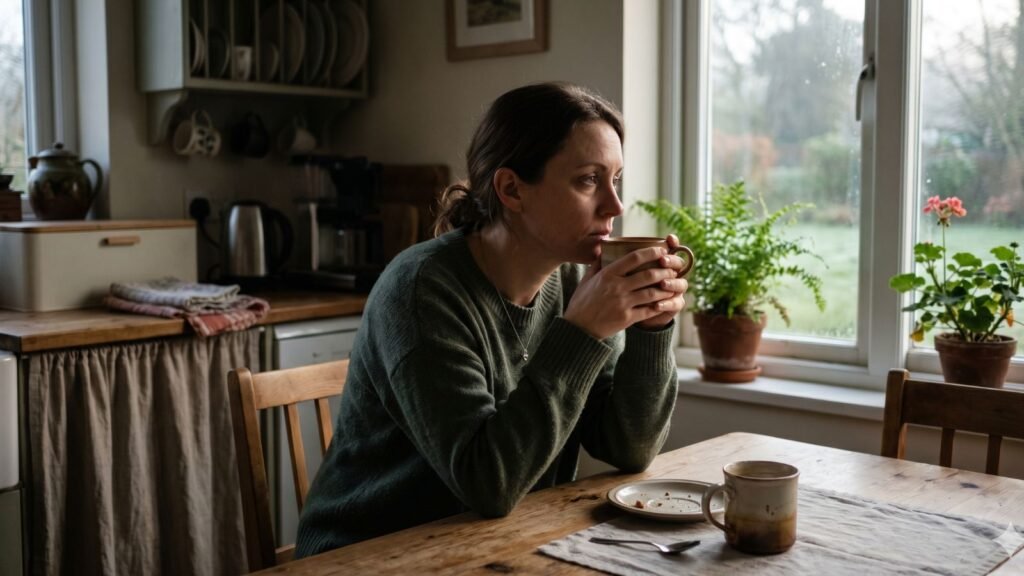
When you were standing in that kitchen years ago, you weren’t thinking about how romantic the moment was. You were thinking about what to make for dinner, or worrying about a conversation you needed to have tomorrow. The magic didn’t exist in the moment itself. It was built later, brick by brick, by time and reflection.
And that realization changes the way you look at today. The ordinary Tuesday you’re living right now, complete with its quiet routines, small frustrations, and unglamorous moments, is slowly becoming the past. Years from now, a future version of you will probably look back at this exact season with a soft, appreciative smile.
Maybe we don’t romanticize the past because it was perfect. Maybe we romanticize it because we survived it, and we finally know how that chapter turned out. There’s peace in looking back at a story when you already know the ending.
The trick isn’t trying to recreate those old days or wishing you could go back. It’s realizing that the warmth you’re feeling doesn’t belong to the past at all. It belongs to you, and it’s something you’re still capable of creating today.