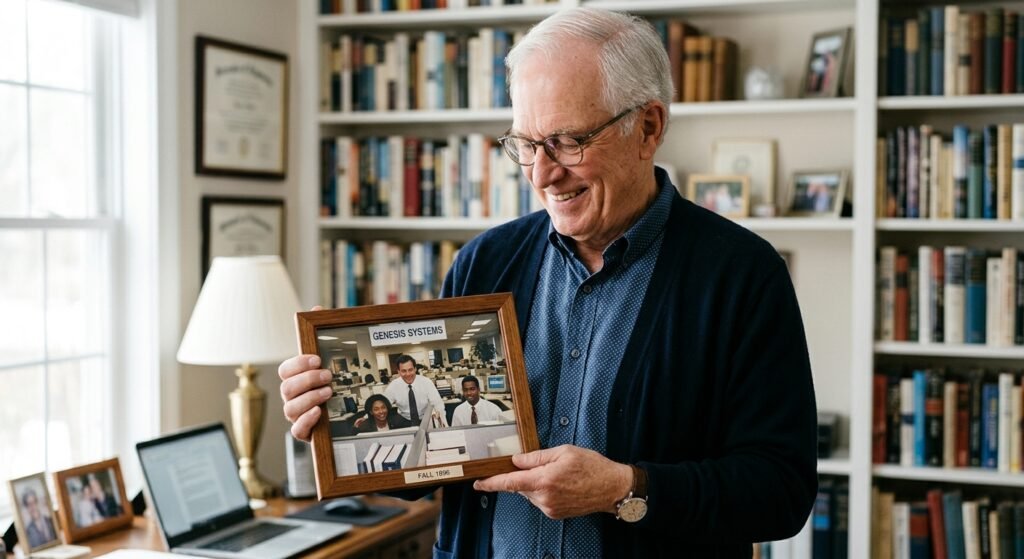
If you look through the bottom of a closet or an old desk drawer, you might find a worn-out ID badge from a job you couldn’t wait to leave. At the time, every Sunday evening felt like a slow march toward dread. You spent months staring at the clock, counting down the minutes until you could escape to your car and finally breathe.
Yet, when you talk about that job years later with an old coworker over drinks, something strange happens. You catch yourself laughing about the impossible deadlines. You recount the exhausting hours and the absurd company policies like battle stories. Somehow, an experience that once brought you to tears has quietly softened into a fond memory.
The Mind Has a Soft Touch with Old Pain
It’s tempting to think your memory is playing tricks on you, but there’s a reason bad times look gentler in the rearview mirror. Our minds are naturally wired to soften the emotional sting of old stress over time, leaving behind the clearer, warmer details of how we coped.
Psychologists often refer to this quiet editing process as fading affect bias. The sharp frustration of a demanding boss or an unfair schedule loses its edge far faster than the satisfaction of having survived it. When you look back, you aren’t feeling the day-to-day exhaustion anymore. You’re just seeing the story of someone who kept going anyway.
It Wasn’t the Work, It Was the Camaraderie
When we romanticize a difficult job, we rarely miss the actual duties. Nobody looks back on a frustrating career chapter and longs for endless spreadsheets, broken office equipment, or chaotic inbox clear-outs.
What you actually miss is the unique bond formed in the trenches. There’s a rare kind of closeness that only exists when a group of people is going through something difficult together. It’s the silent look you exchanged with a teammate across the conference table during a disastrous meeting. It’s the shared venting in the breakroom over lukewarm coffee. You weren’t loving the environment; you were loving the solidarity that kept you all afloat.
Proof That You Made It Out
There’s also a subtle sense of pride wrapped up in looking back at a hard season. Survival changes how we view an experience. Once you’re safe on the other side, the exhausting job transforms into proof of your endurance.
Looking back on a time when life felt overwhelming allows you to measure how much you’ve grown since then. The chaotic workplace or the relentless schedule becomes a landscape you successfully navigated. You don’t necessarily want to go back to that place, but you appreciate the younger version of you who had the strength to endure it.
Memory Is Just Being Kind to You
Next time you catch yourself feeling surprisingly nostalgic for a job that once drained your energy, you don’t need to question your sanity. You haven’t forgotten how hard it was, nor do you actually want that old life back.
Maybe we romanticize our hardest chapters not because they were good, but because we’re proud of who we had to be to survive them. The job itself wasn’t special, but the strength you found there was. Memory isn’t trying to trick you into returning; it’s simply giving you permission to look back at a difficult season and see the quiet beauty in how you made it through.