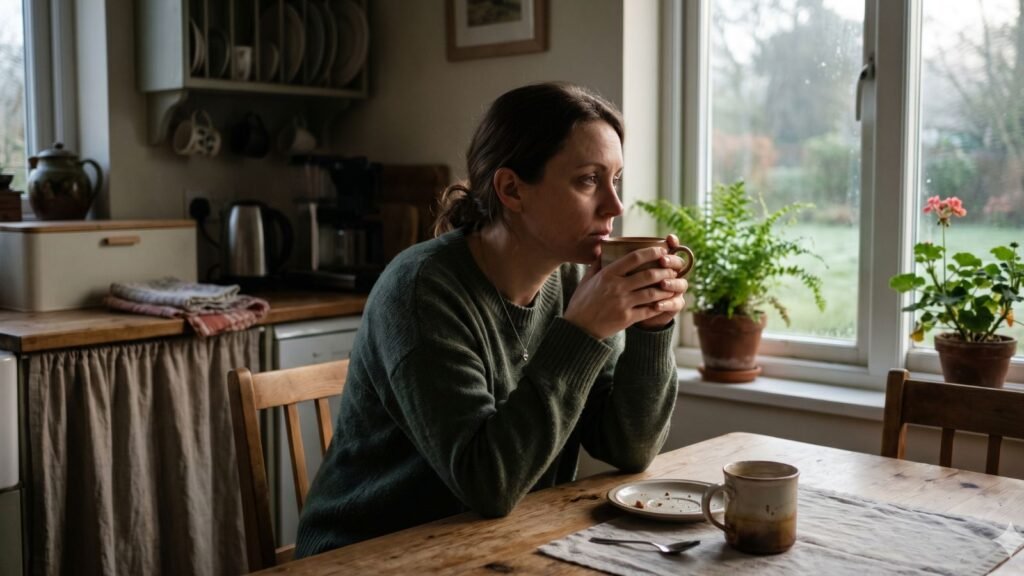
You’re sitting at your kitchen table late at night, surrounded by paper, open laptop tabs, and a half-empty cup of cold coffee. Your phone buzzes on the counter with a message from a close friend asking how your week’s going and wondering if you need a hand with anything. Your shoulders are up to your ears, your mind’s racing with tomorrow’s endless list, and you feel a familiar tightness in your chest. Yet, without even pausing to think, your fingers fly across the screen to type the words you always write: I’m totally fine, just busy, but I’ve got it covered.
It’s a tiny interaction, one that happens thousands of times a day in kitchens and offices everywhere. We decline the offer of a home-cooked meal, we politely turn down a coworker who offers to take a project off our plate, and we stay up until two in the morning assembling furniture by ourselves. We tell ourselves we’re simply being considerate, or that it’s just easier to handle things on our own. But beneath that reflex lies a quieter, more complicated truth about how we view ourselves and our relationships.
We often treat self-reliance as the ultimate goal of adulthood, a badge of honor we wear to show the world we’re capable. But when independence becomes a prison, we start to realize that our refusal to lean on others has very little to do with efficiency. It’s often about a deep, unspoken fear of what will unfold if we finally let go of the rope.
The Quiet Burden of the Capable One
Most of us didn’t become fiercely independent by accident. Somewhere along the way, we learned that being the person who figures things out is a safe place to be. When you’re the one who has all the answers, who never complains, and who always gets the job done, you become exceptionally valuable to the people around you. You build an identity around being strong, reliable, and entirely self-sufficient. It feels good to be the rock that everyone else leans on, and for a long time, that role works beautifully.
The trouble is that once you become known as the capable one, it starts to feel like you’re not allowed to be anything else. You begin to believe that people love you for what you can do for them, rather than who you are. The thought of admitting you’re struggling feels dangerous, because if you can’t hold everything together, you worry you might lose your place in their lives. So, you keep quiet, you press on, and you carry a massive load alone while pretending it doesn’t cost you a thing.
This dynamic quietly changes how we interact with the people who care about us. We stop sharing our true thoughts and hide our exhaustion behind a cheerful smile. Every time we reject an offer of support, we build a small, silent wall between ourselves and the rest of the world. We think we’re protecting our relationships from our messy problems, but we’re actually keeping the people we love at a distance.
Why Vulnerability Feels Like a Risk
When we think about asking for help, we often picture it as a transactional event. We think about the physical effort someone has to make, the time they have to give up, or the inconvenience we might cause them. We analyze the situation mathematically, trying to determine if our need is severe enough to justify bothering someone else. We tell ourselves that other people have their own complicated lives to manage, and we don’t want to add to their troubles.
But the real resistance isn’t about logistics. It’s about vulnerability. To ask for help is to admit that we’re not entirely in control, that we’ve reached the limit of our own resources, and that we’re temporarily exposed. For someone who has spent years perfecting the art of having everything under control, that admission can feel like a profound failure.
There’s a comforting predictability in doing everything yourself. Even when you’re exhausted and overwhelmed, you at least know exactly what to expect. The moment you ask someone else to step in, you have to let go of the outcome. You have to trust that they’ll show up, that they won’t judge you, and that they won’t hold your neediness against you in the future. For many of us, that level of trust feels far more terrifying than simply staying up all night to finish the work ourselves.
The Hidden Cost of Doing It All
When you constantly refuse support, you’re not just exhausting your body and mind. You’re also teaching the people around you that you don’t need them. Over time, friends and family members stop offering because they’ve been turned down so many times. They assume you have everything handled, not because they don’t care, but because you’ve trained them to believe you’re invincible.
This creates a painful cycle of isolation. You feel lonely and resentful because no one seems to notice how hard you’re struggling, yet you’re the one who has spent years hiding the evidence. You look around at your relationships and wonder why you’re always the one giving and never the one receiving, forgetting that you closed the door to receiving a long time ago.
Social dynamics suggest that we actually grow closer to people when we allow them to help us. When we allow others to support us, we aren’t burdening them; we’re offering them a chance to feel valued, useful, and connected to us. By refusing their assistance, we’re accidentally denying them the opportunity to show their love in a tangible way.
Reimagining What Strength Looks Like
It helps to look at the people you care about and ask yourself how you feel when they come to you in a moment of need. When a friend calls you crying in the middle of the night, or a family member asks you to help them move, do you feel burdened? Do you think less of them for being vulnerable? Do you judge them as weak or incapable?
Almost certainly, the answer is no. You likely feel a deep sense of warmth and privilege that they trusted you enough to share their struggle. You feel closer to them because they let you see them in their rawest moments. You’re glad to be there, and you certainly don’t expect them to pay you back or prove they’re worthy of your time.
Yet, we rarely extend that same grace to ourselves. We operate under a double standard where everyone else is allowed to be messy, tired, and imperfect, while we must remain flawless. We assume that our friends want to help us, but we refuse to give them the chance to do so, holding ourselves to an impossible standard that we’d never demand from anyone else.
Perhaps the realization we need isn’t that we must learn to do everything on our own, but that we were never meant to. Maybe asking for help isn’t a sign that you’re failing to handle your life. Maybe it’s a sign that you finally trust your relationships enough to let people see you when you’re not performing. And perhaps, by allowing someone else to carry a piece of your burden, you’re finally giving them the space to love you for who you are, rather than what you can do for them.