You are standing in the middle of a room you’ve wanted to leave for years. Maybe it’s the cramped apartment with the radiator that hissed all through winter, or the office cubicle where you spent years dreaming of something bigger. Your boxes are packed, the keys are sitting on the counter, and the path forward is exactly what you wanted. You got the promotion, the new home, or the fresh start. By all accounts, this is a moment for celebration. But as you look at the clean outlines on the dusty floor where your furniture used to be, a sudden, quiet ache catches you off guard.
It’s an uncomfortable feeling because it feels so contradictory. You’re happy, yet you feel like crying. You’re excited for the future, but you’re mourning the past. We often expect our lives to move forward in neat, clean steps, assuming that when we step into a better chapter, we automatically leave the old feelings behind. But emotional transitions are rarely that simple. Often, the very things we worked so hard to change are the things that leave the most tender spaces behind when they’re gone.
The Complex Fabric of Positive Progress
We live in a culture that treats progress like a one-way street of pure celebration. We send cards for weddings, buy drinks for promotions, and throw housewarming parties to toast to the future. We are conditioned to believe that if a change is good, our emotions surrounding it should be entirely positive. So when sadness shows up at the party, we tend to treat it like an uninvited guest. We wonder if we’re making a mistake, or if we’re secretly ungrateful for the good things we’ve finally managed to build.
But the truth is, every single milestone we reach requires us to say goodbye to something else. Getting married means saying goodbye to the quiet independence of being single. Watching your children grow into independent teenagers means letting go of the years when they fit perfectly in your lap. Even landing your dream career means closing the door on the quiet, low-stakes freedom of having nothing to lose. Sadness isn’t a sign that your new path is wrong; it’s simply the price of admission for stepping into a new version of yourself.
The Hidden Architecture of Transitions
People who study how we navigate change often point out that we mistake transitions for simple events. A graduation, a move, or a retirement is an event. It happens on a specific day, at a specific hour. But transition is the internal process we go through to make sense of that event. Decades ago, writers who examined these moments noted that every healthy transition has to start with an ending. You can’t truly inhabit your new life until you’ve allowed yourself to acknowledge, and fully feel, the loss of the old one.
When we deny ourselves the space to feel that loss, we carry a lingering sense of incompletion into our new chapters. We wonder why the beautiful new kitchen feels a little cold, or why the new job doesn’t feel as satisfying as we thought it would. It’s not because the new reality is lacking. It’s because we’re still holding our breath, trying to pretend we didn’t leave a piece of ourselves behind in the rooms we’ve walked away from.
The Quiet Art of Missing Yesterday
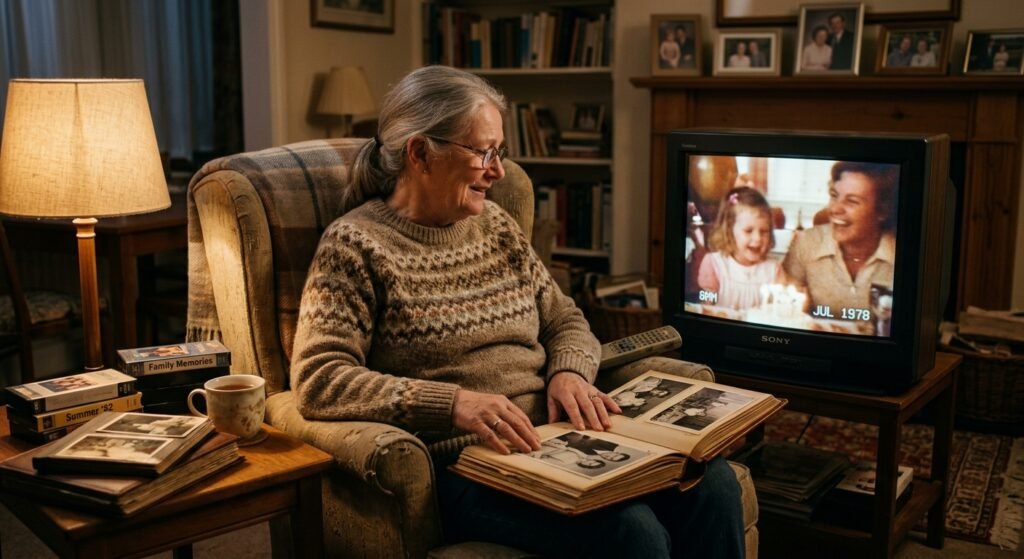
If you look back at your life, some of your sweetest memories probably took place in chapters you couldn’t wait to finish. You might miss the chaotic college house where nobody ever washed the dishes, or the exhausting years when your children woke you up three times a night. In the moment, those seasons felt like trials to survive. You complained about them to your friends, counted down the days until they would end, and dreamed of a time when life would feel more settled.
Yet, years later, you find yourself looking back at those exact moments with a strange sort of reverence. You don’t necessarily want to go back and live them again, but you miss the version of yourself who inhabited them. You miss the simplicity of those early struggles, the closeness that came from shared instability, and the feeling of having your entire life stretched out in front of you like an unwritten book. There is a specific kind of beauty that only exists when you don’t yet know how things are going to turn out.
When we watch life move forward, we aren’t just watching calendars turn over. We are watching ourselves change. We are letting go of the person we used to be to make room for the person we are becoming. And it is entirely natural to want to hold that former self close for just a little longer, even as you step firmly into your tomorrow.
A Gentler Way to Move Forward
Perhaps the quiet sadness we feel during major life transitions isn’t a problem to be solved or a sign of doubt. Maybe it’s the ultimate proof of a life well-lived. If it hurts to leave a chapter behind, it means that chapter was filled with things, people, and moments that were deeply worth loving. The ache isn’t a warning that you’re heading in the wrong direction; it’s a monument to where you’ve been.
We don’t have to choose between being excited for our future and being tender with our past. We can carry both feelings at the exact same time. We can unpack our boxes in a beautiful new home while still feeling a little homesick for the place we left behind. We can look forward to the road ahead, while still holding a quiet space in our hearts for the view in the rearview mirror, knowing that the only reason we miss where we’ve been is because we were lucky enough to love it.