The Ghost in the Recipe
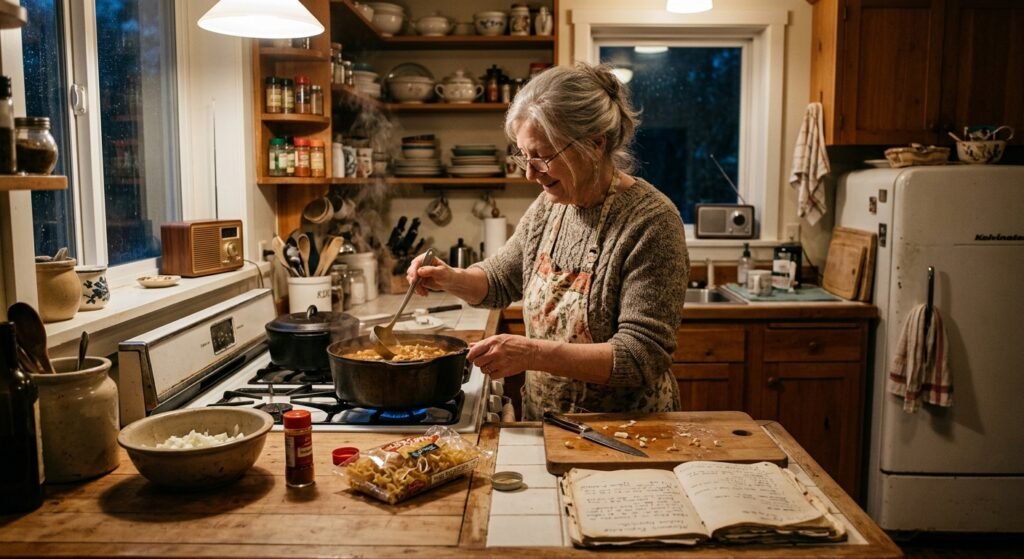
You’re standing at the stove, watching butter melt in a skillet, and without even thinking about it, you reach for the rosemary. It isn’t in the original recipe, and it isn’t even something you particularly craved when you woke up this morning. But you chop the fresh leaves anyway, tossing them into the pan just as they begin to sizzle, because years ago, someone you loved told you that this was the secret to making the dish perfect.
That person is no longer in your life. Perhaps the relationship ended years ago, or maybe you’ve simply drifted into entirely different worlds. You might not have spoken to them in a decade, and you certainly don’t wish to go backward. Yet, here you are, preparing your dinner according to their specific culinary desires. It’s a quiet, private ritual that happens in kitchens everywhere, an unspoken way we carry our past relationships forward, serving them to ourselves, our friends, or even new partners without ever fully explaining where the recipe came from.
When we talk about the lingering effects of past relationships, we usually focus on the big things. We talk about trust, patterns of communication, or the emotional barriers we build to protect ourselves. We rarely talk about the smaller, quieter physical habits we inherit from the people we used to share our lives with. But sometimes, the most enduring pieces of our history aren’t found in our memories at all. They are found in our spice racks, our grocery lists, and the specific way we slice our vegetables on a Tuesday night.
The Vulnerability of the Kitchen Counter
To understand why these habits linger, it helps to look at what actually happens when we prepare food for someone. Cooking is, at its core, an act of vulnerability. When you prepare a meal for a partner, you aren’t just performing a domestic chore; you’re offering them a tangible piece of your time, care, and attention. You’re waiting for their reaction, hoping that what you’ve created brings them comfort, pleasure, or satisfaction.
When that partner tastes your food and offers genuine praise, it feels like a profound form of validation. They aren’t just saying they like the pasta; they’re saying they appreciate your effort and your care. That warm feeling of being seen and appreciated becomes deeply anchored to the dish itself. The recipe ceases to be just a list of ingredients and instructions. Instead, it becomes a physical container for a moment when you felt capable, generous, and loved.
When a relationship ends, we have to find a way to navigate the wreckage and build a new life. We pack up the physical boxes, we delete the photos, and we learn how to sleep on our own side of the bed again. But the sensory memories attached to cooking are much harder to unpack. They don’t fit into cardboard boxes, and they don’t disappear just because we’ve signed a new lease. The recipe remains, still carrying that quiet spark of validation we felt when it was first praised.
How Our Minds Keep the Past Warm
Psychologists who study sensory memory often explain that our senses of taste and smell are uniquely wired to bypass the analytical parts of our brains. They connect directly to our emotional centers, which is why a single aroma can instantly transport us back to a specific kitchen table from a decade ago. Research into memory consolidation suggests that when we experience moments of emotional safety and validation, our brains seal those moments with sensory details to help us remember how to find safety again in the future.
This is why recreating a dish an old partner loved isn’t necessarily a sign of unresolved grief. It is simply how our minds maintain a sense of personal continuity. When we go through major life transitions, we often look for small ways to bridge the gap between who we used to be and who we are becoming. Continuing to cook a meal that was once celebrated helps us hold onto a thread of our own timeline. It serves as a gentle testament to the fact that the warmth we experienced was real, even if the container that held it didn’t last.
We often think of memory as a filing cabinet, but it actually functions much more like a mosaic. We take pieces of our experiences, our travels, our friendships, and our loves, and we assemble them to create the picture of who we are today. The specific way you season your soup or roast your potatoes is just another small tile in that mosaic. It is a physical manifestation of your history, a way of acknowledging that you were shaped by the people who once sat across from you at the dinner table.
Recreating the Love, Not the Person
It is easy to feel a little conflicted when you realize you are still cooking for a ghost. You might wonder if it means you aren’t fully over the relationship, or if you’re secretly harboring a desire to undo the past. You might feel a strange sense of guilt when you prepare that specific meal for a new partner, as if you’re bringing an uninvited guest into your current relationship.
But most of the time, the truth is far simpler and much gentler. You don’t actually want that person back in your kitchen. If they walked through the door right now, you would probably feel uncomfortable, distant, or entirely indifferent. What you are actually trying to recreate isn’t the person; it’s the version of yourself who knew how to care for someone, and who was appreciated for doing so. The recipe is a monument to your own capacity for devotion, proving that you are someone who knows how to bring comfort to a table.
By continuing to make that meal, you are honoring your own capacity to love and be loved. You are keeping the best parts of your history alive, while letting the rest go. It’s a way of saying that even though the relationship didn’t survive, the kindness, the laughter, and the shared warmth of those dinners were still worth keeping.
A Legacy of Small Moments
Next time you find yourself browning the butter just a little longer, or adding that extra pinch of salt because someone from your past once told you it made all the difference, you don’t need to feel haunted. You don’t need to overanalyze why their voice still echoes in your kitchen cabinets, and you don’t need to force yourself to change your recipe just to prove you’ve moved on.
Perhaps those recipes aren’t reminders of what we lost at all. Perhaps they’re proof of what we got to keep. We walk through this life gathering little pieces of grace from everyone we encounter, and those pieces eventually become part of the fabric of our daily routines. The kitchen is simply the place where we keep those quiet treasures alive, serving them up to ourselves and the people we care about today, one ordinary, beautifully seasoned meal at a time.